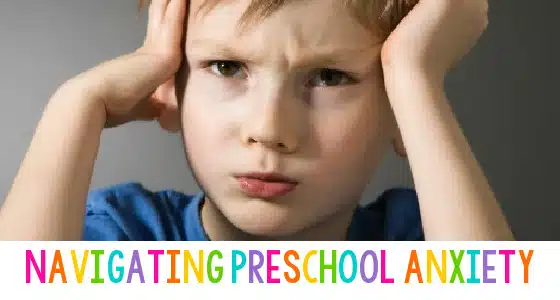



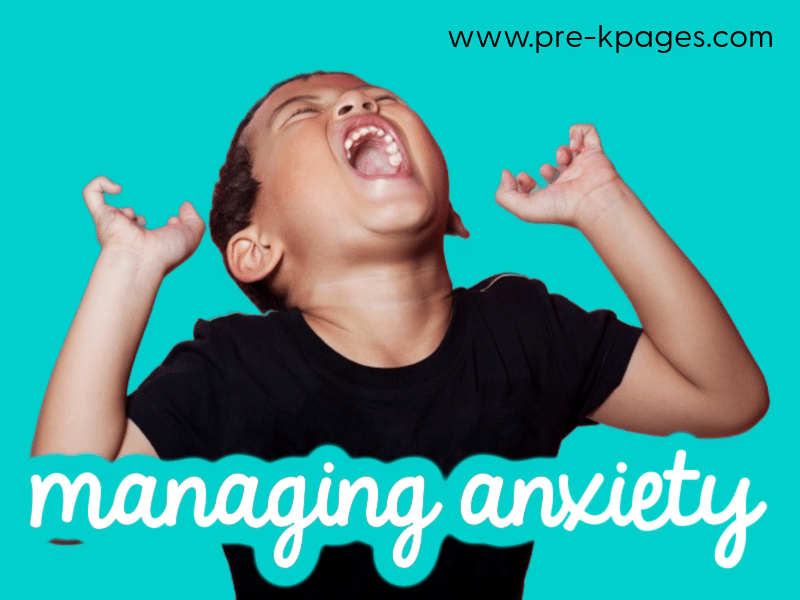
One of the toughest parts of preschool teaching is helping our little learners with feelings of anxiety and nervousness. Often we’ll see these feelings at the beginning of the school year, with separation anxiety at drop-off or a reluctance to join in with the group.
I’m thrilled to have Meg joining us again as our special guest host, and we’ve got practical tools and supportive strategies lined up to help with anxiety.
Watch the Podcast Episode
Understanding Misconceptions
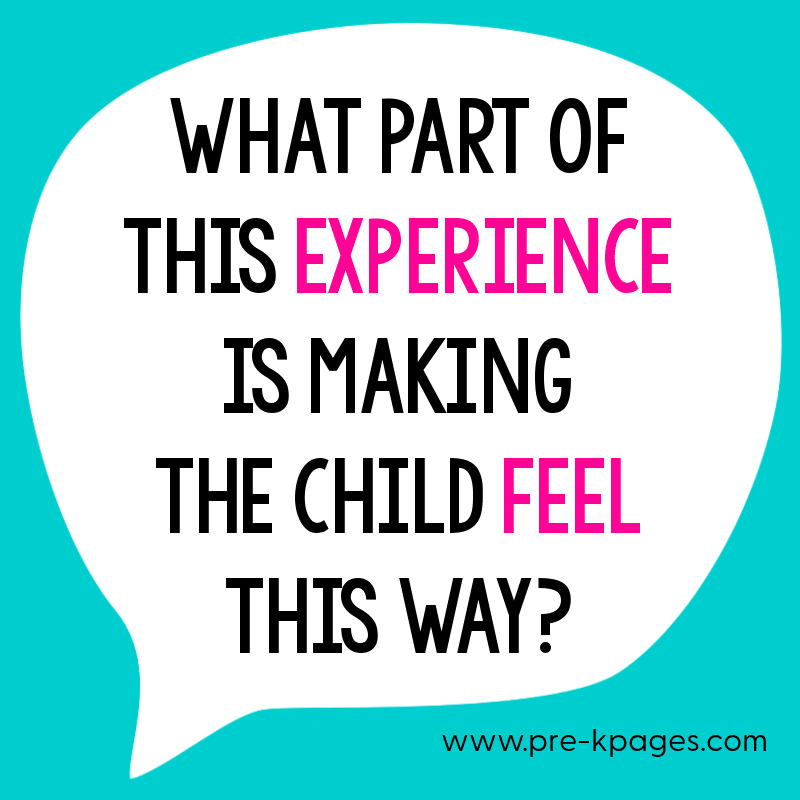
First things first, let’s debunk some common misconceptions about anxiety in kids. Teachers may feel that a child displaying anxious behavior is “ruining the start of school” or “ruining my day.” It’s easy to see challenging behavior as a disruption, but remember, it’s not about us. All behavior is a form of communication. Our task is to figure out what these anxious kids are trying to tell us and how we can help meet their needs. We must begin to ask, “What part of this experience is making the child feel this way?”
Practical Solutions for Preschool Anxiety
Preschoolers need to learn skills to manage their anxiety (or any emotion). Our job to teach skills and strategies for handling the emotions and associated behaviors.
- Teach Strategies Before You Need Them: Start teaching coping skills immediately. Introduce simple strategies to manage big emotions before crises happen. Teaching a simple breathing exercise on Day One can be game-changing. Teach the whole class, not just the child with anxiety. (It’s a strategy that everyone will need at some point during the school year – even the teacher!)
- Identify Triggers: Keep an eye out for common anxiety triggers. Through consistent observation, you might discover patterns—like a child who gets anxious during transitions. Recognize these triggers to help them through it. Read a social story about anxiety. A social story is a short, simple story about social situations, feelings that may occur, and simple actions to take in response. We can give children the words to describe what’s happening to them and give them ways to respond appropriately.
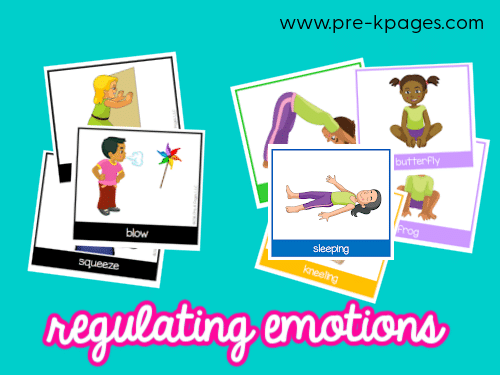
- Creative Relaxation: Use fun, quick yoga poses, like the sleeping pose, to introduce relaxation techniques. With arms and feet straight, encourage kids to notice how their body feels while they breathe slowly.
- Consistency is Key: Ensure all staff members understand and implement these strategies consistently. Involving parents by sending home social stories can bridge the school-home gap, ensuring everyone is on the same page. Keep using strategies whenever the need arises (or practice from time to time just to relax).
Real-Life Experience
Let me share a story about a little boy named Richard who really challenged me. All day long he would have these big feelings. After observing for a few days, I realized he struggled with transitions. And we had transitions all day long. Once I recognized the problem, I talked with him about how his body felt during these times. Soon, he could articulate what he felt. “My face feels hot. I breathe like this.” Through guided support, we worked together to manage his feelings during transitions.
Using Our Bodies as Tools
Encourage kids to be aware of what is happening in their bodies when they feel anxious or nervous. Incorporate yoga or simple breathing exercises. Even a common tool like a squishy ball can help children relieve stress and stay calm. Explore how physical movements can help manage anxieties and better regulate any emotions.
Bridging the Home-School Connection
To make social-emotional learning effective, involve parents with weekly updates on what’s been taught at school. Talk about strategies and skills that the children are learning. Send home simplified stories or lists of books for parents to read with their kids. Some parents will do it and some won’t. But overall, all caregivers will become more aware and understanding about anxiety and developing emotional skills.
A Resource to Help
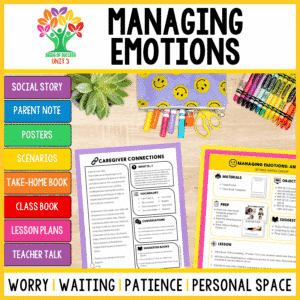
Need some help teaching strategies to your students? Unit 3 of the Seeds of Success Social-Emotional Learning Curriculum gives you lesson plans and other resources to teach young children how to manage feelings around topics like worry, impulse control, waiting, and respecting personal space. Incorporate these lessons in your circle time or other appropriate areas of the schedule.
A Final Message
Remember, the next time you have a preschooler melting down in class—don’t take it personally. It’s not a battle against you. It’s a signal that they need help navigating their feelings. Focus on teaching and reinforcing these crucial social-emotional skills, as they are valuable lessons children will carry throughout their lives.
Watch the full podcast episode for more information and strategies!