

Are you looking for ways to bring more nature into your preschool classroom? It can be overwhelming to make changes all at once, so start gradually, one center at a time. One of the easiest ways to start your journey is by building a natural preschool math center.

Creating a Nature-Inspired Math Environment
There are so many benefits of using more natural materials in your math center. Bringing the outdoors into your classroom can provide a calmer and more soothing environment for young children. Who doesn’t want a calmer and less chaotic classroom, am I right?
You see, it used to be thought that the brightly colored plastic counters like teddy bears, farm animals, and vehicles common in the early years were “fun” and would draw children’s attention and help them be more engaged in learning.
But now, research has shown us that having so much brightly colored plastic in the classroom can not only add visual noise and clutter to the learning environment, but it can also lead to problems with attentional control and increase behaviors. It turns out that those fun, bright colors can be distracting for your little learners and cause them to pay less attention instead of more. Connecting with nature is an important part of supporting the happy and healthy development of young children. Happy and healthy children learn more.
Natural Preschool Math Center Materials
Having a clearly defined and dedicated math center will keep materials organized and inviting for your little learners. An intentional and well-designed preschool math center can provide a stimulating and engaging environment for young children to explore and develop essential math skills. An added benefit to using natural materials in your math center is that they are free or very inexpensive.
Organizing Math Manipulatives
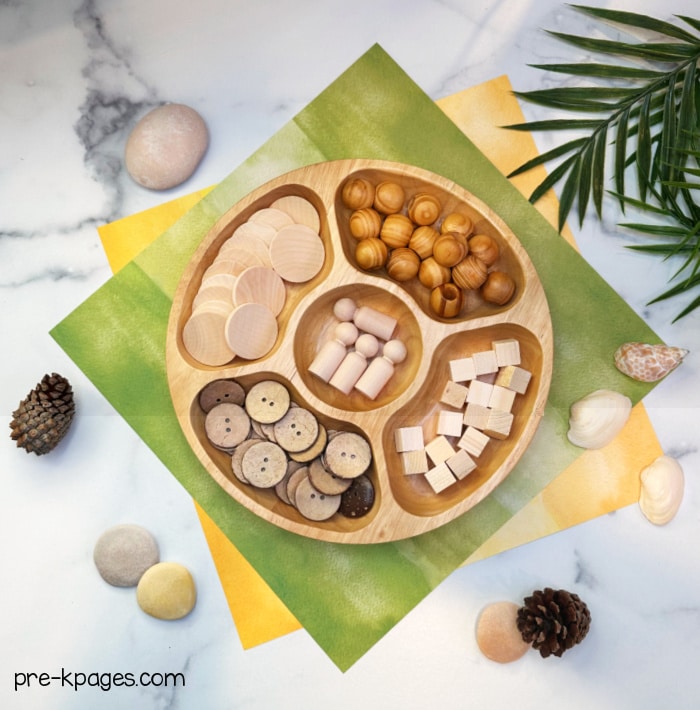
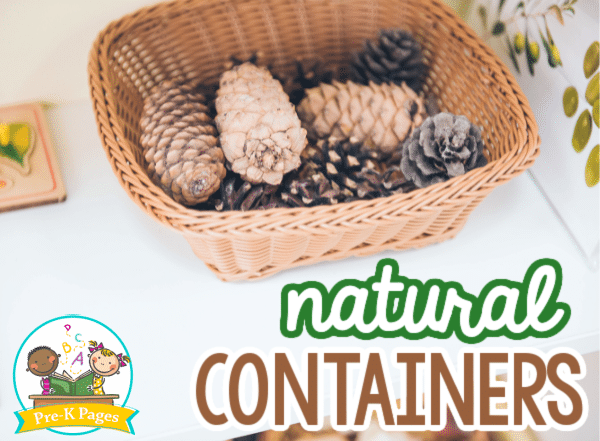
You can arrange and organize your math manipulatives, such as counting cubes, wood slices, wood beads, and other natural objects in open baskets or trays, inspired by the Montessori method. Incorporate natural materials like pinecones, seashells, and stones to add a touch of nature to the center. Here are some more natural items you may consider including in your math center:
- Wood Serving/Sorting Tray
- Round Wood Discs
- Shells
- Craft Sticks
- Twigs
- Wood Beads
- Wood Peg People
- Wood Buttons
- Rocks
- Pinecones
- Wood Cubes
- Small Chalkboards and Chalk
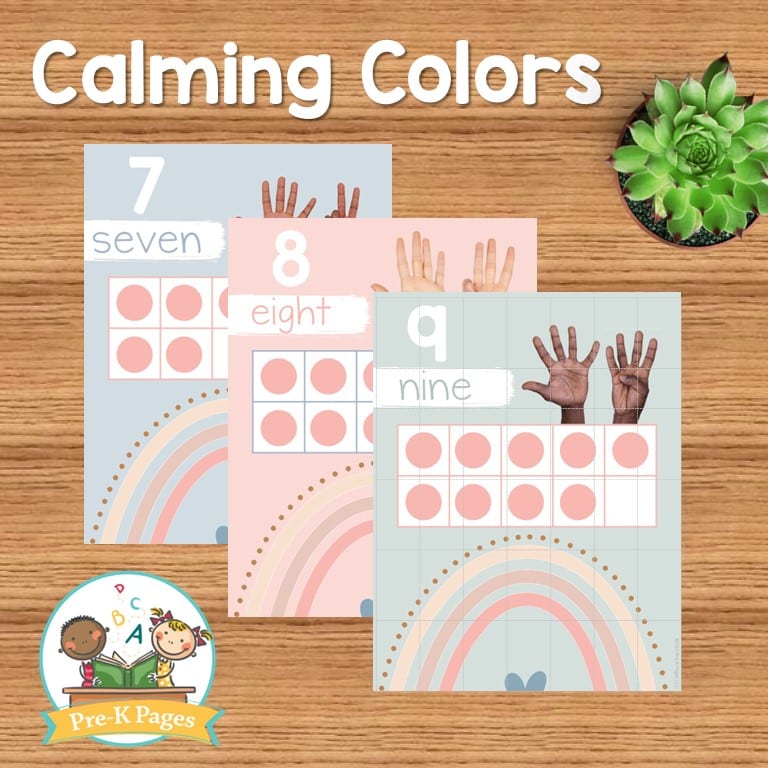
Natural Preschool Math Center: Displaying Visual Aids
Consider incorporating posters that feature calm, soothing colors like these number sense posters in your math center. You can also add photographs of natural landscapes and animals to create an engaging visual environment.
Consider replacing your individual dry erase boards with chalkboards to develop fine motor skills when writing numerals.
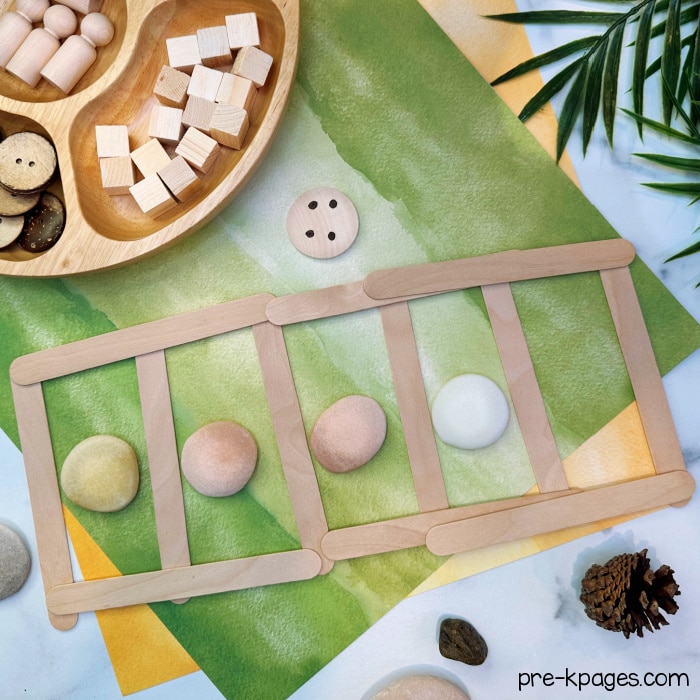
Nature-Based Math Activities: Counting and Number Sense
Natural materials like pinecones, rocks, shells, or leaves can be used to practice counting and build number sense skills. Set up activities where children can match objects to corresponding numerals or create their own number lines using sticks and stones.
You can easily create your own ten frames with glue and craft sticks for students to use when counting natural objects.
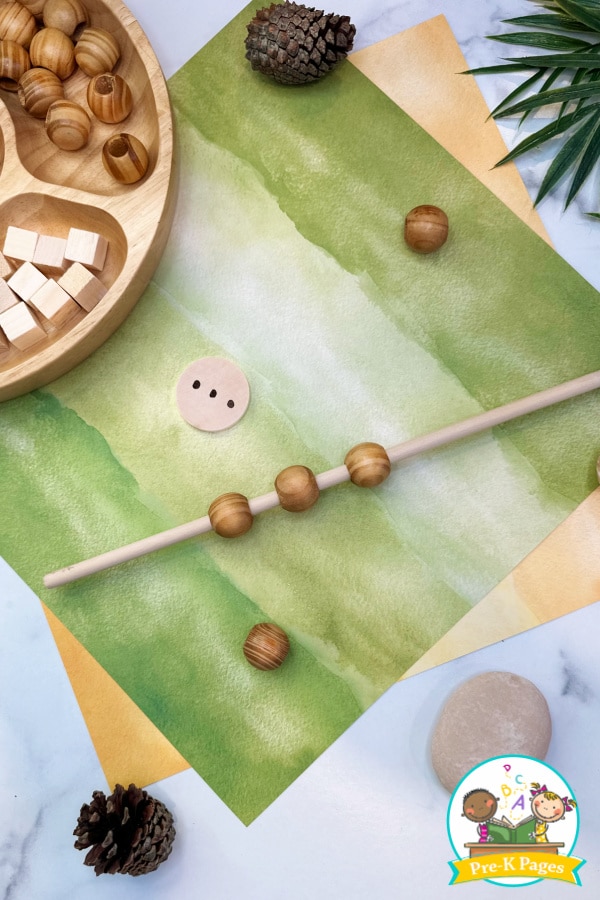
Natural Preschool Math Center: Measurement and Comparisons
Explore measurement concepts using natural objects like twigs, leaves, and large seeds. Provide balance scales and measuring tapes for children to compare and measure lengths, weights, and volumes.
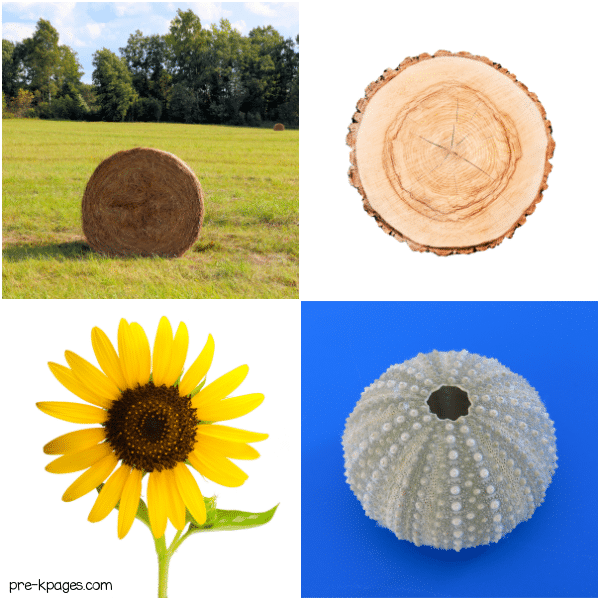
Shape and Pattern Recognition
Look for natural shapes like circles, triangles, and squares in nature. Use natural objects to create patterns, such as leaf arrangements or seashell sequences, and encourage children to identify and extend the patterns.
Sorting and Classifying
Use nature-inspired materials for sorting activities. Children can classify objects by size, color, texture, or type, using things like stones, leaves, or even flower petals. Encourage them to create their own sorting criteria as they explore.

Outdoor Math Exploration
Take math learning outdoors by incorporating nature walks and scavenger hunts whenever possible into your plans. Children can collect objects for use in the math center, search for specific shapes, or count the number of leaves, twigs, and rocks they find. Hands-on experiences such as these connect math with the real world.

Natural Preschool Math Center: Enhancing Engagement and Learning
You can add elements like sand, water, and playdough to your math center to create sensory math activities whenever possible. This multi-sensory approach deepens understanding of concepts and provides important tactile experiences for children.
Math Games and Puzzles
Include math games and puzzles with nature themes to engage children’s interest. Memory games with images of animals, plants, or natural landscapes will encourage problem-solving and critical thinking skills.
Math Literature
Don’t forget to add math books to your math center! Math-related storybooks can also be placed in your cozy reading nook. Books such as The Very Hungry Caterpillar, or One Duck Stuck provide opportunities to explore numeracy concepts in a fun and relatable way.
When you blend nature with math, you can create learning activities that have a more meaningful and deeper connection with the subject material. Providing a more natural, nurturing space for math learning in your preschool classroom will promote curiosity and exploration, and your little learners will develop a love for mathematics.