
Preschoolers are natural scientists. Their natural curiosity and endless questions about the world make early childhood the perfect time to introduce basic science concepts. As a preschool or Pre-K teacher, you know the challenge is turning children’s curiosity into valuable learning experiences.
The key? Engaging, hands-on activities that not only capture their attention but also build the foundation for lifelong scientific thinking. And the best part? You don’t have to do it alone!

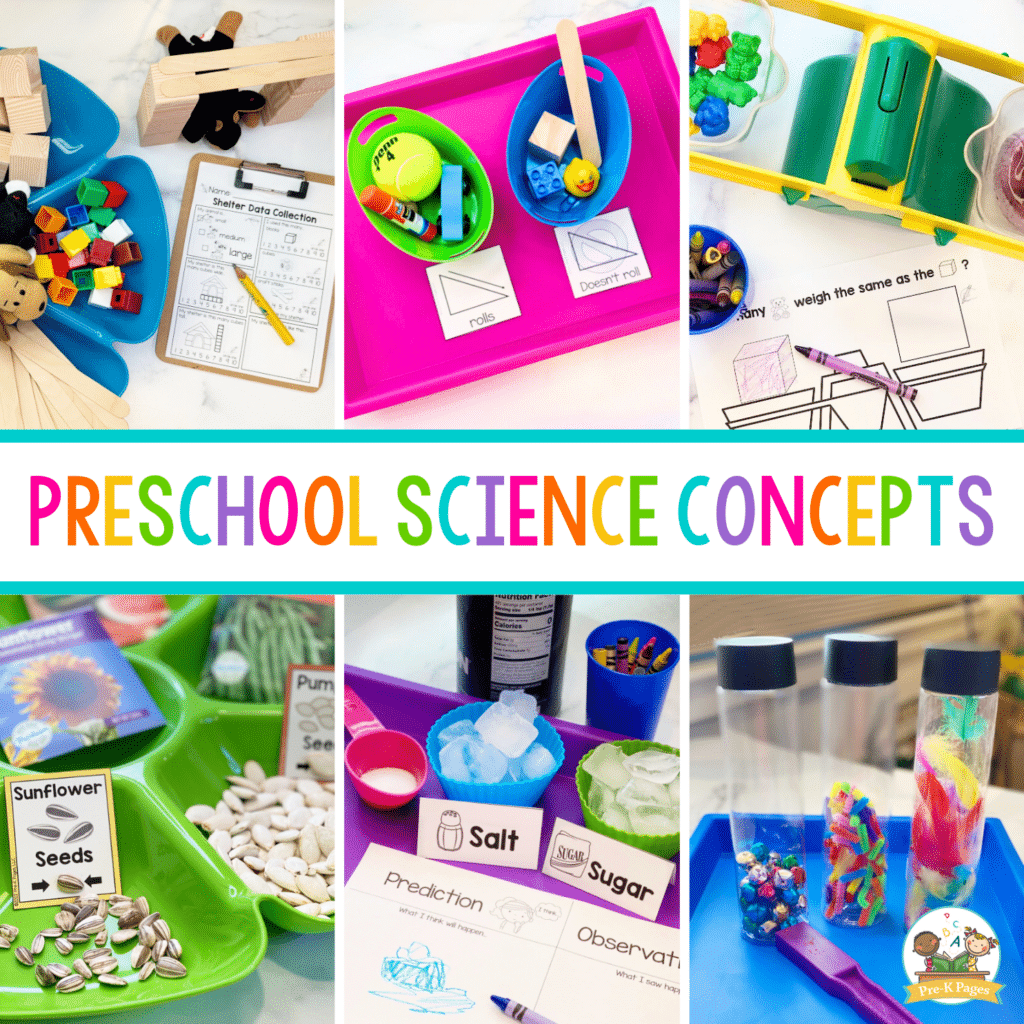
Preschool Science Concepts
In this post, we’ll dive into the essential preschool science concepts that every little learner should explore, and we’ll show you how our comprehensive science curriculum can make teaching science concepts a breeze.
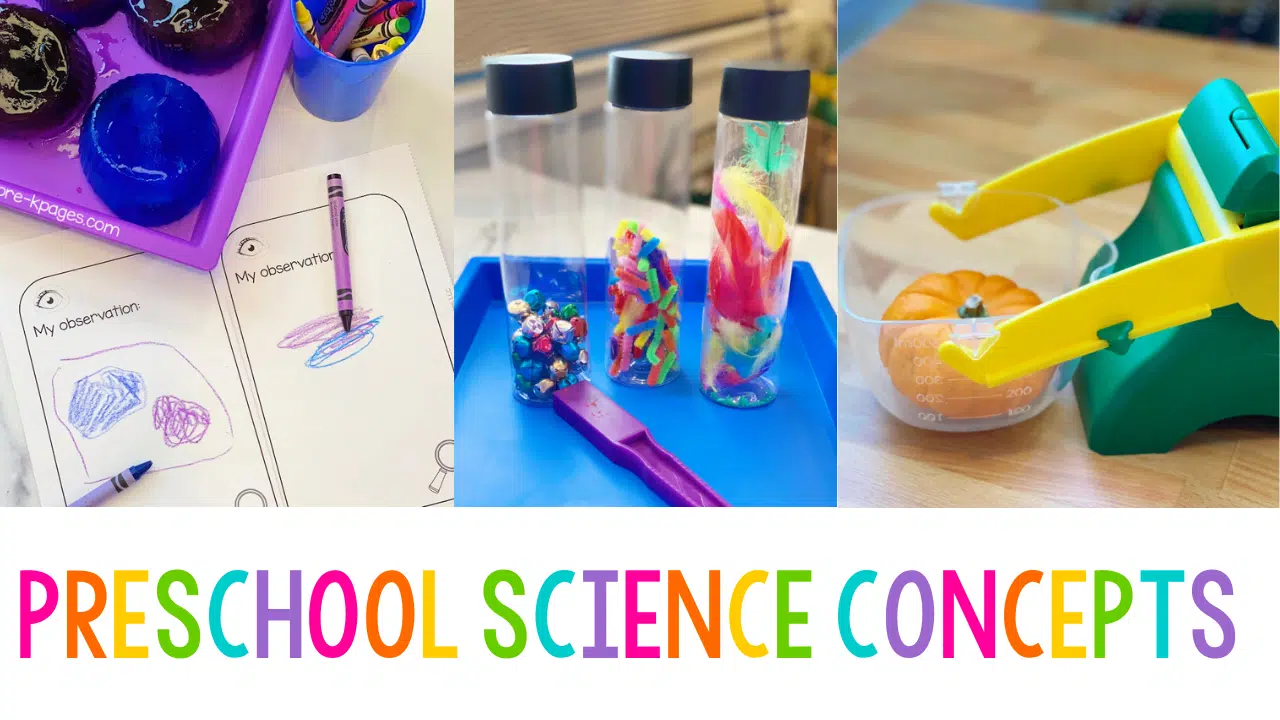
From exploring the properties of ice cubes to investigating what sinks or floats, your little scientists will be eager to dive into these exciting activities. Plus, you’ll have the resources you need to ensure that your students are getting the high-quality science learning experiences they deserve.
Why Teaching Science Concepts in Early Childhood Matters
Teaching science concepts in early childhood is about more than just fun experiments (although those are certainly a highlight!). It’s about laying the groundwork for critical thinking, problem-solving, and a lifelong love of learning. When children engage in preschool science activities, they develop scientific process skills such as observing, investigating, classifying, and predicting. These skills are not just for science — they’re essential for success in all areas of learning!
Here’s why having an age-appropriate science curriculum is important for teaching preschool science concepts:
- Encouraging children to ask questions fosters curiosity and critical thinking.
- Kids learn to make observations and predictions, building their analytical skills.
- Science learning promotes creativity as children explore and experiment.
- Hands-on activities and experiments bring abstract concepts to life, making them easier to understand and more memorable.
But how do you ensure that your science area is not only engaging, but also meets early learning standards? That’s where our comprehensive science curriculum comes in!
Science Curriculum for Preschool and Pre-K
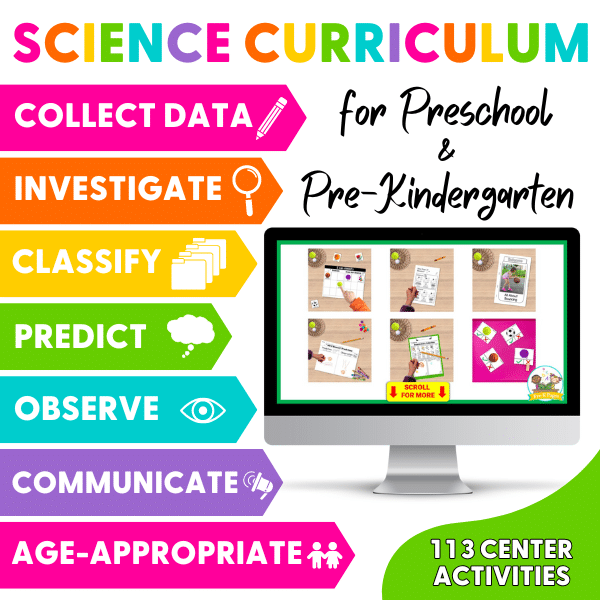
Let’s face it, surfing the web for random science experiments to go along with your themes or units of study is no fun. What you really need is a done-for-you science curriculum that’s designed specifically for Pre-K.
But not just any science curriculum, one that’s focused on meaningful science experiences and scientific process skills that align with standards and honor the way young children learn. And what if that science curriculum also had easy to understand, step-by-step teacher instructions, lesson plans, and center activities? If all of that sounds good, then you need this science curriculum in your teacher life.
Unlocking the Power of Our Science Curriculum
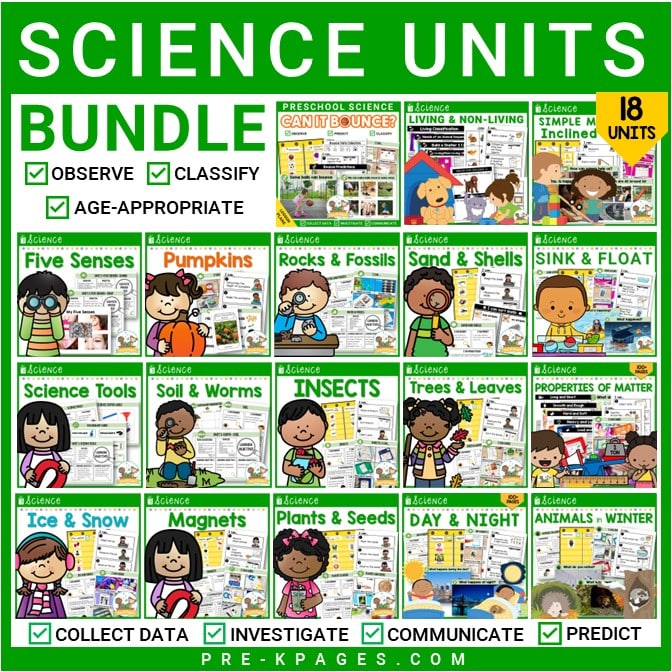
Imagine having everything you need to create a dynamic and successful science area in your classroom—right at your fingertips. Our science curriculum is designed to do just that, offering more than 113 done-for-you center activities that cover 18 essential science units.
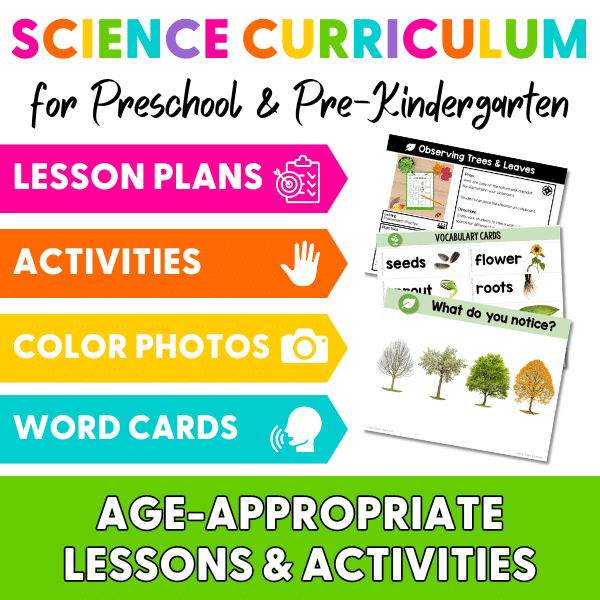
Each unit is packed with age-appropriate lesson plans, activities, color photos, and word cards, ensuring that your students get the high-quality, hands-on learning experiences they deserve.
Let’s take a closer look at each of the units included in our curriculum:
1. Day and Night
Explore the concepts of light and shadow with fun activities that help children understand the differences between day and night. Through simple observations, kids learn about the sun, moon, and stars, and how these celestial bodies affect our daily lives.
2. Insects
Get up close and personal with creepy-crawlies as children learn about different types of insects, their life cycles, and their important roles in the ecosystem. Activities like bug hunts and insect sorting games make this unit a favorite among young explorers.
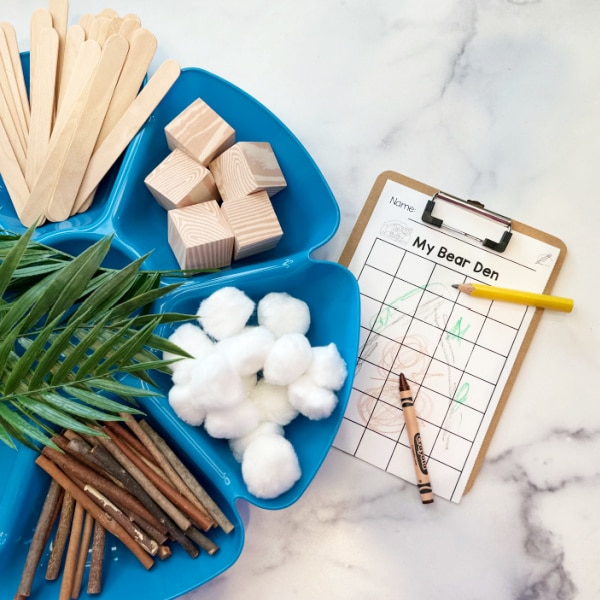
3. Animals in Winter
Teach your students how animals adapt to the cold winter months. This unit covers hibernation, migration, and other survival strategies, with engaging activities that bring these concepts to life.
4. Pumpkins
Perfect for the fall season, this unit dives into the life cycle of pumpkins, from seed to harvest. Kids will love the hands-on experience of planting seeds and watching them grow, while also learning about size, color, and the changing seasons.
5. Ice and Snow
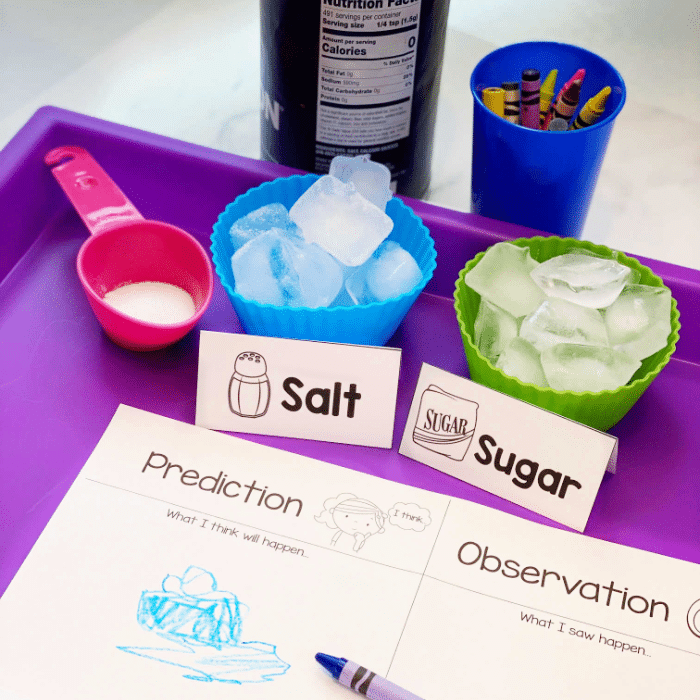
Bring the magic of winter indoors with activities that explore the properties of ice and snow. From simple ice cube melting experiments to snowflake crafts, this unit helps children understand states of matter and the effects of temperature.
6. Plants and Seeds
Nurture your students’ green thumbs with this unit on plants and seeds. Children will learn about the parts of a plant, the growth process, and the importance of water and sunlight. Watching their seeds sprout and grow is an unforgettable experience!
7. Magnets
Magnets are a fascinating way to introduce kids to the concepts of force and attraction. This unit includes fun experiments that demonstrate how magnets work, encouraging children to explore and ask questions.

8. Trees and Leaves
Take a closer look at the trees and leaves that surround us. This unit covers the different parts of a tree, how trees grow, and why leaves change color. Outdoor activities like leaf rubbings and tree bark observations make this unit especially engaging.
9. Sand and Shells
Bring the beach to your classroom with activities that explore the properties of sand and shells. This unit teaches children about texture, size, and shape, while also introducing them to concepts like erosion and fossil formation.
Preschool Science Center Activities
10. Science Tools
Introduce your students to the tools of the trade! This unit covers basic science tools like magnifying glasses, balance scales, and measuring cups, teaching kids how to use them for exploration and discovery.
11. Five Senses
Help your students explore the world through their five senses. This unit includes activities that engage sight, sound, taste, touch, and smell, encouraging children to observe and describe their experiences.
12. Sink and Float
One of the most popular units, Sink and Float, invites children to explore buoyancy and density through simple experiments. Using a variety of objects, kids predict, test, and observe what sinks or floats, building their understanding of basic science concepts.

13. Soil and Worms
Dig into the dirt with this unit on soil and worms. Children will learn about different types of soil, the role of worms in the ecosystem, and how plants depend on healthy soil to grow.
14. Rocks and Fossils
This unit is perfect for your little geologists! Kids will explore different types of rocks, learn how fossils are formed, and even create their own “fossils” using simple materials.
15. Properties of Matter
Introduce your students to the basic properties of matter—solid, liquid, and gas. This unit includes fun experiments that demonstrate how matter can change forms, helping children understand these essential science concepts.
16. Ramps
Ramps are a great way to explore concepts like gravity and motion. This unit includes activities that let kids experiment with ramps of different heights and materials, observing how objects move in response.

17. Can it Bounce? Balls Unit
Get ready for some bouncy fun with this unit that explores the properties of different types of balls. Kids will predict and test which balls bounce the highest, learning about which balls can bounce, and energy in the process.
18. Living and Non-Living
Help your students understand the difference between living and non-living things. This unit includes sorting activities, observations, and discussions that teach kids about the characteristics of life.
Bringing Preschool Science Concepts to Life in Your Classroom
A successful science area keeps little learners engaged and curious about the world around them. With our science curriculum, you can be confident that your students are not only having fun but also developing critical scientific process skills. Whether they’re investigating what sinks or floats, observing the life cycle of plants, or exploring the properties of magnets, these activities and experiments will keep your classroom buzzing with excitement.
And remember, a high-quality science curriculum supports the development of scientific process skills like observing, investigating, classifying, and predicting—skills that will serve your students well beyond their preschool years.

Preschool Science Curriculum
Having an amazing science area in your preschool classroom is wonderful, but without a rock solid science curriculum to follow, you’ll be throwing spaghetti at the wall and just hoping some of it sticks. For true foundational learning to occur in your preschool classroom, you need a standards-based curriculum that is both engaging and developmentally appropriate for young children.
Good science curriculum provides a structure for teaching students important preschool science concepts. For example, this is how students will begin to understand that cyclical changes that take place in nature and animals. Without a science curriculum, they may view changes as magical or random. They may not understand the reasons or purpose behind these changes.
With 18 comprehensive units, the Trailblazer Science Curriculum for Preschool is standards aligned, so you can rest easy knowing your little learners are getting exactly what they need to build a strong foundation for future scientific success.
Ready to Elevate Your Science Teaching?
Did you know our complete science curriculum includes more than 113 done-for-you center activities to ensure that your students are getting the age-appropriate, high-quality science experiences they deserve? With 18 different science units that include lesson plans, activities, color photos, and word cards, you can rest easy knowing that you’ve got science centers covered for this coming school year.
Imagine having everything you need to create engaging, hands-on science experiences right at your fingertips. No more scrambling for ideas or piecing together random activities—the curriculum is all set and ready to go. All you have to do is bring the excitement, and let the magic of science unfold!
Ensure High-Quality Science Experiences for Your Students
Don’t miss out on the opportunity to provide your students with a top-notch science education. We designed our comprehensive science curriculum specifically for preschool and pre-K teachers like you who want to make science fun, accessible, and aligned with early learning standards.
Learn more and grab your science curriculum today! Give your students the gift of exploration, discovery, and a lifelong love of learning.
Teaching these science concepts in your classroom will not only keep your preschoolers engaged but will also help them develop important skills that will serve them for years to come. So, what are you waiting for? Dive into the world of preschool science and watch your students’ love for learning grow!
©2024 Pre-K Pages, LLC Terms of Use