


Have you ever noticed a child w-sitting and wondered why they do that? Today, Dr. Marianne Gibbs, an expert in the field of occupational therapy, is here to explain w-sitting and some alternatives for kids.
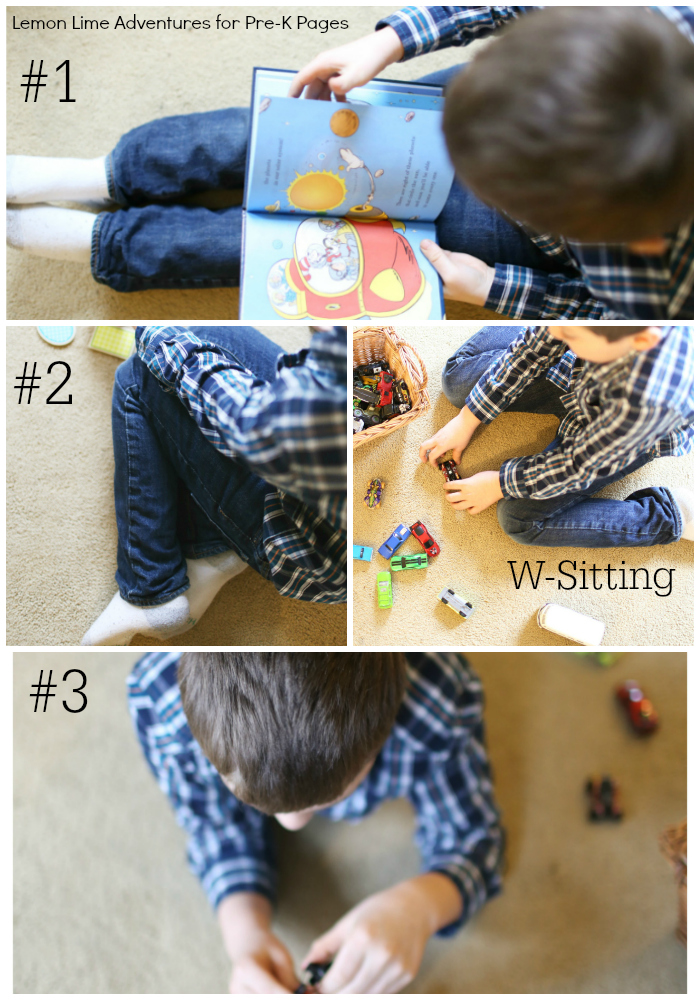
First, let’s define exactly what w-sitting is. W-sitting occurs when a person is seated on the floor with one leg on each side of their body in the shape of a “W”.
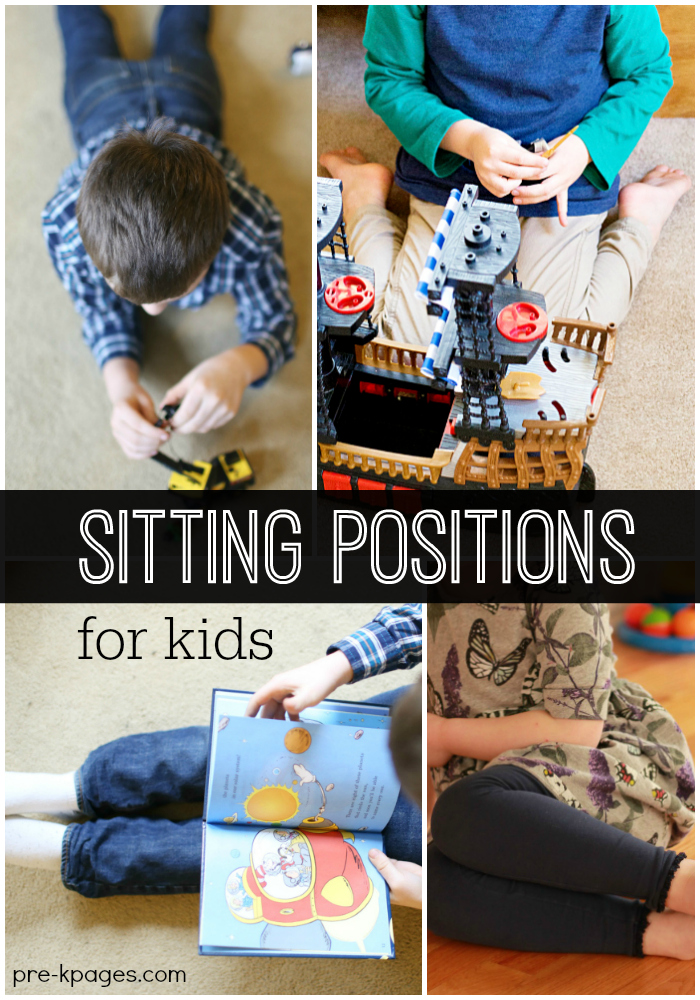
Is w-sitting bad?
W-sitting can be a potentially detrimental position in which to sit.
The position of w-sitting compromises the knee and hip articulations (joints) by positioning them in ways they are not anatomically designed to support. Think about your knees for example. Knees move in and out like hinges. While knee articulations are designed to move like hinges, they are not designed to move in rotational patterns, which “W”-sitting necessitates.
Observe your children or students today and see how they sit on the floor at school or at home. Do they sit in the “W” position?
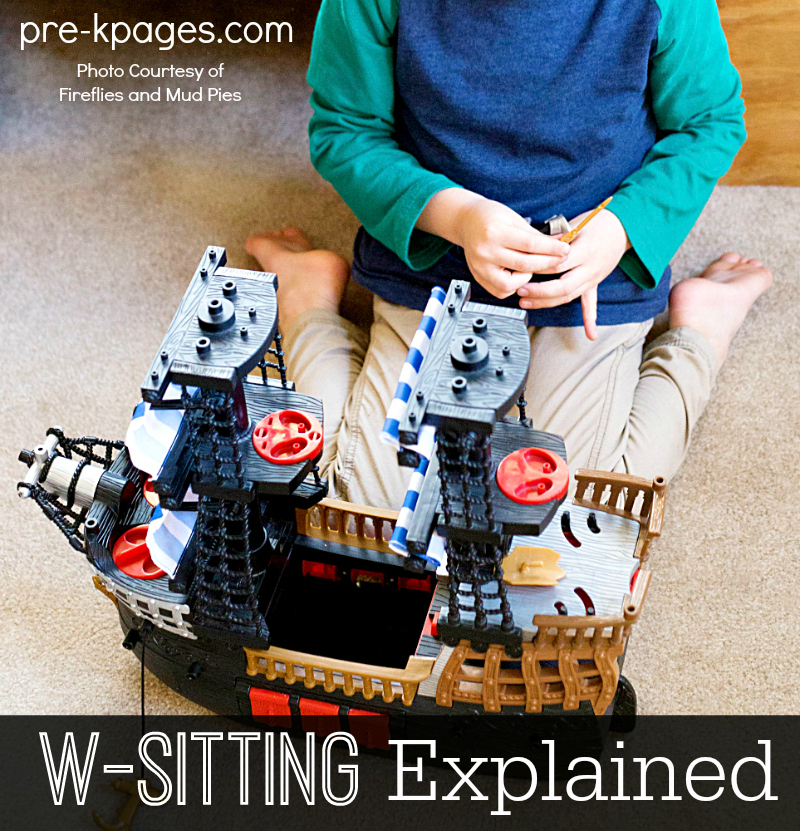
Why do children w-sit?
Children may develop a habit of w-sitting as a way to establish increased stability in their bodies when they have difficulty assuming and maintaining the criss-cross (tailor) sitting position. You may frequently observe w-sitting when young children are playing in centers on the floor or while seated in whole group.
In both of these scenarios, children with decreased trunk stability may prefer to use the w-sitting position to gain more stability in their positioning so they can listen and learn better and/or use both hands in an activity.
Unfortunately, w-sitting compromises knee and hip joint positioning, inhibits trunk stability needed for sitting, and may impact the development of proficient hand skills.
What can teachers and parents do when a child is a w-sitting?
Teachers and parents can gently, but firmly discourage “W”- sitting in young children at school and home.
The only exception is if a child has a physical disability that prevents him or her from sitting any other way and the student would therefore miss opportunities to socialize and learn with peers in a whole group setting.
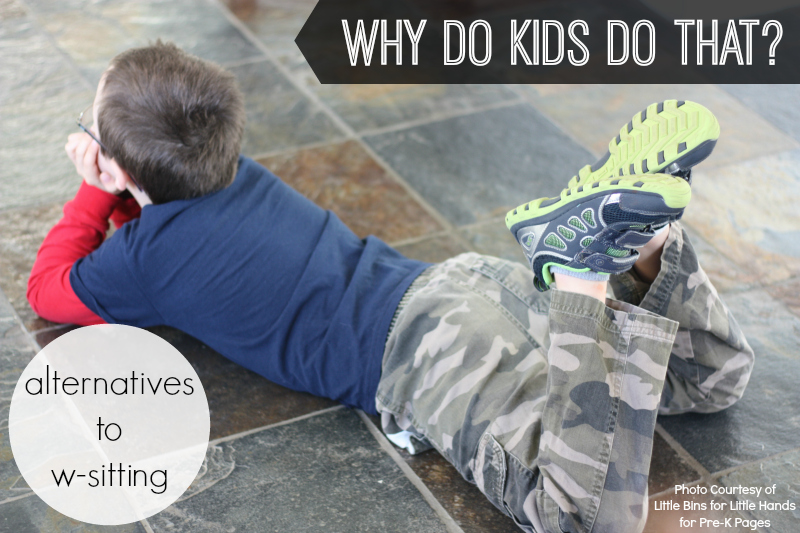
Allow for a variety of sitting positions at home or in the classroom, especially if your kids are struggling to sit comfortably or have pain sitting in the criss-cross (tailor) position.
Alternatives to W-Sitting
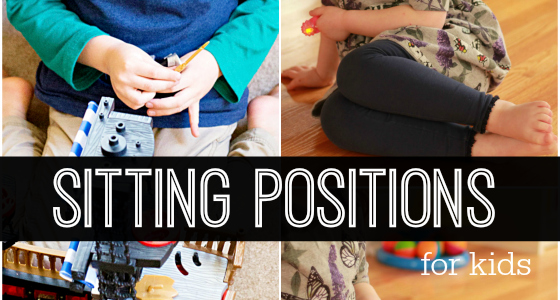
All of the following positions support healthy joint development and learning.
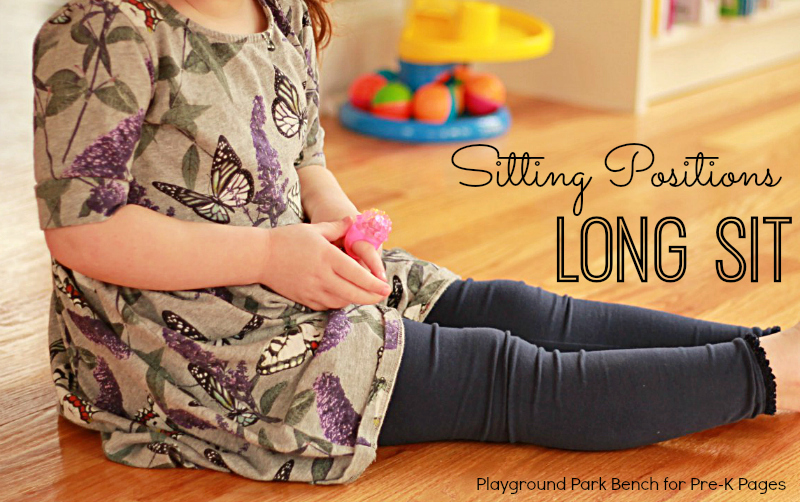
1. Long Sit (legs straight out in front of torso)
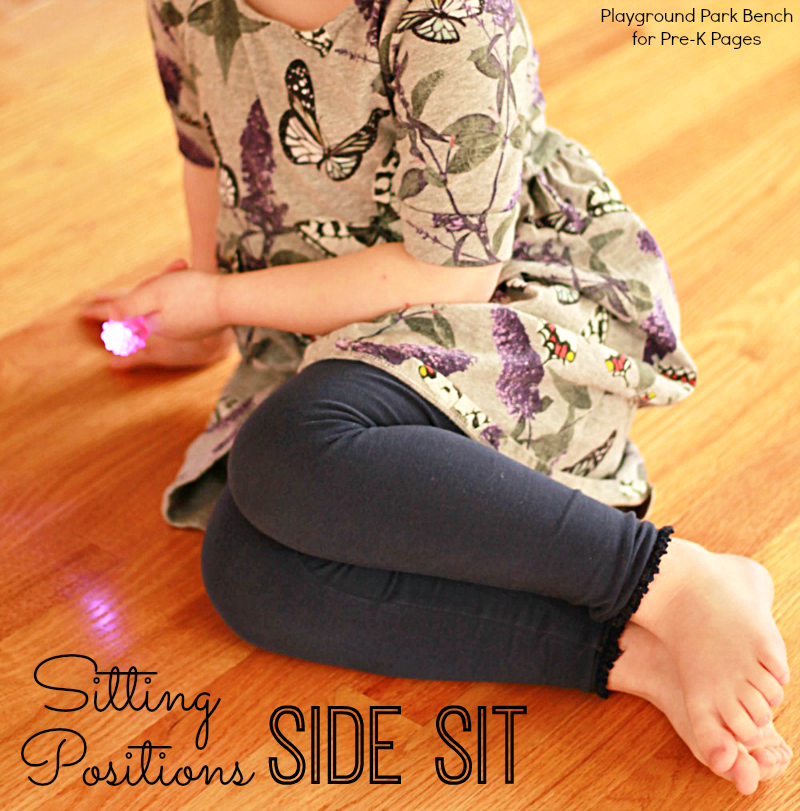
2. Side Sit (legs bent and tucked to one side)
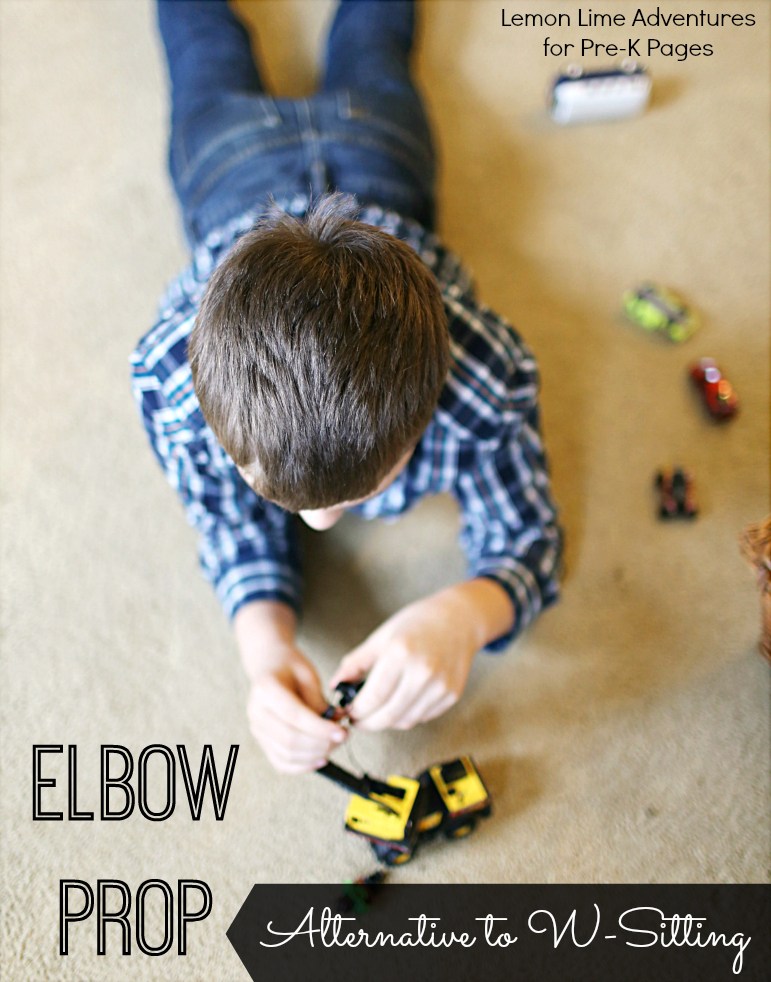
3. Lying on Tummy (propped up on elbows)
4. Lying on Back (propped up on elbows)
5. Sitting on a small to medium-sized ball with feet connected firmly with the ground is a fun way to sit and gain coordination at the same time. (not pictured)
It is normal for young children to move in and out of different positions when sitting on the floor – that is natural and the way kids stay alert and learn to manage their bodies in space. Just as one size does NOT fit all, one sitting position will never accommodate the sitting needs of all children.
Young children learn best when their bodies are safely and comfortably positioned. When you support a variety of appropriate sitting positions, you are setting all children up for sitting success.
Dr. Marianne Gibbs is the creator of Write Out of the Box!, a website designed to support the development of fine motor skills in children. Her engaging and interactive workshops receive rave reviews from teachers across North America. In her shop you will find a wide array of helpful tools to support the development of fine motor skills.
More Teaching Tips from Pre-K Pages