




Do you dread the first day of school? As preschool and pre-K teachers, we often have “schoolmares” – nightmares about the first day of school – long before it ever arrives. The unknown brings fear, and it’s only natural.
Each new school year presents fresh challenges, particularly when it comes to managing separation anxiety in preschoolers. Let’s explore some fun and practical ways to ease this anxiety and ensure a smooth start for everyone!
Understanding Separation Anxiety
Separation anxiety is a common issue for young children starting school for the very first time. It’s the fear or distress that children feel when separated from their family members or caregivers.
For young children, leaving their familiar environment and stepping into a new setting can be overwhelming. This feeling often translates into tears, clinginess, or even aggression when a parent leaves.

Types of Separation Anxiety
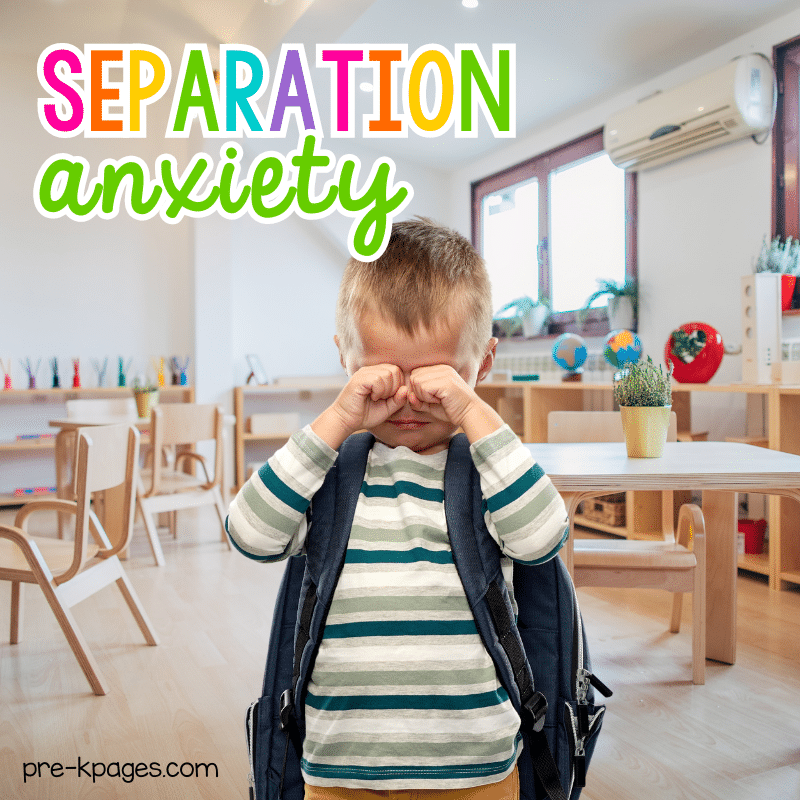
Each child is unique and will experience separation anxiety in their own way. Three types of responses a child might have when their family members leave them on the first day of school:
- Active: Some children might cry or protest actively.
- Quiet: Others might withdraw and stay silent.
- Aggressive: A few may display aggressive behavior, such as throwing objects or trying to run after their parents.
Helping Preschoolers Cope with Separation Anxiety
The way caregivers handle the drop-off on the first day can have a big impact a child’s separation anxiety.
Some parents may be feeling anxious about leaving their child at school for the first time. Others may even feel guilty for leaving their child in a new place.
It’s important for the family to be upbeat, calm, and relaxed when talking about the first day of school with their child. This will help the child feel more calm and relaxed.
Parents who talk positively about school at home before the first day tend to have children who adjust better.

How to Help a Child with Separation Anxiety in Preschool
Now, let’s dive into some strategies to help ease separation anxiety for preschoolers on the first day of school:
1. Guide Parent Behavior: A big part of easing separation anxiety starts before the first day of school. During your Parent Orientation or Meet the Teacher event, teach parents and primary caregivers how to prepare their children for this transition. Encourage them to use positive language when talking about school. For instance, phrases like, “You’re going to have so much fun and make new friends!” can help create a positive association with school.
2. Create a Visual Daily Schedule: Young children thrive on routine and consistency. A visual daily schedule in your classroom can help reinforce the idea of structure and predictability. When a child feels anxious, guide them to the schedule and show them what comes next. This visual aid helps them understand their day and reduces anxiety by providing a sense of control and anticipation.
3. Create a Calm and Welcoming Environment: Your classroom environment plays a crucial role in reducing anxiety in preschoolers. Start the day with a warm welcome.
4. Greeting: Greet each child with a smile, a hug, or a high-five. Establish routines such as putting away belongings and finding their name card. These small, consistent actions help children feel secure.
At the end of the day, provide closure with a goodbye song and a visual cue on the schedule indicating the day’s end. This ritual helps children understand that their parents will return, easing the anxiety of separation.

Easing Separation Anxiety in Preschoolers
Despite your best efforts, some children will still cry on the first day of school. Here’s how to handle it:
- Stay Calm: Your calm demeanor will reassure the children.
- Positive Reinforcement: Speak cheerfully and positively about the school day.
- Acknowledge Feelings: Let the child know it’s okay to feel sad. “I know you miss your mom. You’ll see her soon.” Show them the picture cue for the end of the day.
- Avoid Bribery: Never make deals or bribe the child to stop crying.
- Encourage Participation: Invite the child to join activities but don’t force them if they’re too distressed. Gradually, they’ll start to participate as they feel more comfortable.
Collaborate with Caregivers
Engage family members in the process. Encourage parents to talk about school positively and share any concerns they might have. This collaboration reinforces the idea that school is a safe and exciting place.
Managing Preschool Separation Anxiety
Remember, easing a child’s separation anxiety is a team effort involving teachers, caregivers, and the children themselves.
You can assist young children in adapting to their new school routine. This can be done by guiding parents, creating a structured environment, and maintaining a calm and welcoming classroom.
Starting the school year can be a fun and exciting adventure for everyone. Prepare and be patient to manage separation anxiety in your classroom. This will help make the first day of school a positive experience for everyone involved.
©2024 Pre-K Pages, LLC NO SCRAPING. See our Terms of Use.