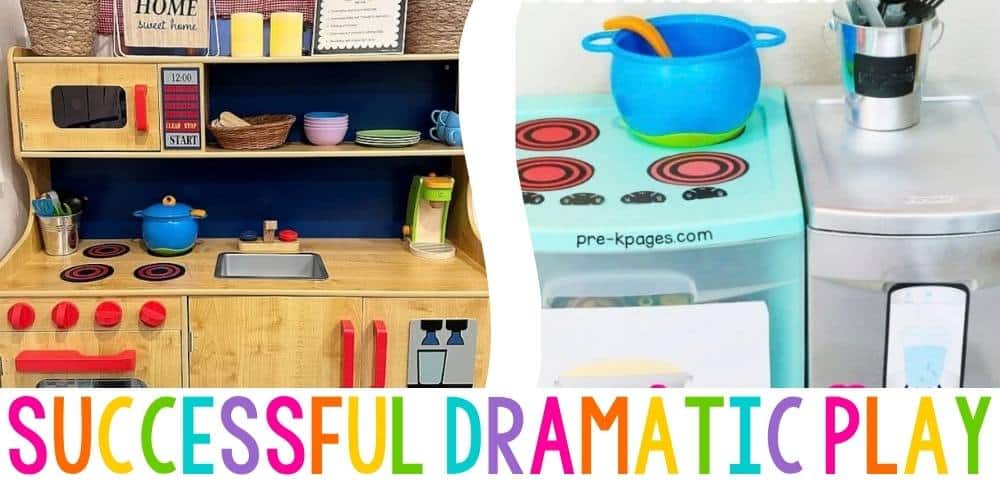


Wondering how to create a successful dramatic play center in your preschool classroom? Watch this episode below for all of my best tips!
But, before we start, let me ask you a quick question…
Do your students love pretend play?
I’m pretty sure your answer is a resounding “yes!” because, come on, what child doesn’t like to act out everyday scenarios for fun?
Well, you can take your students’ love for dramatic play, and turn it into a teachable moment (isn’t that our job after all?)
And what better way to do that than by creating your own — very successful, might I add — dramatic play center.
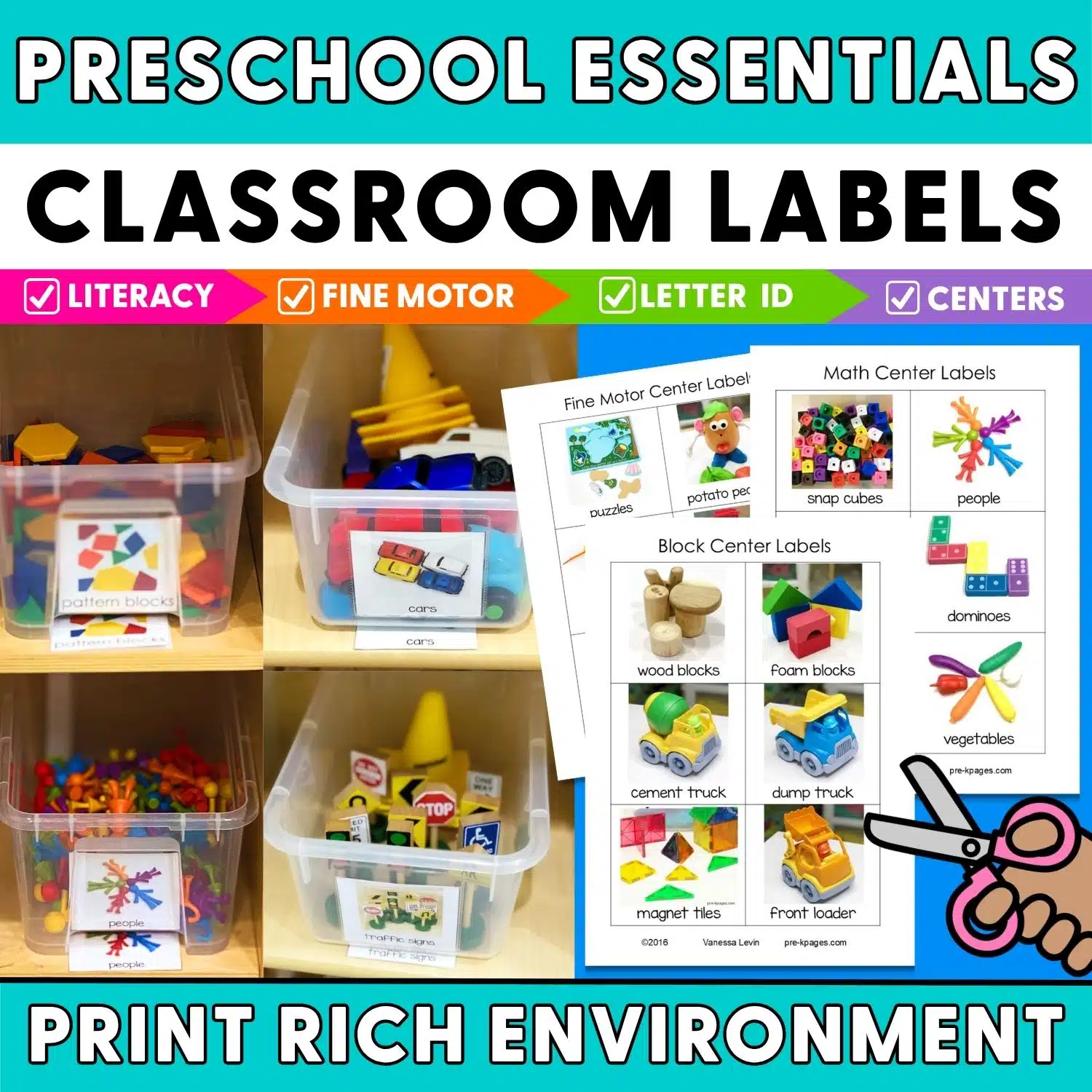
Having a well-equipped, well-organized, and clearly labeled dramatic play center will keep your preschool students engaged in playful learning and on-task for longer periods of time.
So really, what’s not to love?
All right, let’s dive in!
Here’s How to Create Your Own Dramatic Play Center (And Make It a Roaring Success!)
If you’re wondering why your students don’t like going to your dramatic play center, then you definitely need to keep reading!
My own dramatic centers tend to be super high-interest. Why? Because I follow the steps below, which makes sure they’re a roaring success.
Step #1: Stock up on the Right Materials
![[Image quote: “It’s no secret that young children love playing and learning in the dramatic play center.”]](https://www.pre-kpages.com/wp-content/uploads/2022/02/EEC037_quote1-1024x1024.jpg)
Just like the block center — which I talked about in episode 34 —, the dramatic play area is super high interest. That means it gets more use than some of the other learning centers in your classroom.
And this is exactly why the materials you include in this center should be very sturdy. After all, they have to withstand daily, heavy use by all the children in your classroom.
You will also need to choose the materials in your dramatic play center carefully to ensure they’re helping your students learn while they’re there.
Here are some of my favorite things to put in my own dramatic play center:
- Baby dolls
- Books
- Diverse play food
- Dishes, bowls, cookware etc…
- Child-sized table and chairs
- Child-sized kitchen set
- Doll bed & high chair
- Play phones
- Clipboard, paper, pencils
- Dress-up clothing
Most of these materials will stay in the center all year long and never go away, except for when we do the space station theme.
Step #2: Where to Start? This Way!
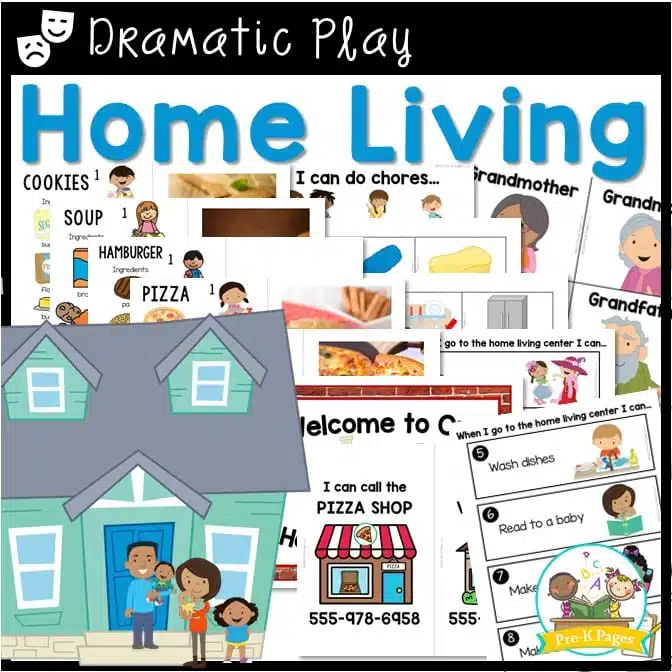
There are a million cute dramatic play themes out there you can choose from, but always remember to start with what’s familiar to your students. Home is the place that everyone knows. Use some familiar items (play dishes) and familiar toys (dolls) to create a home atmosphere.
Outside of home, where have they all been before? What’s a shared experience that they can all relate to? For most children, that’s going to the grocery store.
You could also do a birthday party theme. But you would need to really know your students to be certain that their families all celebrate birthdays, and take into consideration if they’ve ever had a birthday party. For example, for students who experience food or housing insecurity, a birthday party may be a luxury they’ve never had.
Once you’ve had a chance to get to know your students and families, you can branch out and start offering other dramatic play themes you know are relevant to them.
Gradually, you can work your way up to dramatic play scenarios your students may not be familiar with, such as a dramatic play space theme.
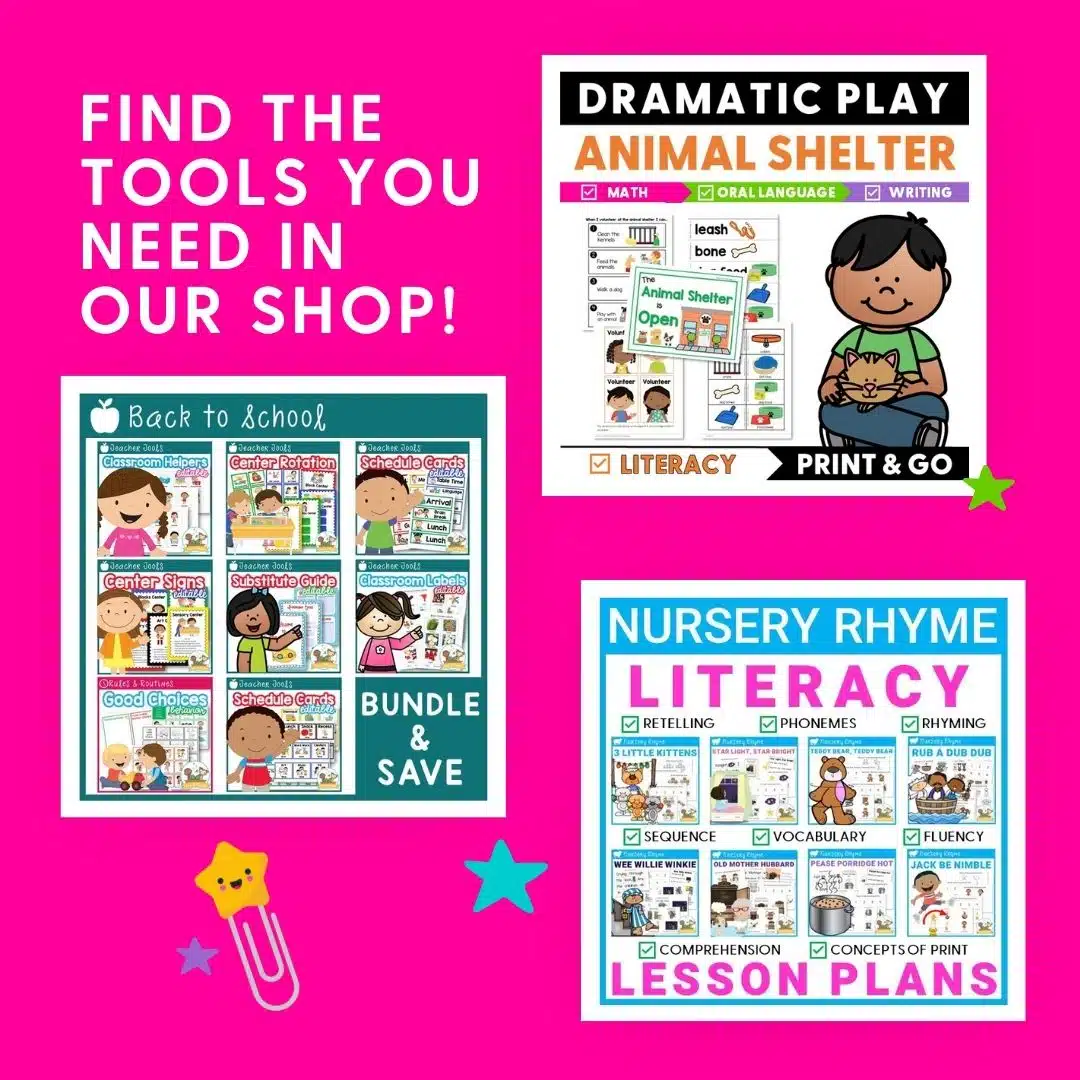
If you need some dramatic play theme inspiration, I offer many themes to choose from in my store here.
Step #3: Enhance Your Dramatic Play Center With Props and Themes
Changing your dramatic play themes will help boost your students’ interest and engagement, develop their vocabulary and oral language, and build their background knowledge.
If you’re wondering how often you should change your dramatic play themes, the answer to that is to follow your students’ lead.
You will also need to take into consideration how often your class meets. For example, if your class meets Monday to Friday, you can change themes about every two weeks or so since they’ve had ten full days to play in the center.
But if you only see your students two to three times a week, then you’ll probably want to keep yours out for a longer period of time.
All in all, follow your students’ interests, and if they seem less into what you currently have in your center, then it’s time to change the theme. If the center is still highly engaging, don’t change it right away. Maybe add a few new props to the same theme to change up the play.
Step #4: Introduce Your Themes Thoroughly
![[Image quote: “Having a well-equipped, well-organized, and clearly labeled dramatic play center will keep your students engaged in fun learning.”]](https://www.pre-kpages.com/wp-content/uploads/2022/02/EEC037_quote2-1024x1024.jpg)
Start by reading a book to introduce a new theme and vocabulary. Then, give your students a “grand tour” of the new theme set-up and show them the new items you’ve added, model how to use them, and where to put them when they’re done.
Step #5: How Much Space Do You Need?
The dramatic play center is one of the most popular centers in any early childhood classroom. For this reason, you’ll want to make sure you have enough space for your students to spread out and really engage in pretend play without being too crowded.
So how much space do you need exactly? This is the tricky part of dramatic play, because space can be a real issue for many classrooms.
I personally like to have as much room for my dramatic play center as I have for my block center, since they’re both super high interest for young children. But, as I said, it all depends on how big your classroom is.
I discuss all of this in more depth (plus share a few more tips on how to keep your dramatic play center tidy) in the video above, so make sure to watch it!
Check out these research-based, playful learning kits in our curriculum shop!
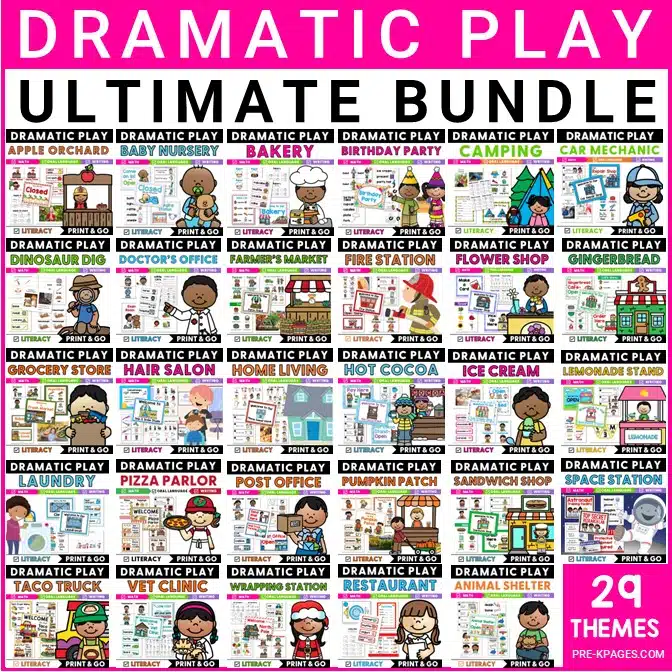
Dramatic Play Power Pack
Bundle of 29 of our bestselling printable dramatic play kits for preschool, pre-k, or kindergarten classrooms.