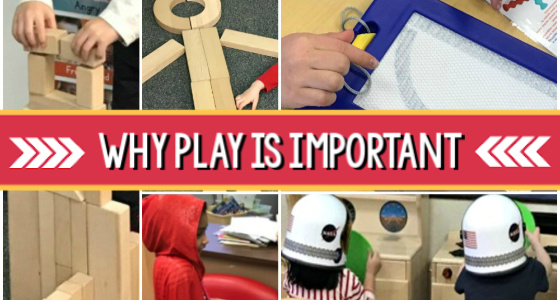


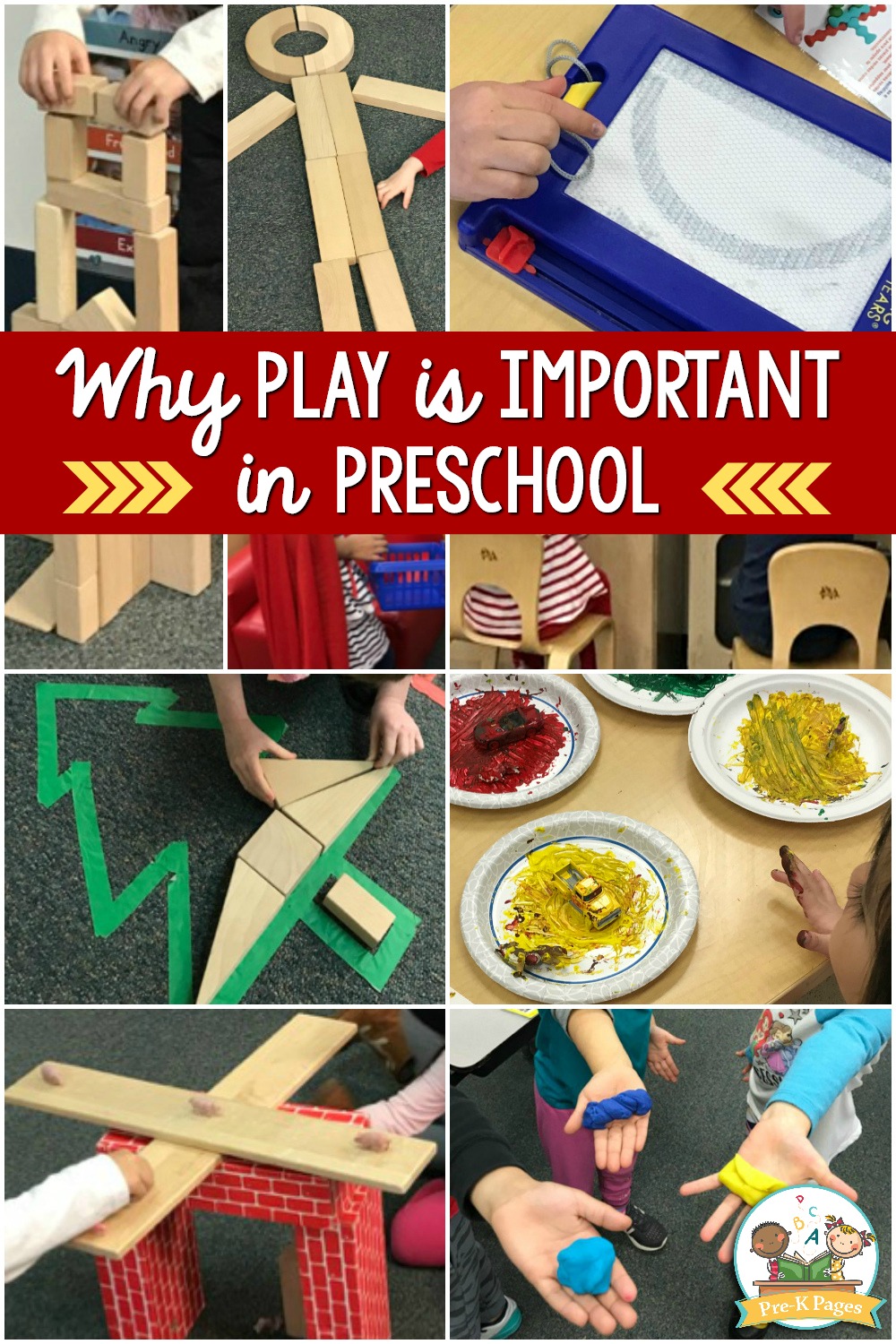
In play time, no preschooler has ever said “I want to make a tall structure. Could you please give a lecture about building construction? Then I want to watch a video of someone making a skyscraper. Next, I’ll draw my design. Finally, after several days, I’ll get around to actually building.”
That method might be acceptable for older learners, in a drafting class. However, it is not how little kids learn. Preschoolers learn by playing.
What Is “Playing”?
Playing is the same today as when you were a child. “Playing” is exploring, experimenting, discovering, running, hiding, chasing, jumping, laughing, blowing bubbles in your milk, having a tea party, and pretending to be a pirate–just to name a few things.
Some of you may be thinking, “but they are just playing. That’s NOT learning.” I want to tell you a not-so-secret secret: Playing is HOW little kids learn.
True play happens when the child is in control of the action. (No, not in control of the classroom. That’s chaos!) A child thinks of the idea and works to put it into practice. While playing a child tries, fails (or succeeds), adjusts, incorporates new ideas, collaborates with others (children or adults), tries again, keeps going until something is resolved.
Why Play Is Important
Expecting a preschooler to learn without involving play is like expecting a bird to learn to fly without flapping its wings. Playing is the way a child tries out his abilities in the world. Play is developmentally appropriate. That means play experiences fit how a child is growing. Play fits the child’s abilities and pushes those to extend those abilities. You are not creating a learning gap with play. You are actually closing that gap.
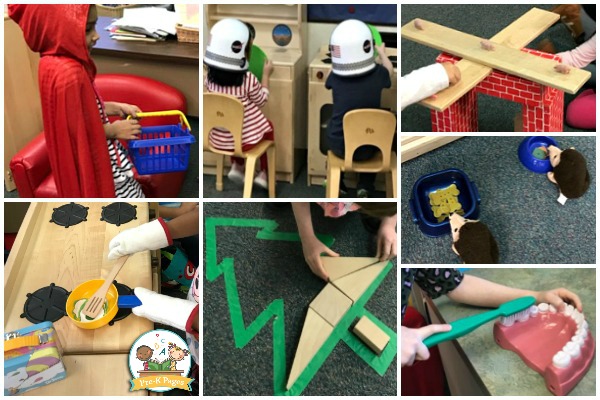
My preschoolers’ favorite item in our dress-up center is a red piece of cloth. They would drape the cloth over their heads. They pretended to be Little Red Riding Hood. I know it just looks like playing – because it is! While playing in this way, they end up retelling the story you read to them earlier. As a group, the kids learn to take turns, increase language skills, discover the main ideas, and learn from each other. Yes, they will need some guidance at first. Gradually, leaders will emerge, assigning roles and making sure everyone gets a turn.
In play, preschoolers can take on different roles. They can begin to understand feelings in relation to different situations. Individually or together, they can make decisions and begin to solve problems. They can explore alternate solutions (different ways the story could end).Their interests and their ideas push learning into other directions – and the teacher does this, too, with comments and suggestions and observations.
Incorporating Play into Daily Routine
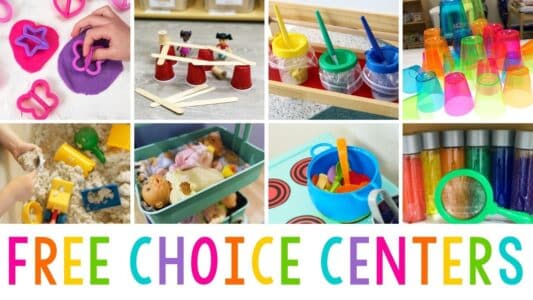
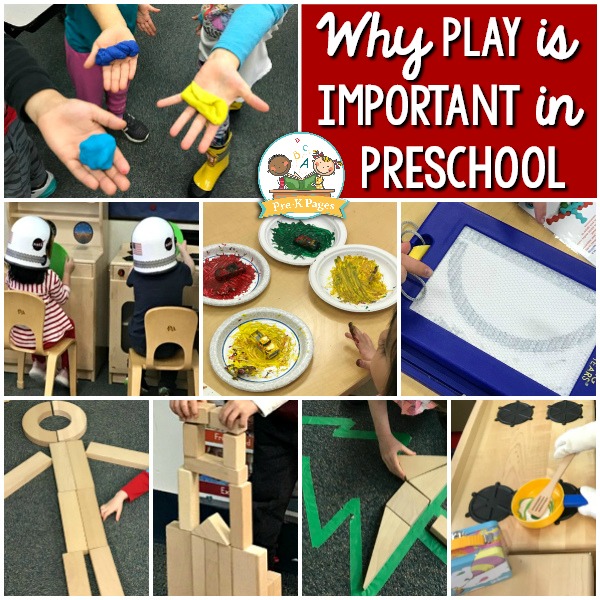
All this type of learning through playing can be implemented in a classroom within centers. Some examples are: blocks, dramatic play, play dough, art, science, library, sensory bins, and outdoor play. In other words, it is everywhere. Playing and learning happen spontaneously in the life of a preschooler. Our job as preschool teachers is to set up the play environment and provide tools for preschoolers’ explorations.
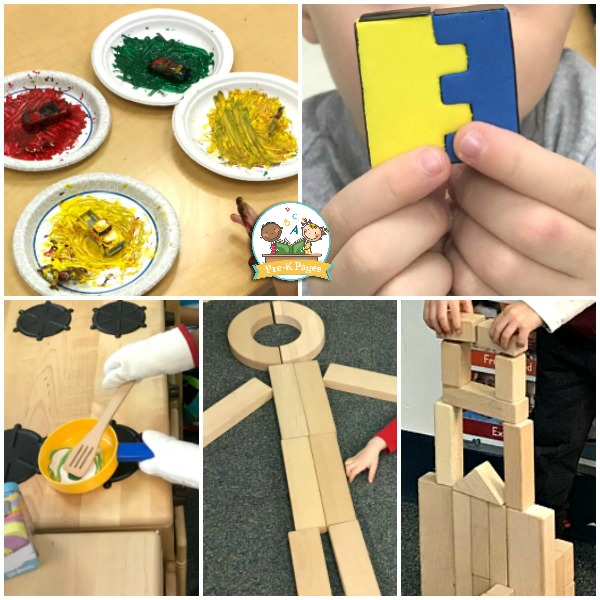
Often teachers may not recognize the learning and development as it happens. For example, play dough is a common activity – enjoyed by children but sometimes not so much by adults. Some may see preschoolers just making a mess and goofing around. While that may be true, more is going on. Before kids can write or even pick up a pencil, they need to strengthen their hand muscles. One way to do this is using play dough. The pushing and rolling of the clay increases strength and stamina, which are needed for things like writing and tying shoelaces, as they get older.
When you allow preschoolers to play, you are building their confidence and establishing a love of learning. Take a look at your classroom. Where can you incorporate more exploration, more playing? Playing is what preschoolers need. Go play! I bet they will teach you how.
Contributed by Carla Goldberg
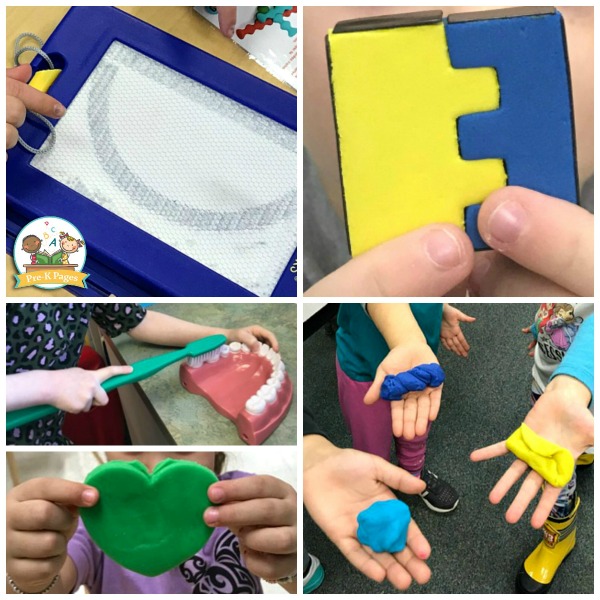
Check out some of my favorite tools for preschool play for different centers and types of learning.
Discover ideas for setting up different learning centers in your classroom.
Free Editable Daily Schedule
When preschoolers have a predictable and consistent daily schedule in place and they know what your expecations are for each upcoming activity, they feel safe and secure and are ultimately more willing to learn.
I’ve taught both full and half-day schedules and I’ve included free editable templates of both types for you here. To have the editable schedules emailed to you, simply fill out the form below.
More Teaching Tips