
Do you feel like all you do is assess the kids in your Pre-K or Kindergarten classroom? Are you an assessment machine?
Are your kids missing out on fun while you’re drowning in paperwork?
I thought so! There are ways to streamline assessment and make it so much less time-consuming, keep reading to learn how.
Why do we even do assessments?
Assessment is gathering data to understand what students know and don’t know. This data is very important for guiding instruction. When you know what students know and don’t know, you can tailor your lesson plans to support and guide. You need this information to effectively plan what to teach. This data also helps you form small groups and differentiate instruction to meet the individual needs of your learners. After all, each child is in a different place, right? By knowing where they are, you can be a more effective teacher for all your students.
What do I assess?
You may work in a program or school that already has established what needs to be assessed. The program or state has already created a form or list for assessment. If this is you, you’re ready to go. You know what to assess and can move along to the how.
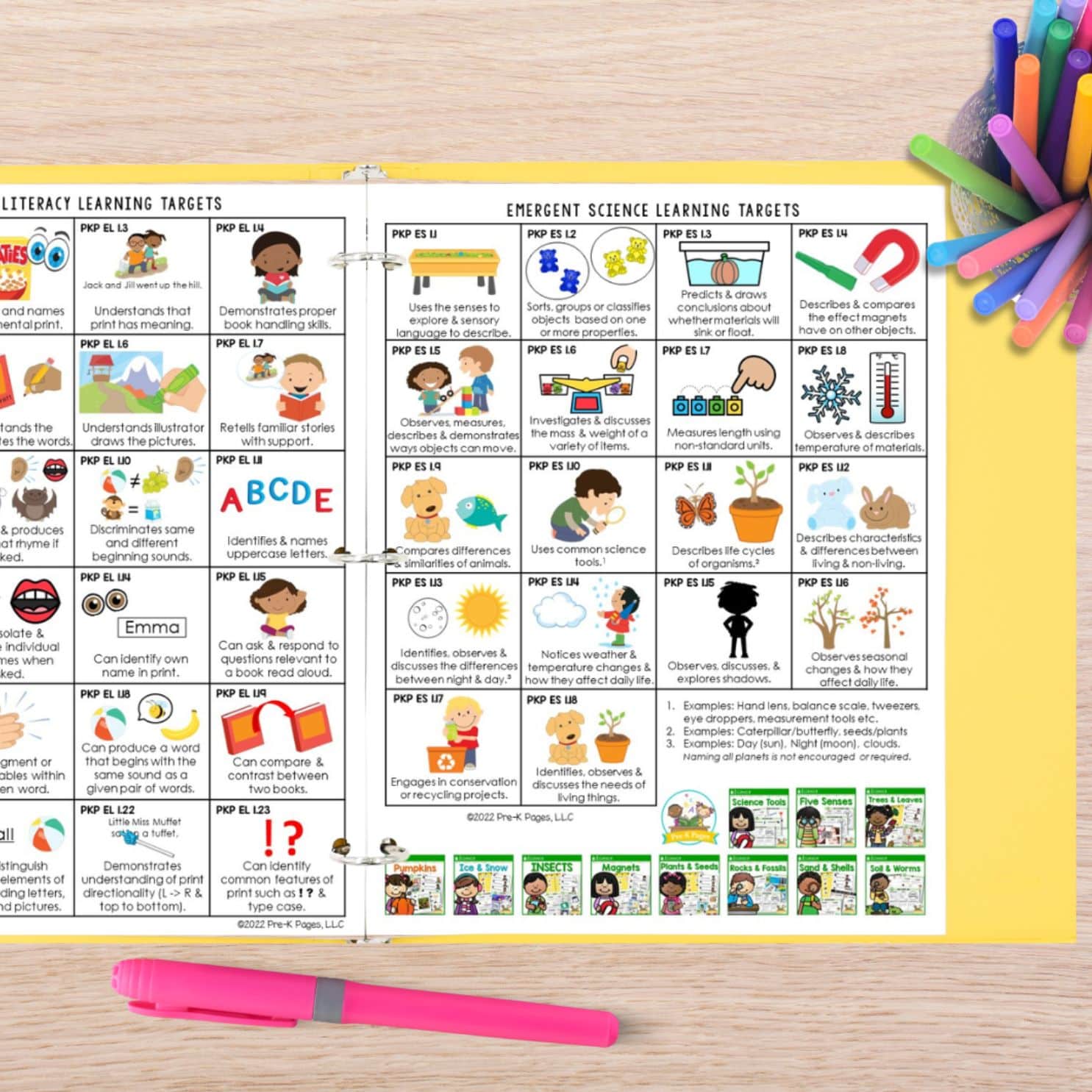
But what if that’s not you? I get this question all the time – what should I assess with my students? What should my kids be learning? First, check with your state. Many states have some learning standards in place for pre-kindergarten. Also check state childcare guidelines for your age group or the national Head Start guidelines.
And you can check out our standards. We reviewed the pre-K standards in all the states and identified the most common age-appropriate standards for four-year-olds. Then we created a set of standards as a guideline for our curriculum and teaching. You can download the standards here as a guidelines for your assessments. These standards will apply to any preschool classroom, not just ones using the Trailblazer curriculum. Trailblazer Standards
How do I prepare for assessments?
I’ve worked with teachers who say that assessments take too long. But when it’s time to do assessments they walk to their desks and get a pen. Then they walk to where paper assessments are and flip through to find the one they need. Then they grab a book from the shelf and a few other things they need. And the seconds are just ticking away before they even start.
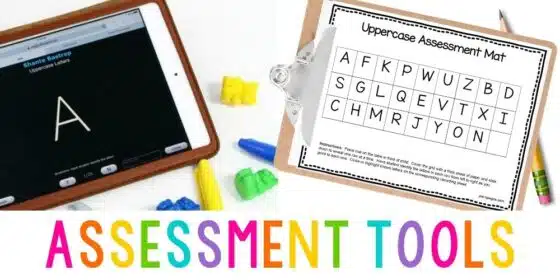
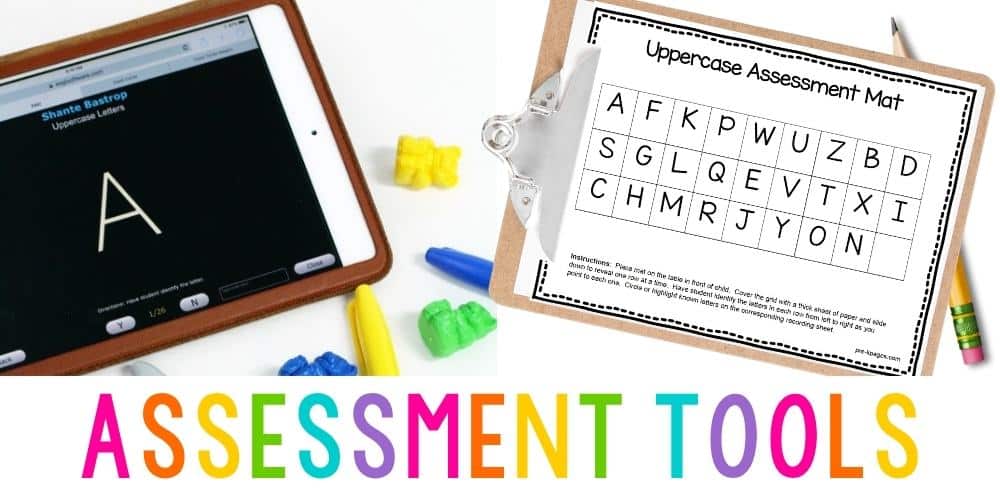
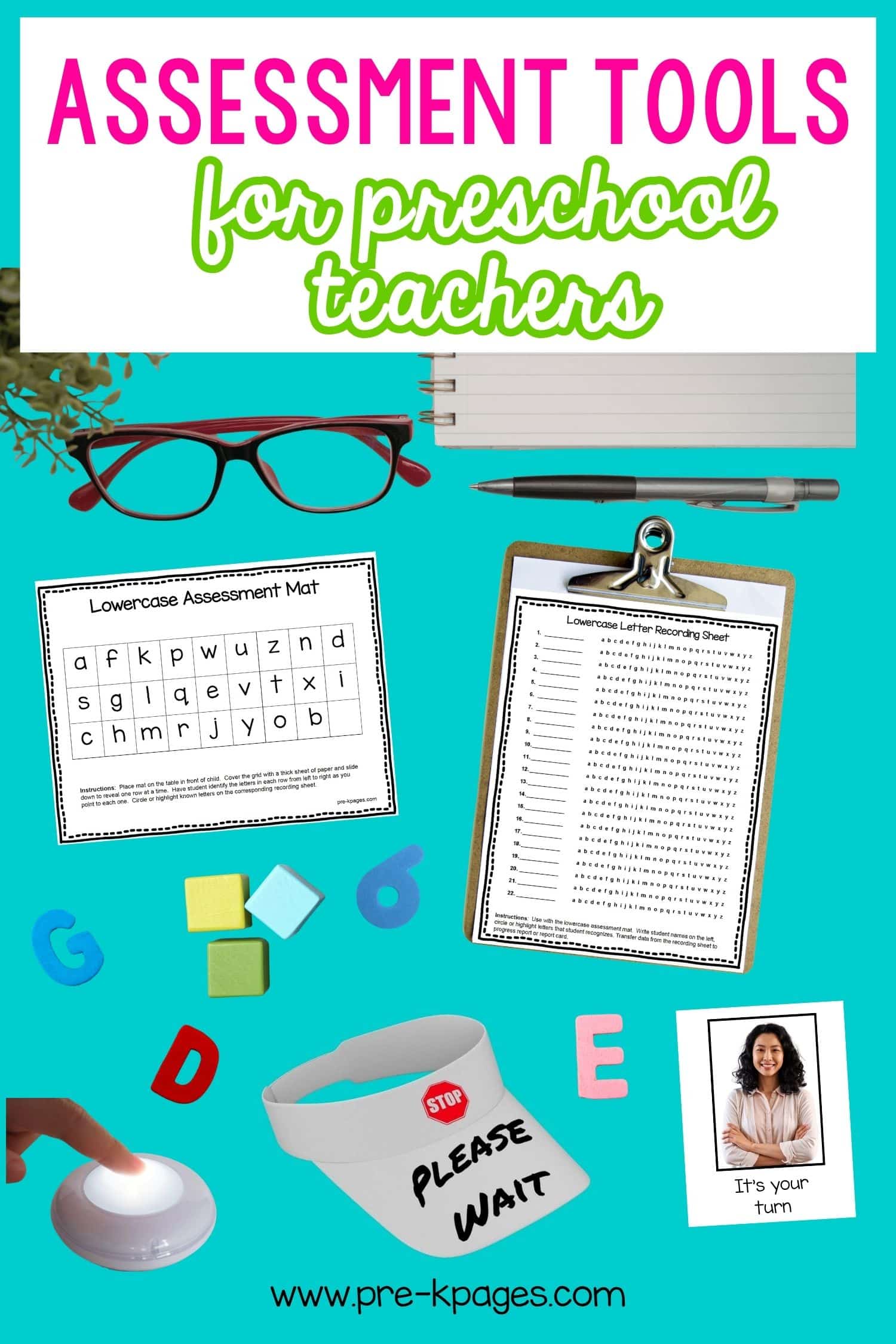
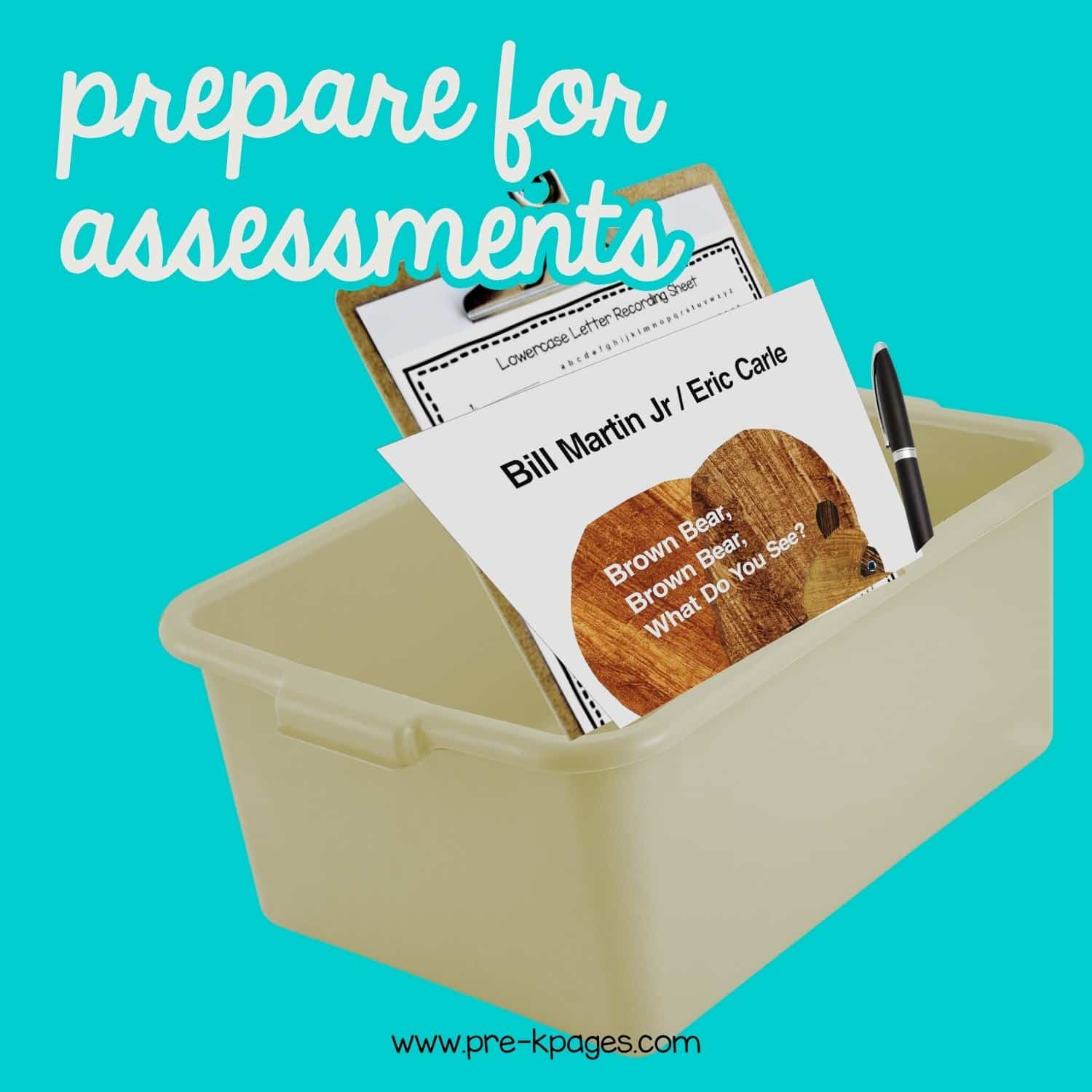
So, we’re going to gather all those resources ahead of time in a tub or basket. Then, when it’s time for assessments, it’s grab and go! I have a different clipboard for each different assessment. So in my tub is the clipboard I need for today’s assessment, a pen, and any other items needed related to that assessment. And I can get started right away when assessment time arrives!
Check out our Assessment Bundle for paper assessment tools – ready to print and use!
How can I make assessments go faster?
The best way to make assessment faster and more efficient is to have a system in place. Systems save time. The best system I’ve discovered is continuous ongoing assessment. I think we can all agree that young children and assessments don’t always mix well. Since they have short attention spans, it makes sense to break down assessments into smaller bite-sized chunks. Keep it short and sweet and have multiple testing sessions for each child.
Take a selfie on your phone, print, cut, and glue to a square piece of colorful posterboard. Laminate the square and then explain how it works to the kids. As you finish assessing a child, you give him or her the colorful square with your picture on it. Tell that child to give the square to the next child on your assessment list. Teach the children that as soon as they receive the square with your picture they should come to you immediately. This will eliminate the extra time it takes to “wrangle” kids over to you and will also cut down on noise.
How do you keep other kids from interrupting?
Do your assessments seem to take FOREVER because your kids are always interrupting? You’re not alone! Here are a couple quick tips you can use to let kids know when you’re testing.
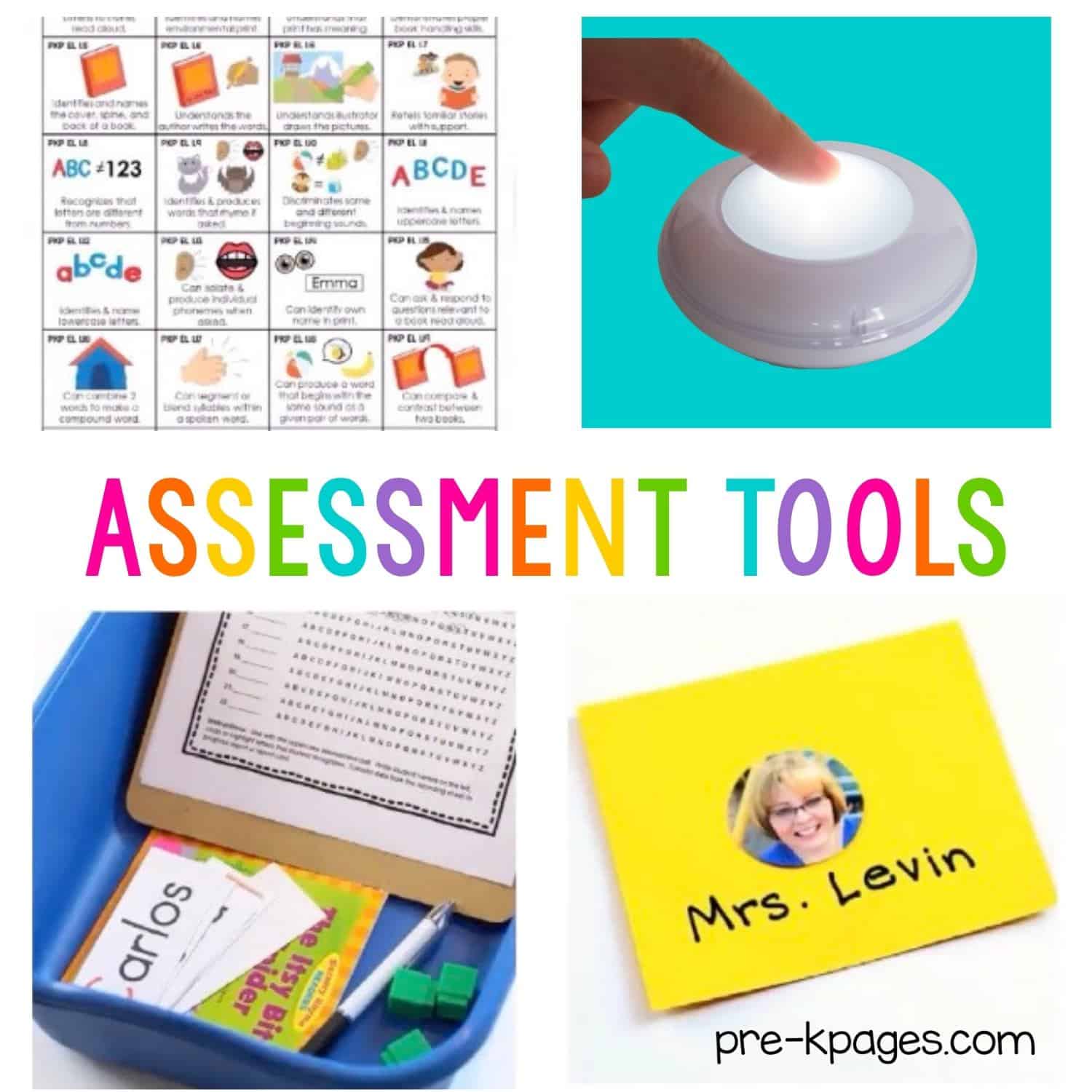
1. Closet Light: Closet lights, or push lights are a common fixture at most dollar stores. These little lights are battery operated and can be found in many different fun shapes like stars, moons, and smiley faces. The next time you’re at the dollar store, grab a closet light. Next, place the light on the table in front of you when you’re assessing. As each student comes over to be tested, invite them to push the light to turn it on. Also invite the child to turn it off when they leave too. Turning the light on and off is fun for kids and can be used as motivation to come over quickly when it’s their turn. Explain to the other students that when they see the light on, that means they can’t interrupt you. When the light goes off, they can approach you.
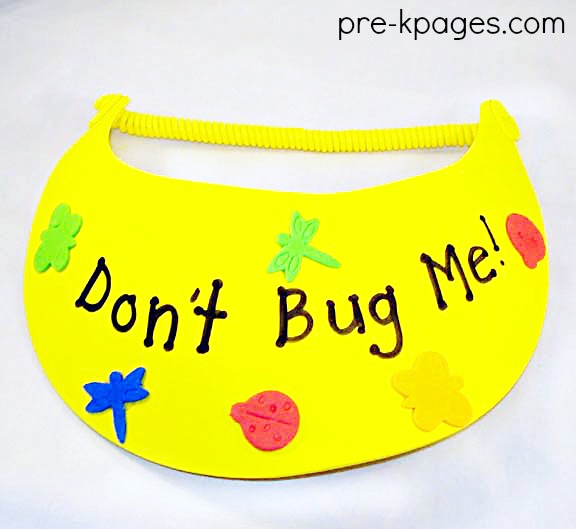
2. Bug Hat: Get a cheap foam visor from the dollar store. Decorate the visor with bug stickers or draw simple bugs on the hat with a permanent marker. Whenever you’re assessing, wear the hat. Explain to the kids that when you wear the hat it means “don’t bug me” and they may not approach you. Of course, you will want to teach plenty of problem solving skills first before you introduce the hat. Have a plan for who the kids can ask if they have a question or need help.
Also make sure you have a plan for what the kids are doing while you are assessing. If you have an assistant, she will be in charge of the rest of the group. Place out several familiar games or activities for kids to do. Especially ones from the beginning of the year that may have been put away for a while. You want familiar and not new activities to cut down on questions or noise levels that come with new things.
How to Get Your School to Pay for ESGI
Using a digital assessment tool like ESGI on your computer, tablet, or smartphone to assess your students makes assessment so much easier. It speeds up the assessment process, making it quick and easy to get your assessments done. Did you know that ESGI saves teachers about 400 hours a year? That’s the equivalent of 67 full days of teaching. 67 full days is more than a third of the school year. What could you do if you had 67 extra days to teach your students?
Everybody thinks public schools have no money, and the truth is, they don’t have money for most things, but they DO have money for certain things, like assessment tools.
I created this free fact sheet if you would like to use it to help you introduce ESGI to your administrator(s).
Because a big part of ESGI is parent communication, Title 1 districts can use these funds to pay for ESGI. The professionally written, personalized letters in English or Spanish that ESGI instantly generates are the perfect way to keep parents informed of their child’s progress!
Need to differentiate or individualize instruction for your kids? With ESGI you can print personalized flashcards specific to each student with just one click of a button!
Do you need to analyze your data quickly and figure out who knows what? ESGI instantly generates charts and graphs to highlight gaps and trends in your data! These charts and graphs are perfect for taking to PLCs and for creating your small groups.
Use code PREKPAGES and try ESGI FREE for 60 days! If you like it, the same code will get you $60 off your first year too!
More Teaching Tips from Pre-K Pages