
So here it is- the chapter I’ve been waiting for! Chapter 19: Learning About Letters and Words is the chapter that inspired me to host the Literacy Beginnings book study blog party. If Literacy Beginnings was a summer blockbuster movie chapter 19 would be the car chase scene, so fasten your seat belts!
Throughout the book we have discussed the many important facets of literacy learning and how they are all vital pieces of the early literacy puzzle. On the top of page 185 the authors finally point out the elephant in the room. Oh no they didn’t! Oh yes they did! Feast your eyes on this little gem below:
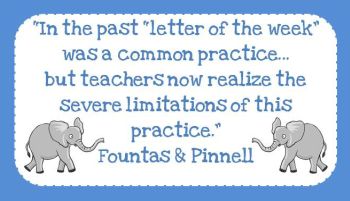
It’s never been a secret that literacy research doesn’t support the “letter of the week” philosophy, but what makes the author’s statement so powerful is that nobody at this level has ever said it so bluntly before. Bravo Fountas and Pinnell, bravo!
“Letter of the week” suggests that letters are learned first (and in sequence) and then children learn to read, when in reality all of this learning is taking place at the same time. The more connections children make between the multiple understandings required to read, the faster they learn (letters).”
Experiences with Letters
They also discuss the importance of noticing the distinctive features of letters, or visual discrimination. Young children need many opportunities to interact with letters and learn the shapes of each letter before they can identify them quickly.
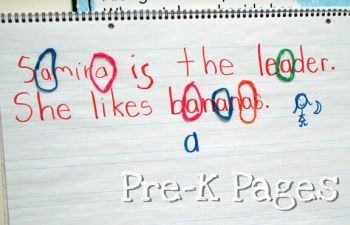
One activity to practice distinguishing the differences between letters is “letter detectives”. We pretend to be “letter detectives” during our daily morning message time. I ask one child to come up and use a large magnifying glass to find a particular letter in our message.
First, I draw the letter in large print on chart paper and talk through the letter formation as I go. For example, “The lowercase g is a circle with a hook at the bottom to catch fish! Do you see the hook?”
I provide the child with highlighting tape or Wikki Stix to mark the letters he finds in the message. If he selects an incorrect letter I might say, “Let’s look at that letter more closely.” Then I compare the similarities and differences between the two letters and help guide the child to the correct letter while remaining positive and encouraging. If he continues to make the same mistake I prompt with “Let’s look again” while I talk through the similarities and differences again.

One way to expedite letter learning is to provide activities that incorporate seeing, hearing, speaking, and doing. Three activities that I have found to be fun, appropriate, and highly effective are sandpaper letters, letter roads, and HeidiSongs.
- Sandpaper Letters: You can add red and green dots to the sandpaper letters to indicate start and stop positions and draw arrows to reinforce proper letter formation. When you combine seeing the letter, touching and feeling it, and saying the name or sound of the letter all at the same time it becomes a highly effective learning experience.
- Letter Roads: These don’t have to be store bought; you can download a free paper version from Making Learning Fun. Add colored dots to the paper letters and laminate for durability. Students use small cars and drive across the surface of the letters. This activity helps develop visual and muscle memory in the brain.
- Heidisongs: Singable Songs for Letters and Sounds incorporates a movement and song for every letter. The children see the letter formed on the screen, hear and sing the song, and make the motions. These songs work well for all types of learners.
The salt trays Eilis shared in chapter 17 provide another great tactile learning experience.
Letter Charts
On page 404 the authors share their letter chart for you to reproduce and use in your classroom. I copy the charts on cardstock, laminate, and place in each child’s writing folder. I also place a copy in their B.E.A.R. books along with a note to the parents explaining how to use them.
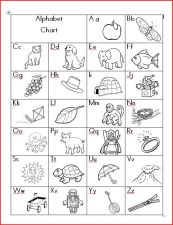
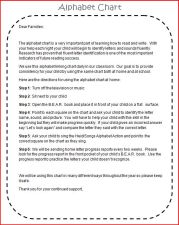
This chapter also mentions the importance of alphabet books in the classroom library and a list of suggested titles to include.
What are your thoughts on Chapters 19? Leave a comment below! If you write a response on your blog, be sure to link up to the Linky party.
Are you tuning in late? No worries! Matt from Look at My Happy Rainbow has graciously started a guide with links to all the chapters! Not sure what’s going on? Check out the Literacy Beginnings FAQ for answers.
Chapter 20 will be hosted by Deborah from Teach Preschool so stay tuned!
Want to let your friends know about the book study blog party? Click “Like” at the top of this page or choose from other social media options below.