

What do you enjoy in the art center? What do your preschoolers enjoy? An indispensable part of my classroom has become my easel. We usually just paint there, but easel painting is anything but “just” an activity for preschoolers. They can develop some great skills by regularly painting at the easel.
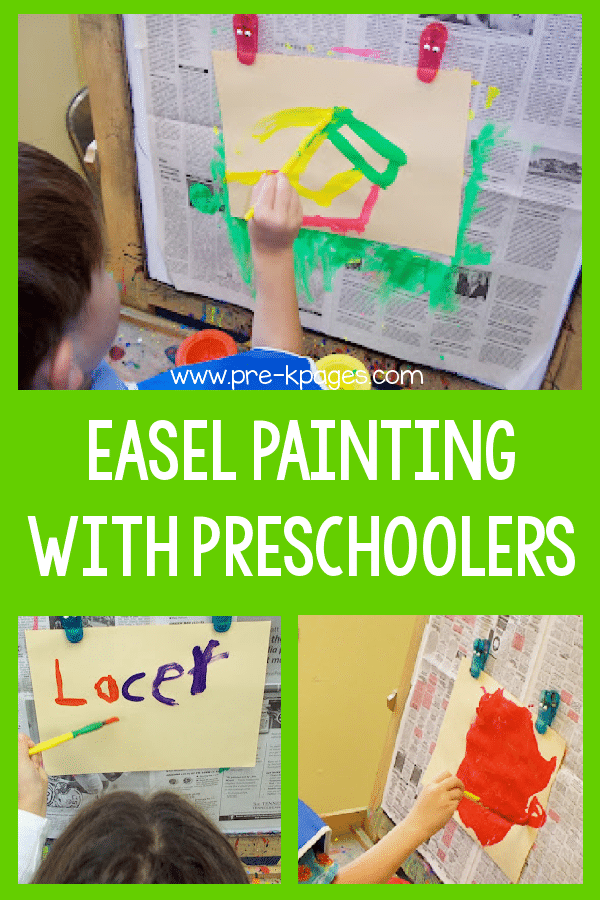
Easel Painting Is Literacy
Painting develops literacy skills. Preschoolers make marks on a page to show their ideas or thoughts. They think of an idea or a movement or an object. Then they paint to communicate what they are thinking. Preschoolers begin to understand how symbols can stand for other things–this is a house and this is me. They are learning that other people can look at the lines and circles they create and get meaning from them. These foundational understandings help prepare them for understanding the marks in a book are words that stand for something else. And, as the children grow, they understand that they can make letters to create words for others to read.
Easel Painting Is Social-Emotional Learning
When painting at the easel, preschoolers can develop responsibility. Our preschoolers learn to put on a smock before painting. While getting messy is a part of learning, we can minimize mess on clothing by using smocks (and we learn to be responsible for protecting our clothes). Our preschoolers also learn that paint goes on the paper and not the clips, easel frame, or tops of the paint cups.
Painting can provide a great emotional outlet. A child who wants to work alone can find the easel a welcoming place. A child can use the easel to express whatever emotions he’s feeling, with large movements or small ones, fast movements or slow ones.
Since easel painting is limited to one child (or two if you utilize both sides), preschoolers learn patience and delayed gratification. If a child wants to paint but someone else is already there, she must wait for her turn. Many experiences in the preschool classroom contribute to this lesson, but easel painting can support learning to wait (which is one of the most difficult things for preschoolers to do).
Easel Painting Is Motor Development
Preschoolers need to work on both vertical surfaces and horizontal surfaces to develop gross motor and fine motor skills. A vertical surface allows the children to stand while working and to work on a surface at eye level. A larger area to work allows them to use larger movements to paint. They can develop more control over the marks they make, learning to control the brush movements to make just the mark or shape they want.
They develop stronger coordination between the eyes (where they are looking) and the hands (where they are painting). As they paint across the page or up and down the page, they are crossing the midlines, developing more body awareness and brain connections.
Tips for Set Up
We’ve explored the why of easel painting; let’s look at how we can paint smarter!
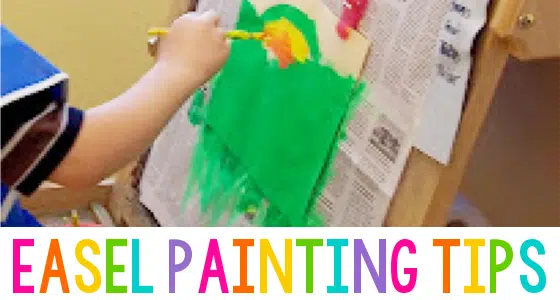
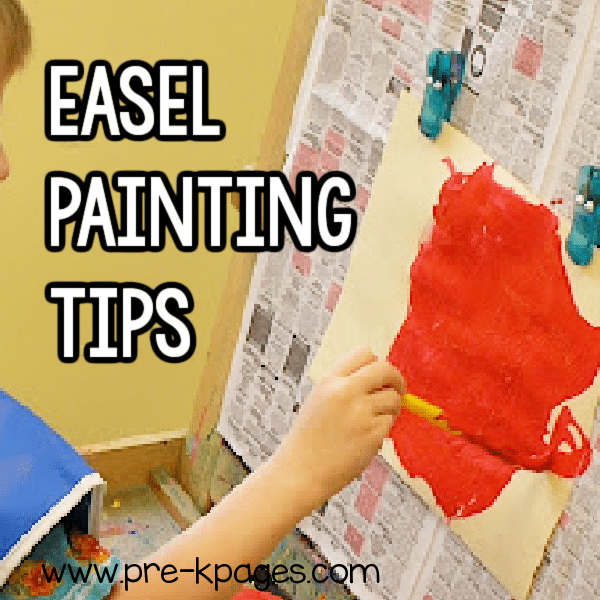
Cover the easel. We use newspaper or other scrap paper over our easel surface. While the easel has a washable surface, we discovered that we had to wash it after each painter. When the easel is covered, we don’t have to clean the surface. Any paint that escapes the page is on the scrap paper and dries more quickly. We have much less trouble with residual wet paint that transfers onto the next blank page we put on the easel. A covered easel means we can remove a painting and add blank paper much quicker. This is important when impatient painters are waiting.
Plan a place for wet paintings to dry. Sometimes paintings will need a while to fully dry. Make sure you have a place for these to go and a plan to get them from easel to drying space. You could use a drying rack or a countertop, but make sure you have enough space for all the wet paintings that may be generated (especially when the easel is first available).
Tips for Paint
Limit color choices with new painters. At the beginning of the year, you may want to provide only one color. Use paint cups with lids, so at the end of the day you can seal the paint and put it out again the next day. You can use the same color for a couple of weeks before changing to a new color. Limiting to one color allows preschoolers to focus on technique – tapping the brush to remove excess paint, moving the brush and applying the right pressure to make marks, and so forth. As our painters become more experienced, provide 2-3 colors regularly.
Experiment with color. Sometimes, instead of different colors, offer different shades and hues of the same color. This is easy to do without purchasing lots of different colors. Put the same color in three paint cups. To one paint cup, add white paint, making a lighter version of the color. To another cup, add some black, brown, or blue, creating a darker version. Using different shades and hues encourages different types of color exploration.
A Couple of Additions
Provide inspiration. Near the easel or on the upper corner of your easel, tape a picture or a word card for kids to see as they paint. Include something that connects to your classroom theme or the current season. Some kids all use it to inspire work and others will not use it at all. But with the picture or word there, opportunities arise for conversation and can stimulate further thinking.
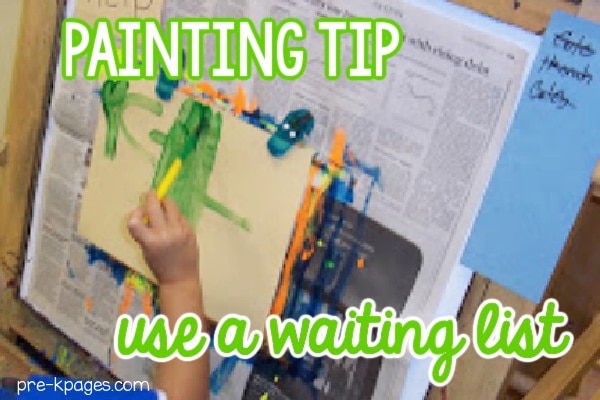
Add a waiting list. When the easel becomes really popular, tape a piece of paper beside the easel. Introduce the waiting list and lead children to write their names on the list to be next. (Or you may need to write it.) Or make a set of name cards for the easel with a clothesline or clip board for children to clip their names on the wait list. Then kids make another choice until the easel is available.
When someone finishes painting, ask the next child on the list if he is ready for a turn. If so, he move to the easel. If not, skip his name and go on to the next one. This prevents a line of kids waiting or a teacher’s brain from trying to remember who is next. And waiting kids can check the list to see how long until their turn.