




Pincer Grasp Activities for Preschool
Developing good fine motor skills is an important part of any high-quality preschool program. The pincer grasp is just one of those skills. These fun activities will help preschoolers practice their pincer grasp in playful, hands-on ways.
What is a Pincer Grasp?
The pincer grasp is the ability to use the thumb and pointer finger together to grip small items. This is a key milestone in every child’s development.

Why is the Pincer Grasp Important?
The pincer grasp is an important skill for developing fine motor skills, self-help skills, and dexterity in the hands. This motion is also essential for developing good handwriting later.

Pincer Grasp and Self-Help Skills
Developing a great pincer grasp can significantly enhance a child’s confidence in performing daily tasks independently.
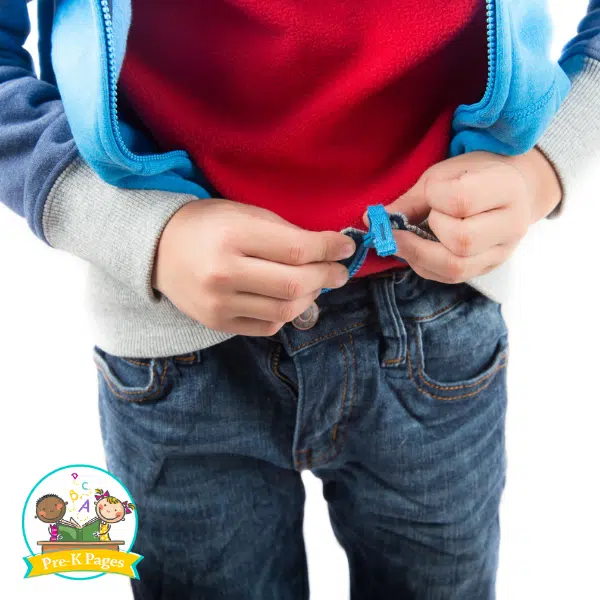
This motion is important for developing self-help tasks and life skills such as:
- Zipping
- Buttoning
- Tying
- Eating independently with utensils
Pincer Grasp: School Readiness
Without the ability to button their own pants, zip their own coats, open a milk carton at lunch, or even feed themselves – young children will struggle at school.
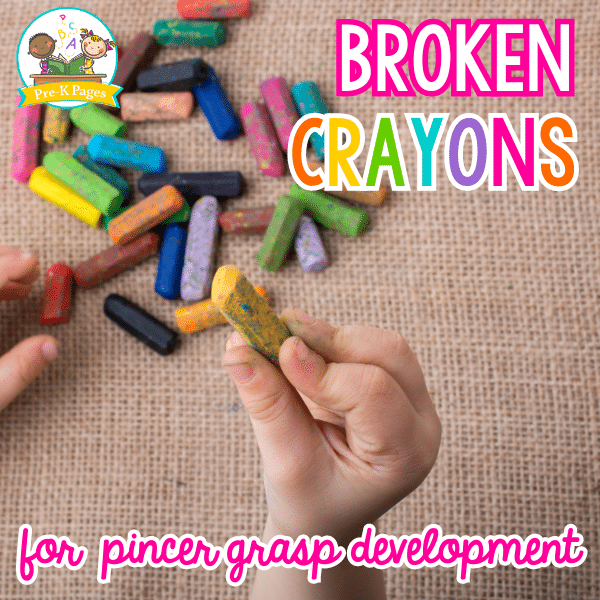
These skills will also prepare kids to hold a pencil and a crayon, which will eventually lead to better handwriting.
It is in every child’s best interest to develop their pincer grasp skills at the preschool age for a successful experience both in life and in school.
Pincer Grasp and Handwriting Skills
Teachers and parents often struggle to get young children to use their thumb and pointer finger to hold a pencil correctly.
To help kids improve handwriting, you can provide fun opportunities for them to practice using their pincer grasp at home or in the classroom.
Engaging Pincer Grasp Activities for Toddlers
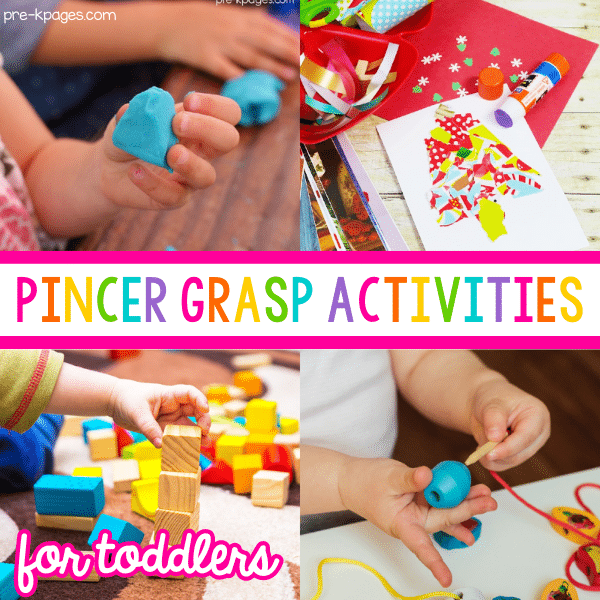
Playing with Blocks and Lego: Encourage your kids to pick up and place Lego pieces together or stack blocks in the block center. This not only strengthens their pincer grip but also boosts their creativity and spatial awareness.

Using Play Dough: Young children love to squish, roll, and pinch play dough. These are also great ways to strengthen the muscles needed for a strong pincer grasp. Invite children to form small balls or shapes using their thumb and index finger in your play dough center.

Tearing Paper: This activity may sound silly at first, but your kids’ eyes will light up with excitement when they’re invited to pinch and tear paper. They’ll think they’re playing and having fun, but they’re actually developing that important pincer grasp.
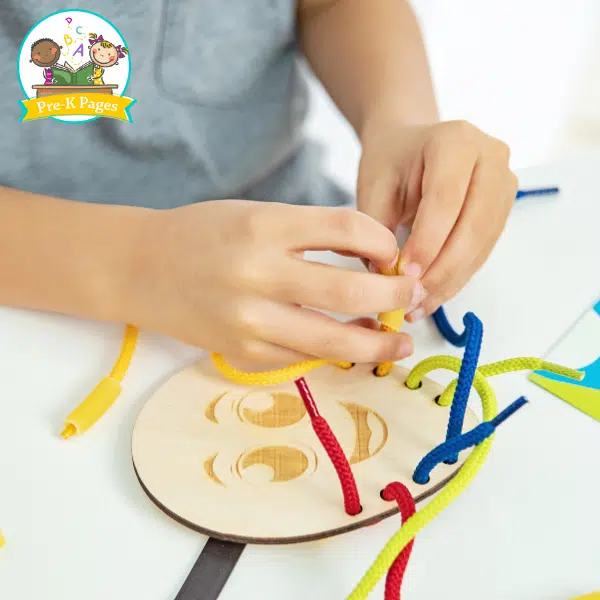
Pincer Grasp Activities for Preschoolers
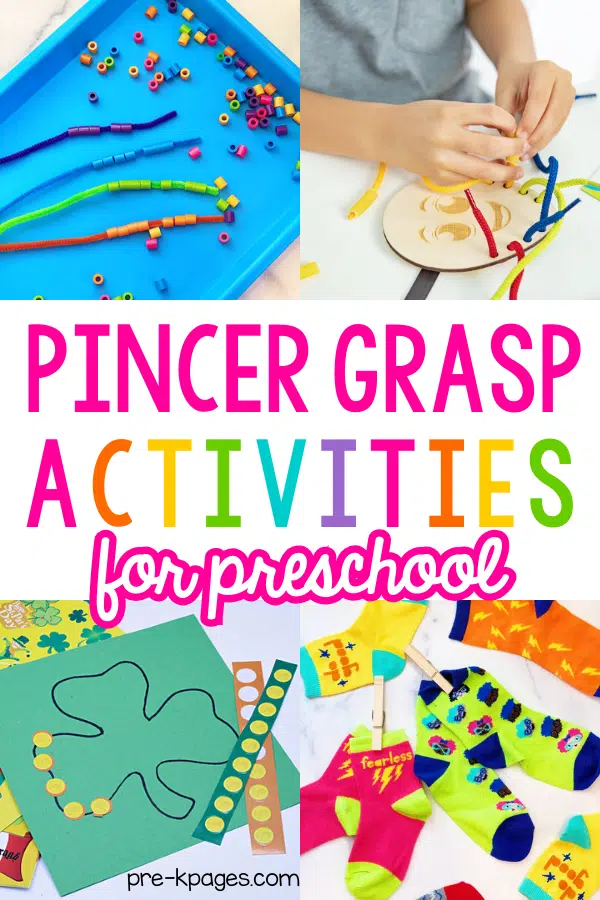
Lacing Cards: Threading strings through lacing cards is a fantastic way to improve hand-eye coordination and fine motor skills. It requires children to use their pincer grasp to hold the string and thread it through small holes.

Lacing Large Beads: Another fun pincer grasp activity is to thread large beads on a string.
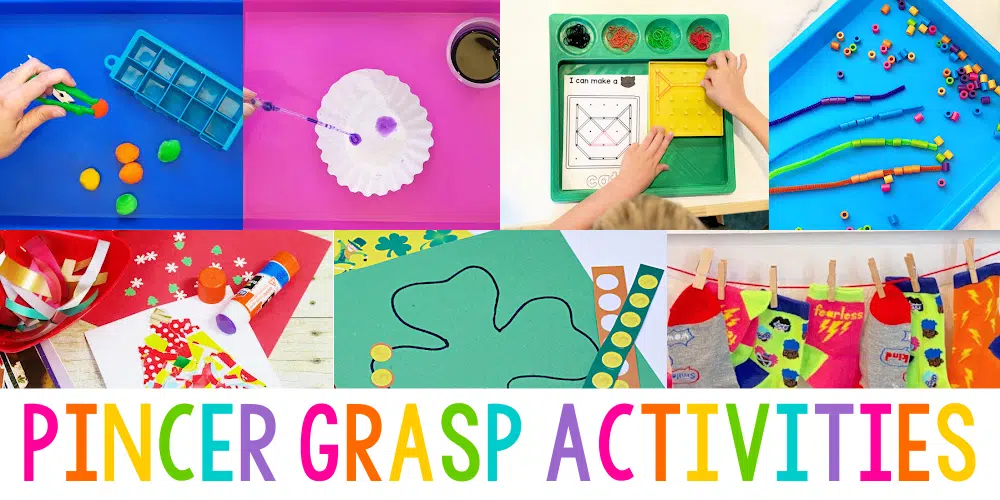
Pom-Poms and Ice Cube Trays: Invite your children to use tweezers or tongs to pick up pom-poms and place them into the compartments of ice cube trays. This activity is great for developing precision in the pincer grasp.
You can also invite children to sort different colored pom poms into a muffin tin using tweezers or tongs.

Eye Droppers: Squeezing eye droppers to transfer water is a fun science activity. This activity also helps improve coordination and concentration while practicing precise control of the pincer grasp. Add these to your water table or science center and let the fun begin!

Pipe Cleaner Activities
Pipe Cleaners and Colanders: Kids can poke pipe cleaners through the holes of a colander. This is a fun activity that also helps in improving the coordination between the thumb and pointer finger.

Pony Beads and Threading: Threading pony beads onto pipe cleaners or strings can be a captivating activity for kids. It encourages concentration and uses the pincer grasp for picking up and placing the beads.
Of course, pony beads pose a choking hazard so please supervise children closely when using them.
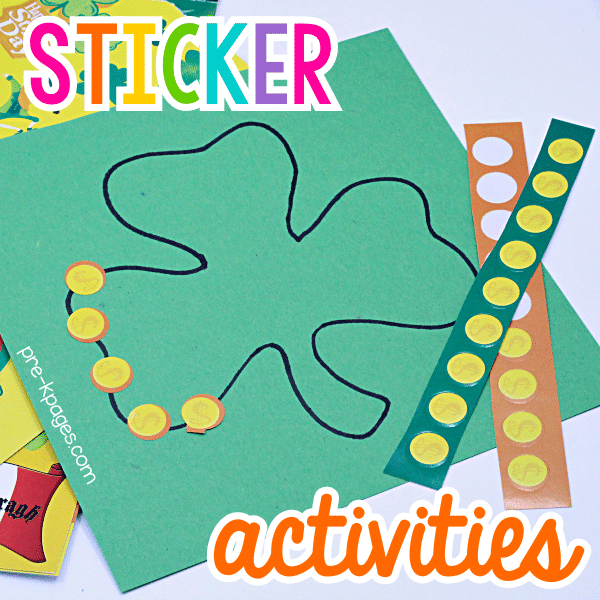
Fun Pincer Grasp Activities
Stickers: Your kids will love pinching and peeling stickers off the page and putting them on paper. This simple sticker activity helps with grip strength.
Wind-Up Toys: These toys help kids practice using their thumb and index fingers to wind them up, improving their grip strength in a fun way.
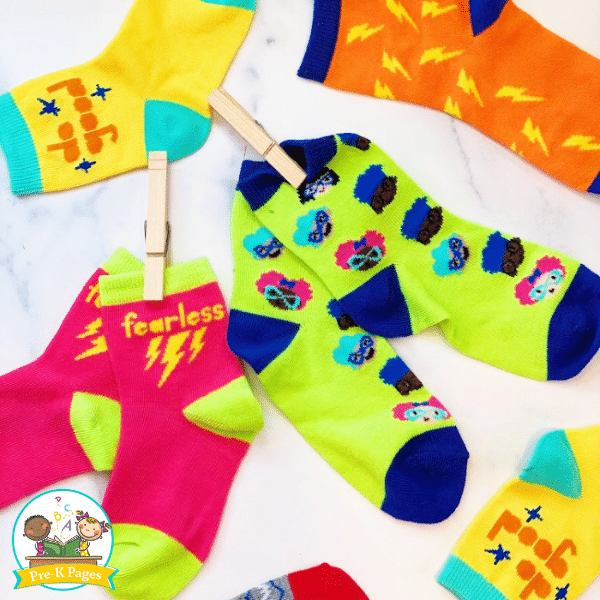
Clothespin Activities
Using Clothespins: Use clothespins to practice fine motor skills by clipping them onto containers or cardboard edges. It’s a fun way to improve pincer grasp. This activity also introduces the concept of pressure control.
Inviting children to clip together matching pairs of socks with clothespins is another fun way for your kids to practice.
One meaningful way to get kids to use spring-loaded clothespins is to invite them hang up laundry in your pretend play laundromat center.

Tongs and Tweezers: You can make fun activities for kids by having them use tongs or tweezers to pick up small items. Using tools like tongs or kid-friendly tweezers to transfer objects can improve fine motor skills.
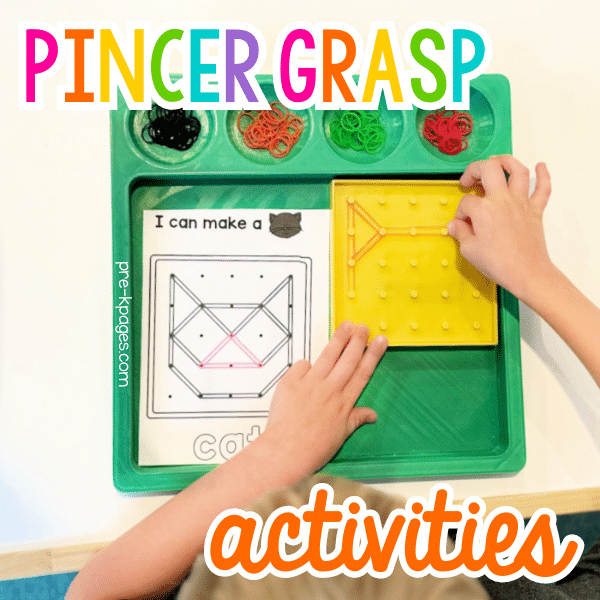
Geoboard Fun: Creating shapes and patterns on a geoboard with loom bands involves stretching and pinching. Geoboards are excellent for fine motor development and pre-writing skills.
Benefits Beyond Fine Motor Skills
The activities listed above not only develop the pincer grasp but also enhance other skills. For instance, playing with blocks and Lego can spark creativity and problem-solving.
Using play dough and participating in process art can ignite little imaginations and artistic skills.
These activities promote the development of fine motor skills, preparing children for more challenging tasks like dressing, eating independently, and eventually handwriting.
Tips for Encouraging Pincer Grasp Development
Incorporate Variety: Use a wide range of materials and activities to keep children engaged and challenged.
Focus on Fun: Make each pincer grip activity enjoyable. If children are having fun, they’re more likely to participate and benefit from the exercise.
Progressive Difficulty: Begin with simple activities such as play dough. Once the child becomes more skilled, progress to more challenging tasks like using clothespins.
Everyday Opportunities: Parents can help children practice using their fingers by having them pick up utensils or help with chores at home.
Developing a pincer grasp is an essential milestone in a every child’s growth.