


Today’s post is written by our guest, Dayna of Lemon Lime Adventures
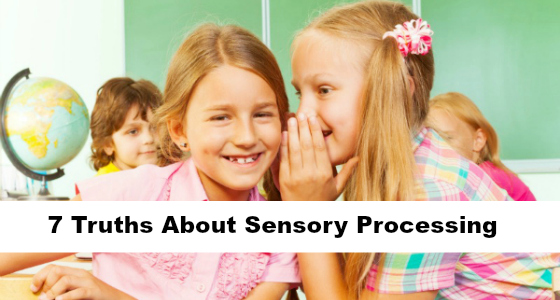
Teachers have a tough job. No doubt about it. Day in and day out, teachers are asked to love, nurture, and educate children that are not their own, and most teachers take that challenge on whole-heartedly. Unfortunately, teachers are not always equipped with the knowledge they need to meet the needs of all of their students. These 7 truths every teacher should know about sensory processing could be the key to unlocking many doors for teachers and their students.

7 Sensory Processing Truths
When I talk with teachers about sensory processing, I usually hear the one or more of the following phrases:
- I had A STUDENT with that once.
- I don’t understand, what is “sensory processing”?
- Our “sped teacher” should know about this…
When I was in the classroom, I would have said the same thing. Now, I know more about sensory processing. Examining these 7 truths about sensory processing can help teachers and parents better understand sensory processing and what they can do to help.
1. There Are More than 5 Sensory Systems
Mind blown! Really, when I learned that I was missing some important sensory systems, I was shocked! Why in the world didn’t anyone tell me that the students I was teaching learned using more than 5 senses?
Scientists have identified several senses beyond the 5 senses we all know and recognize (sight, touch, taste, smell, hearing). Research suggests there are up to 21 senses in the human body! Wow, right? Two senses are vital to the growth and development of young children–the proprioceptive (awareness of body and its position) and vestibular (balance, movement, and coordination) systems.
2. Sensory Processing Is Not a Disorder
Let me be VERY CLEAR! Sensory Processing Disorder is real! But sensory processing itself is typical childhood development. Every child processes information from his or her senses. Understanding more about sensory processing can help you understand more about the disorder.
Up until now, the words “sensory processing” have been synonymous with a disorder. Either you have it or you don’t. Either you need to know about it or you don’t. This is simply not true! In fact, I challenge you to take your parenting and teaching to the next level. I challenge you to learn about “sensory processing” as a brain function and relate it to your kids at home or in the classroom. You might surprise yourself! ~ from One Thing That Will Change The Way You Look At Your Child
3. Everyone Has Sensory Needs and Preferences
Did you know a kid that loved to eat the pen tops in high school (or maybe it was you)? Do you know someone that constantly taps the tables when they’re thinking? Do you have kids that are always rocking or wiggling when they talk? I am constantly meeting adults that repeat what I am saying as I speak, so they can process the information mentally. We all use our senses every day for learning, processing, thinking, and interpreting the world around us.
Think of your own kids or students in your class right now. What preferences do you think of when you think of each child?
4. Sensory Processing Affects How Students Interact with Their Environment
Sensory processing plays a part in all of what a child does, from the way he walks through a classroom to how he interacts with other children. Knowing your students’ sensory preferences, what their preferences look like, and how you can support them can be the defining difference in helping a child be successful. For example, if you know that your child seeks proprioceptive input (awareness of body and its position), you can provide him with fun and engaging play before any seated, quiet event to help him be successful. If you know your child dislikes loud areas, you can provide calming spaces or noise reduction earmuffs. These preferences can effect the choice of toys and even the choice of activities children engage in.
5. Supporting a Healthy Sensory System Can Be Done Using Everyday Activities
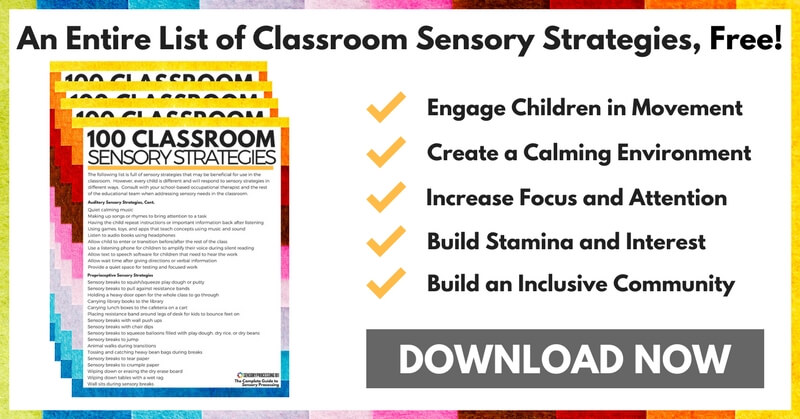
Okay, by now, I might have overwhelmed you. But you can support sensory needs in your classroom without getting too elaborate. Some of the things you are already doing, like brain breaks, music, dance, and sensory bins all support sensory needs. I put together this free, printable list of 100 Classroom Sensory Strategies to help you get started.
One thing to remember is that supporting sensory needs doesn’t always mean DOING more. In fact, you might have a child that avoids many activities/sensory input. For these children, it is important to think about ways to help them gradually receive input that is too overwhelming to them.
6. Sensory Play Involves the Whole Body
You might have thought of sensory play as being only for the hands (play dough, finger painting and bins). However, sensory play is so much more. Remember the proprioceptive and vestibular senses I mentioned before? Helping children organize and regulate their sensory systems involves the whole body, from their heads to their toes. Moving, shaking, jumping, and spinning are just a few activities that help children develop healthy sensory integration.
7. Not All Children Are Able to Integrate Their Sensory Systems Naturally
Unfortunately, using our senses does not come naturally to all of us. Some children can be over or under responsive to different input in their environment causing them to have a very hard time regulating emotions and communicating their needs. Often times, just like the adults that care for them, the children are unaware of why they are having so much trouble. These children may just have severe sensory preferences or there could be a larger problem that requires professional help. If you have concerns about a child you know, go to this link to read more.
Do you know a child who always shouts? How about a child who covers their ears all the time because they can’t stand noise? Perhaps you know a child who is an very picky eater and has strong, negative reactions to certain foods. What about a kid who simply can’t tolerate getting his hands dirty?

The book Sensory Processing 101 is a great resource for parents and educators who would like to learn more about how to support healthy sensory development in children.
Sensory Processing 101 will help you:
- Understand the sensory system in detail
- Identify characteristics of healthy sensory systems
- Recognize characteristics of sensory seeking behavior in children
- Identify “red flag behaviors” in children
- Learn how to help children with sensory issues by providing you with lots of practical activities
BIO: Dayna is a National Board Certified teacher, with over 12 years of experience in early childhood education, who now homeschools her 3 children, one of whom struggles with Sensory Processing Disorder. She is the author at Lemon Lime Adventures and owner of Project Sensory, where she is dedicated to sharing real life stories with parents and educators about the pretty and the not so pretty days involved in raising and teaching children. Want to learn more about Sensory Processing? You can connect with Dayna over on Facebook, Twitter, and Instagram!