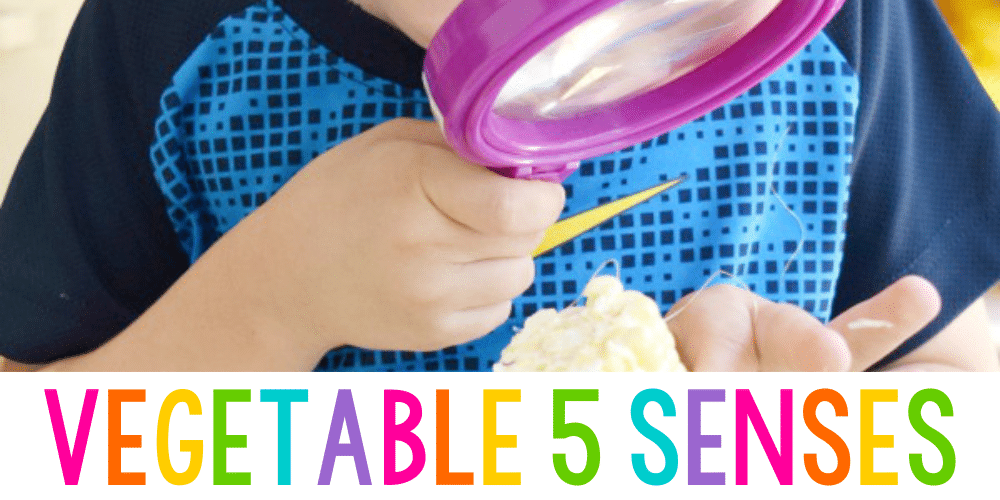

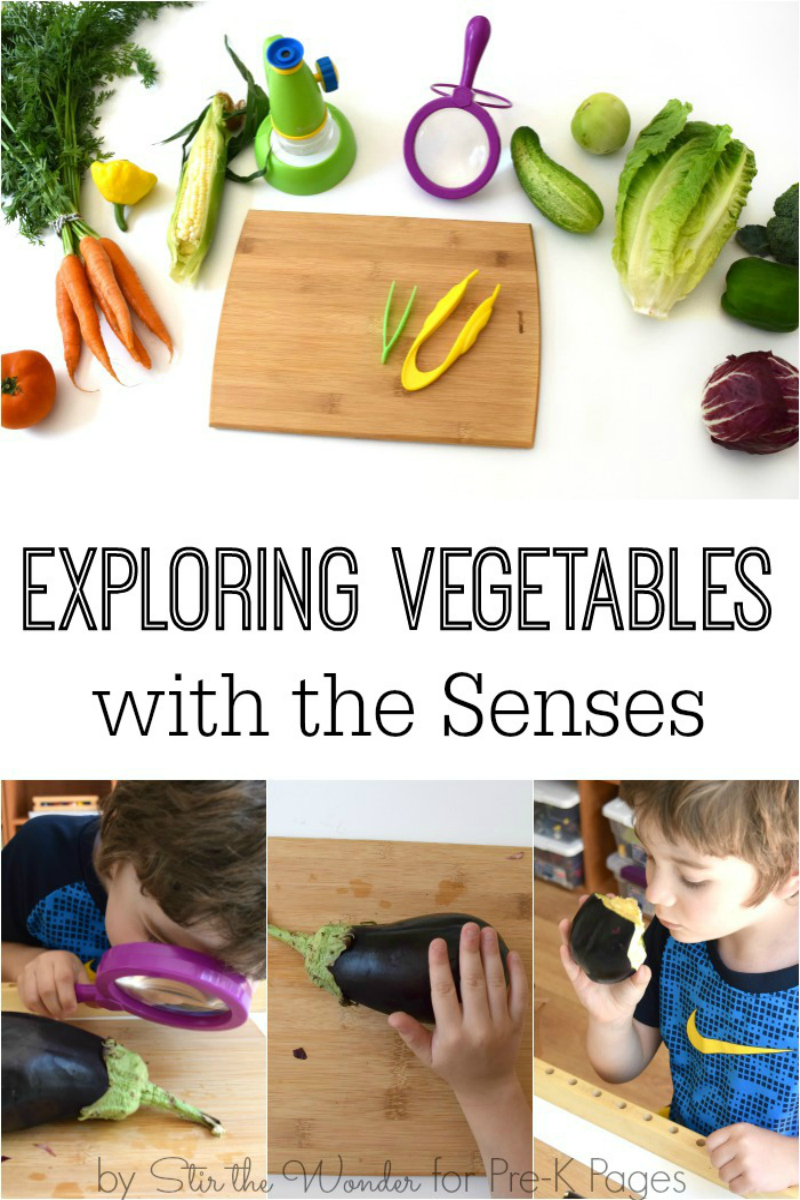
Exploring vegetables using the senses at the science table is a great way for young children to get hands-on experience with the bountiful Fall harvest. This is a wonderful activity to include in your Fall or Farm themed lessons!
Benefits of Exploring Vegetables with Preschoolers
Exploring vegetables at the science table has many benefits for preschoolers. This open-ended activity allows young children to learn about the five senses of touch, taste, sight, smell and sound while exploring new and familiar vegetables up close! It also allows preschoolers to learn how to use science tools, identify colors, and develop language skills.
Supplies
- Variety of fresh vegetables
- Science equipment such as magnifying glass, microscope, and tweezers
- Cutting board and knife
- Bowl, paper bag or trash can for scraps and easy clean up
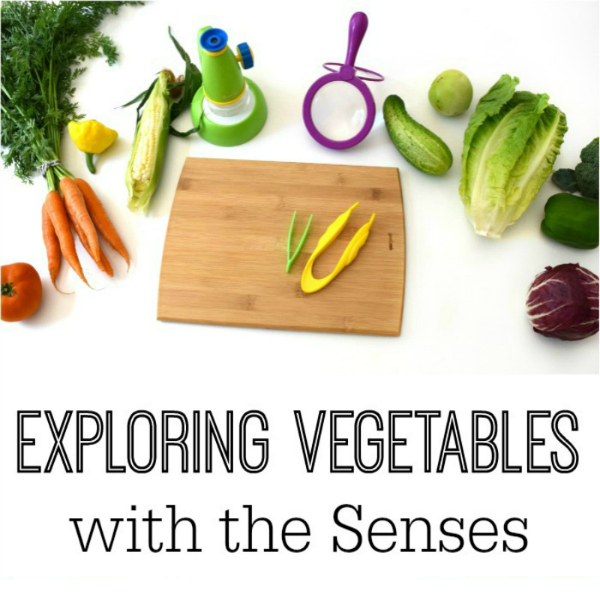
How to Set up the Science Table
To set up the science table for exploring vegetables with the senses, arrange the vegetables in a colorful array. Make sure the magnifying glasses, microscope, tweezers, and other tools are within reach on the table so that all the children can share. Have a cutting board and knife handy so you can easily assist when the children would like to explore what’s inside the vegetables. You will also want to place a bowl, large paper bag, or trash can nearby for easy clean up.
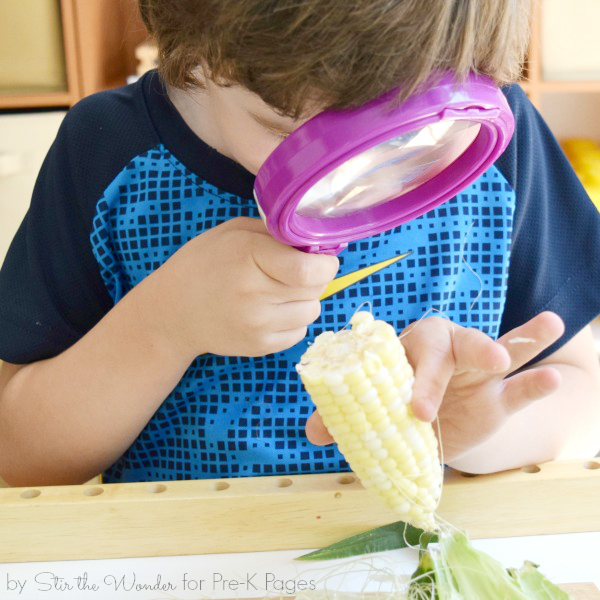
Once the science exploration table is all set up, invite the children to come explore the vegetables using the senses and the tools on the table. Encourage them to go deeper with their exploration by asking questions such as “How does the vegetable smell? How does the vegetable feel?” Use descriptive words such as smooth, rough, bumpy, sticky etc. By asking the children about the colors of the vegetables preschoolers can learn or review the colors, too!
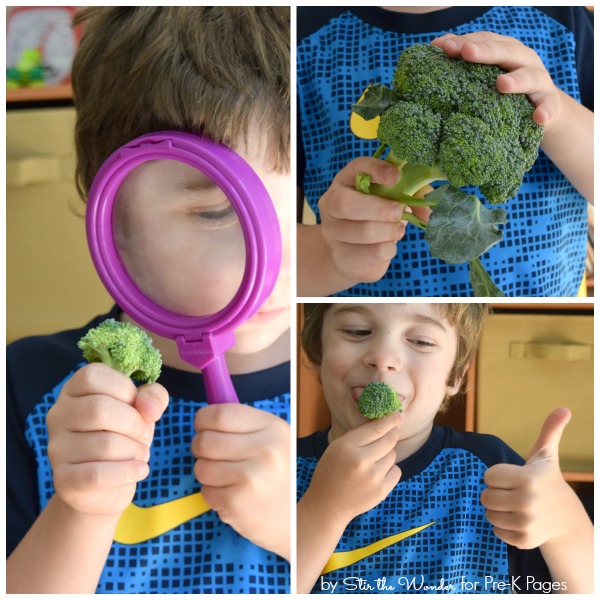
Exploring vegetables in this open-ended way is a fun, no pressure activity. Who knows, even your picky eaters might be inspired to take a taste of a new vegetable!
Supplement your exploration with these books about the five senses.
Preschool Science Curriculum
Having amazing science experiences in your preschool classroom is wonderful, but without a rock solid science curriculum to follow, you’ll be throwing spaghetti at the wall and just hoping some of it sticks. For true foundational learning to occur in your preschool classroom, you need a standards-based curriculum that is both engaging and developmentally appropriate for young children.
A high-quality science curricula serves as a framework upon which the content is built and delivered to the students. For example, this is how students will begin to understand that cyclical changes take place in nature and animals. Without a research-based science curriculum, your kids may think these changes are magical or occur without reason or purpose.
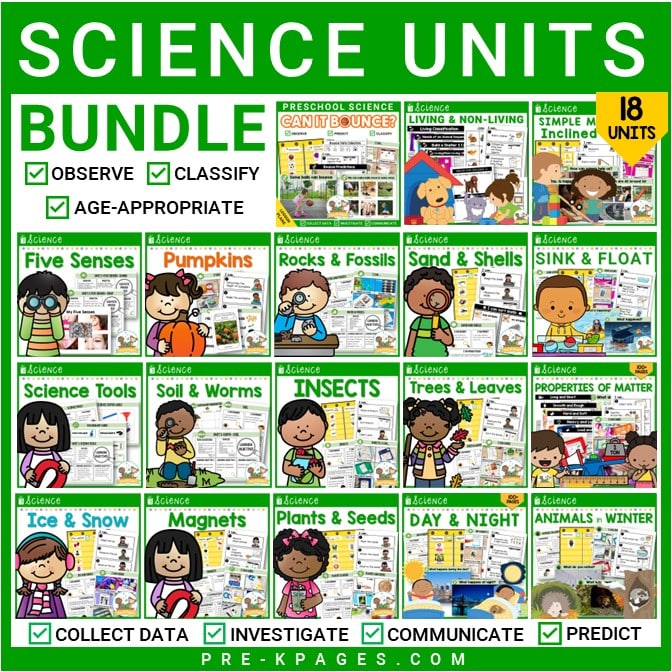
With 18 comprehensive units, the Trailblazer Science Curriculum for Preschool is standards aligned so you can rest easy knowing your little learners are getting exactly what they need to build a strong foundation for future scientific success.
Contributed by Samantha at Stir the Wonder.