Did you know that blowing bubbles can be a fun, hands-on science activity for kids? This super easy recipe and bubble science experiment can be a fun way to teach kids about the scientific method.
You can do this activity at home or in school. Your little learners will have a blast making bubbles and observing how bubbles behave.

Bubble Science Experiment for Preschoolers
You can introduce this bubble experiment by building background knowledge about bubbles. Ask your kids if they have ever blown bubbles before.
Ask them how they think bubbles are made, discuss their ideas, and ask them to tell you what led them to this conclusion.
This experiment will introduce children to the scientific method through the use of bubbles.
1. Ask kids, “How do you think are bubbles made?”
2. Help kids research the topic by reading the book, How to Make Bubbles by Erika Shores
3. Make a hypothesis by asking, “What will happen if we try to make our own bubble solution and bubble wands?”
4. Test the hypothesis: Make and blow bubbles with children
5. Make a language experience chart with kids to communicate the results. Ask them, “Did it work?”

Homemade Bubble Recipe For Bubble Science Experiment
After your discussion about bubbles, read a book about bubbles. The book How to Make Bubbles by Erika Shores is perfect for preschool and kindergarten kids! Here’s a super simple homemade bubble recipe for you to try.
Ingredients for Making Natural Bubbles
- 6 cups room temperature water
- 1/2 cup light corn syrup (Karo is a popular brand here in the US)
- 1 cup dish soap (the blue Dawn brand dish soap has always worked well for me)
This bubble recipe makes enough bubble solution for a class of 16 or more children. You can adjust the measurements up or down to best suit your needs.
The secret to making good bubbles is to follow the directions exactly, don’t substitute ingredients or alter the measurements. This bubble solution works very well, just as good if not better than store bought bubbles.
If your water is hard, you should consider using distilled water from the store instead. Distilled water has different properties compared to hard water.
Easy Natural Bubble Recipe
Start by gathering the children around in your large group area and invite them to help you make the natural bubble solution together. You could also do this as a small group activity and make a small batch of bubbles with each group.
Next, add the corn syrup to the room temperature water in a large bowl or container. Let the kids stir gently until well mixed.
Then, add the dish soap and have kids stir gently again without making suds.
You will get the best results if you let your homemade bubble solution sit uncovered overnight before using.
After making bubbles with the children, talk about how it was done and ask what they think will happen next.

Blowing Bubble Predictions
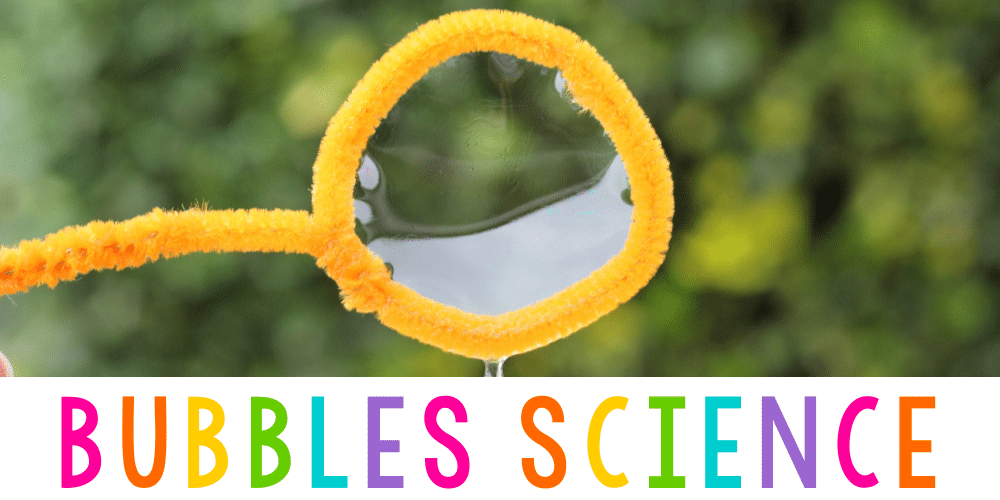
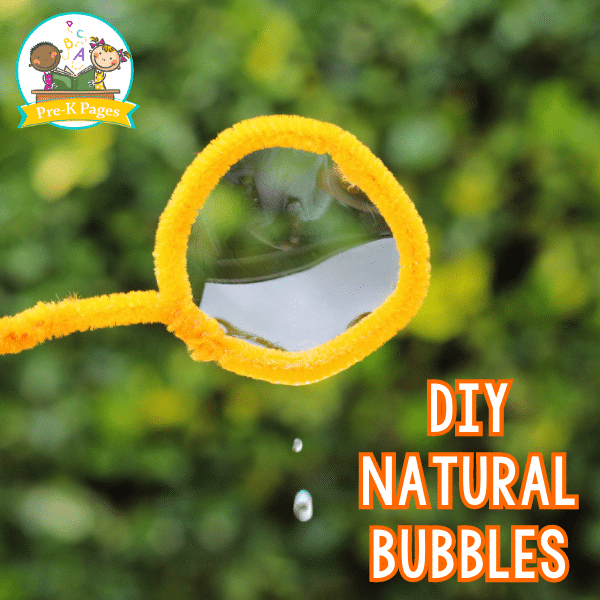
The next day, after your bubble solution has settled overnight, invite your kids to make their own bubble wands with chenille stems (pipe cleaners).
Demonstrate how to twist the chenille stems to create bubble wands. You may need to assist and offer guidance for this part of the activity. This will depend on the age and abilities of your children.

Making Bubble Wands in Preschool
After each child has made their own bubble wand, invite them outside to blow bubbles. This is one of the most fun science experiments for young children!
Provide eco-friendly, disposable cups for each child to hold their own bubble solution and have fun blowing and catching bubbles.
After coming back inside, make a chart with the kids and write what they learned and share the results.
Science Curriculum for Pre-K
Let’s face it, surfing the web for random science experiments to go along with your themes or units of study is no fun. What you really need is a done-for-you science curriculum that’s designed specifically for Pre-K. But not just any science curriculum, one that’s focused on meaningful science experiences and scientific process skills that align with standards and honor the way young children learn. And what if that science curriculum also had easy to understand, step-by-step teacher instructions, lesson plans, and center activities? If all of that sounds good, then you need this science curriculum in your teacher life.
More Science Ideas