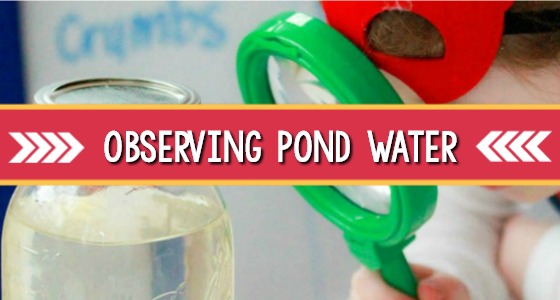



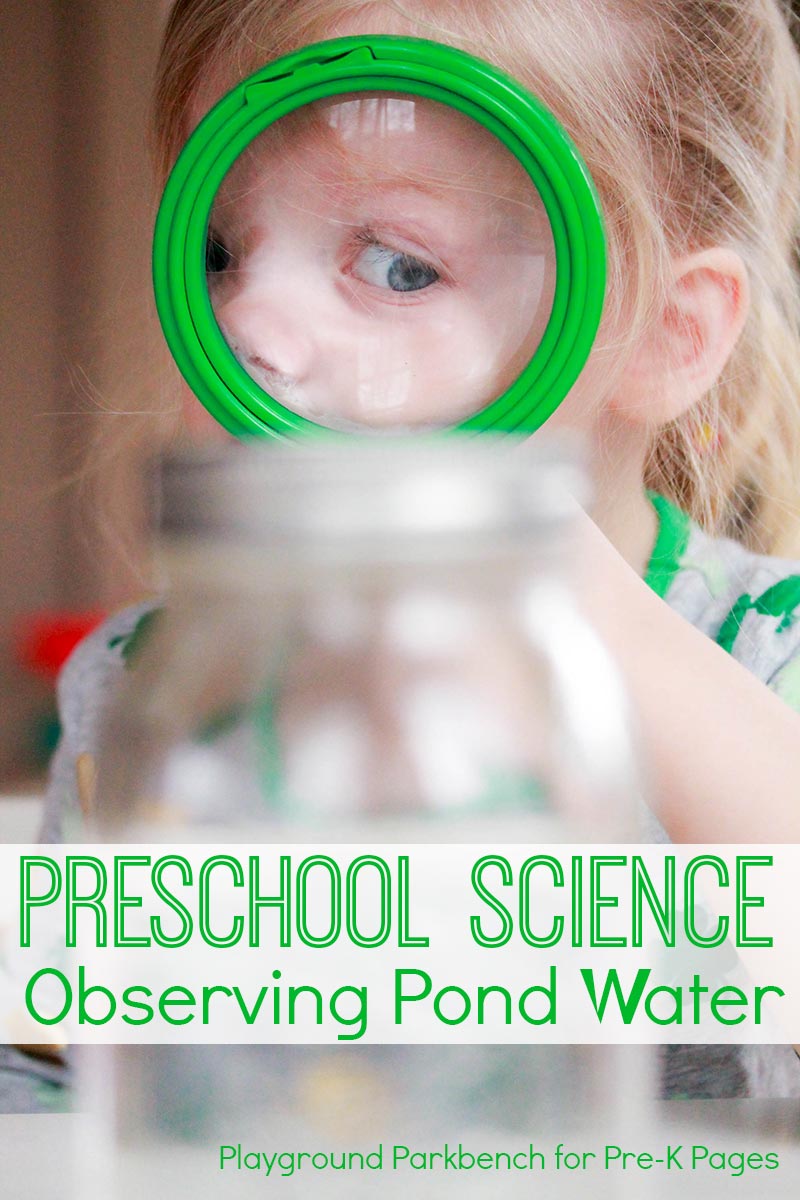
At its most basic level, science is the making and recording of observations. During your preschool pond unit, you can encourage this basic building block of science by observing pond water. Compare it to tap water from your classroom sink, and record your class observations as a collective group.
Making Scientific Observations
Young children are hardwired to observe the world around them, and naturally discern differences among objects in the world around them. You can help them develop vocabulary and use these innate capabilities for science through this simple science activity for preschool – observing pond water.

Prepare the Science Activity
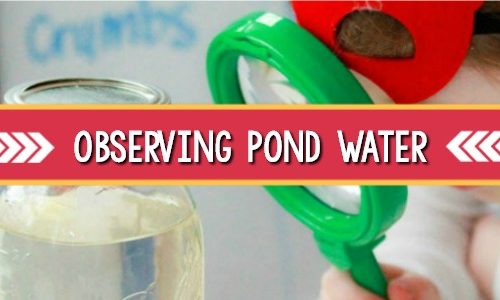
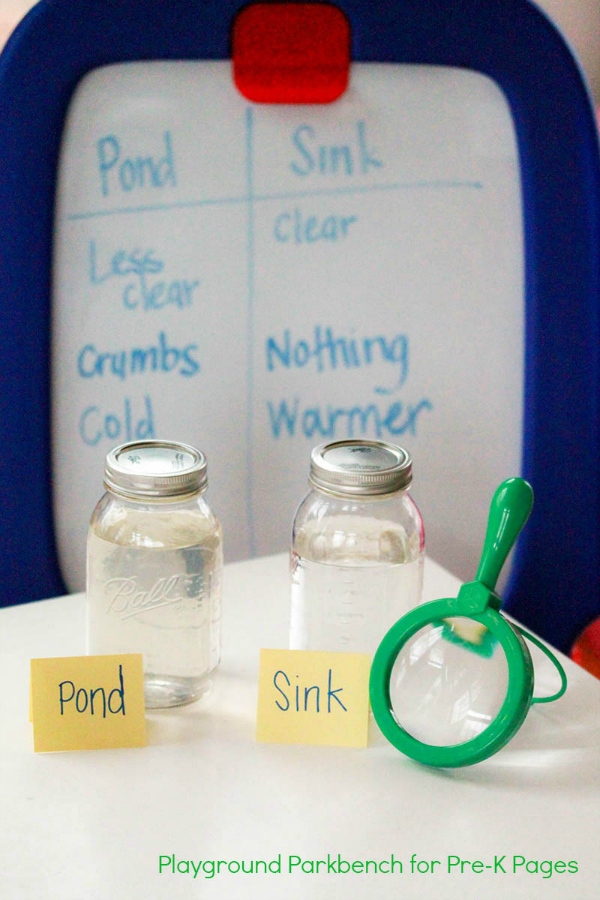
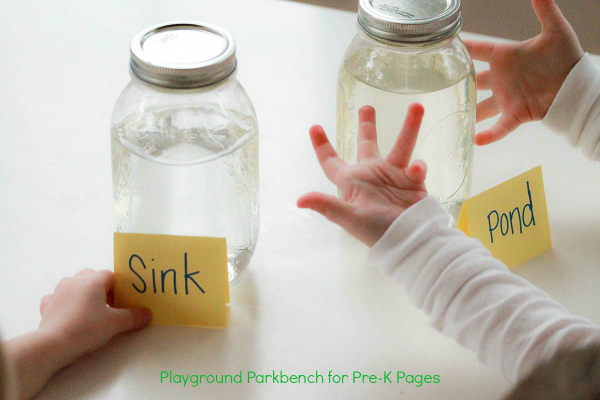
For this simple pond water science activity, you will need two, large clear jars. Fill one with pond water and one with water from your classroom sink. Make two labels – Pond and Sink – for your jars, but do not attach them. You may also want to provide students with magnifying glasses and/or a microscope. Finally, you will want either a large paper tablet or white board to record the class observations.
Encourage Scientific Observations with All Senses
Begin by asking your preschoolers which jar they think contains pond water and why. Allow your students to match the labels to the jars. What words will they use to visually describe the water? The sink water is clear while the pond water is less clear or murky.
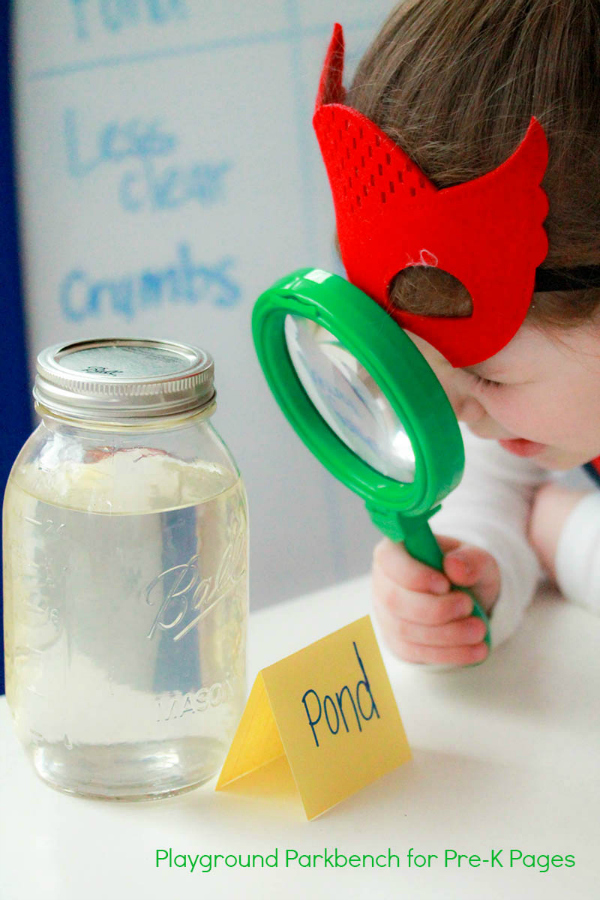
Hand out magnifying glasses to encourage closer visual observation. Can they see anything in the pond water? They might observe ‘crumbs’ or bits of dirt and plant matter floating in the pond water.
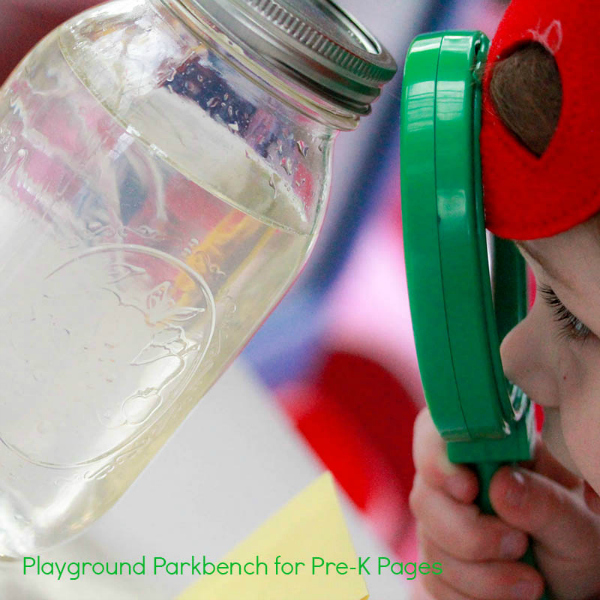
Shake the jars. Does the pond water sound different? You might scoop up a few pebbles along with your pond water to provide for a sound observation.
Check out this research-based, playful learning unit in our curriculum shop!
Pond Theme Bundle
14 of our most popular pond theme resources, including math, literacy, fine-motor, and science activities! Make learning fun with these hands-on resources
Check out this research-based, playful learning unit in our curriculum shop!
Pond Theme Bundle
14 of our most popular pond theme resources, including math, literacy, fine-motor, and science activities! Make learning fun with these hands-on resources
Check out this research-based, playful learning unit in our curriculum shop!
Pond Theme Bundle
14 of our most popular pond theme resources, including math, literacy, fine-motor, and science activities! Make learning fun with these hands-on resources
Check out this research-based, playful learning unit in our curriculum shop!
Pond Theme Bundle
14 of our most popular pond theme resources, including math, literacy, fine-motor, and science activities! Make learning fun with these hands-on resources
Check out this research-based, playful learning unit in our curriculum shop!
Pond Theme Bundle
14 of our most popular pond theme resources, including math, literacy, fine-motor, and science activities! Make learning fun with these hands-on resources
Check out this research-based, playful learning unit in our curriculum shop!
Pond Theme Bundle
14 of our most popular pond theme resources, including math, literacy, fine-motor, and science activities! Make learning fun with these hands-on resources
When you touch the jar, does the pond water feel different? If you collect your pond water on a hot or a cold day, it may have a significant different in temperature to the room temperature sink water.
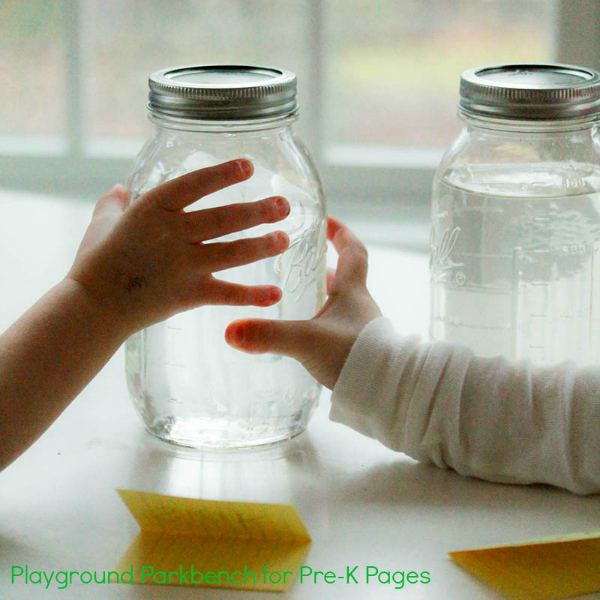
You can even open the jars and let them smell the water. Does the pond water have a different smell? Finally, ask your preschool scientists if they should taste the pond water. Why or why not?
Recap and Record Observations
After your preschoolers have observed the two jars of water, recap your discussion and record their observations in a group chart. Note their points of comparison and contrast.
What observations did they make with each of their senses? Remind them that science is all about making observations – with all of their senses – and recording their observations.
BIO: Meghan is a former hedge fund professional turned SAHM to Big M (5), Lil’ M (3), and Baby M (18 months). She writes at Playground Parkbench, where she shares practical parenting tips, kids learning activities and family financial savvy. If you enjoyed this post, check out her Preschool Garden Observation Journal to encourage more preschool science observations this spring. You can also find her on Facebook, Pinterest, and Instagram.
More Pond Ideas