
Have you ever wondered how you will manage to cover the math skills you’re required to “teach” by the end of the school year? I’ve definitely been there and done that. It’s a careful balance between teaching required skills and respecting how young children learn best. They learn best through fun and hands-on experiences, like math centers.
As early childhood professionals, sometimes we have way too many students to teach effectively. So, what can we do in this situation?
How to Manage Math Centers in Pre-K
Here I’ll explain the method I have found to be most successful in managing math centers and small groups in my own classroom. This method allows for differentiated instruction, provides your kids with fun, hands-on learning opportunities. It also helps you manage a large class to keep everything flowing smoothly. Sounds dreamy, right?
Manage Math Centers Effectively
While many educators have “literacy centers,” fewer seem to implement math centers. Your little learners need the same chances to explore math concepts as they do with literacy skills.
This strategy for managing math centers has been successful in my own Pre-K classroom in a public school setting. Keep in mind that various approaches may suit different educators and programs. There is no one “right way” to manage math centers in your early childhood classroom. It’s important to choose which method works best for you, your students, and your teaching style.
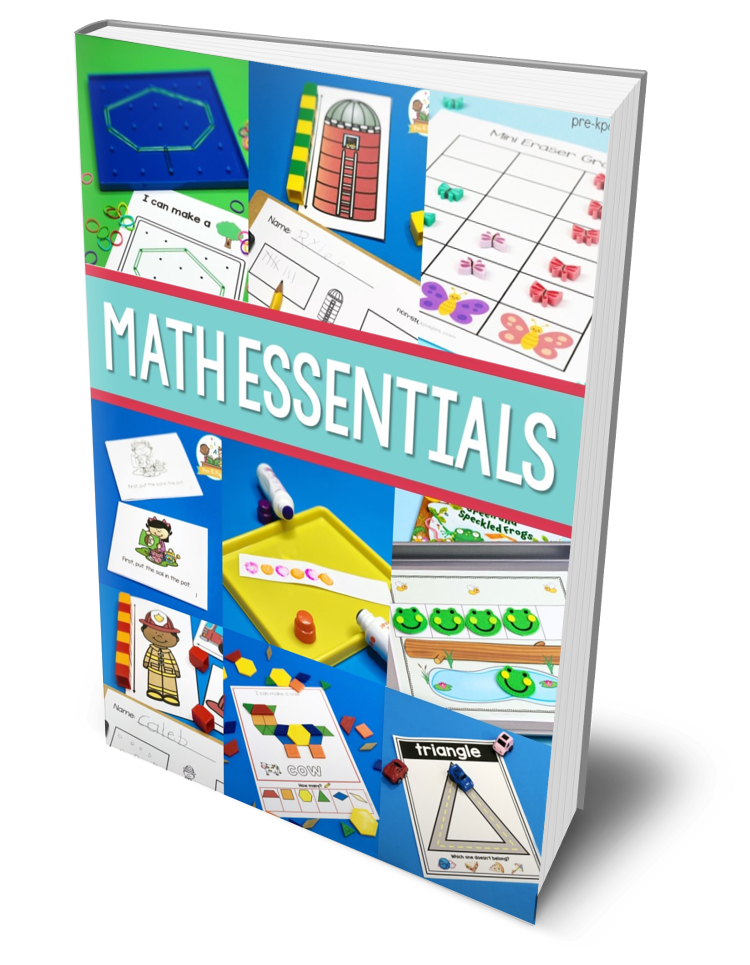
Looking for math center materials and set-up help? Visit the Math Center page!
Preschool Math Centers: Differentiated Instruction
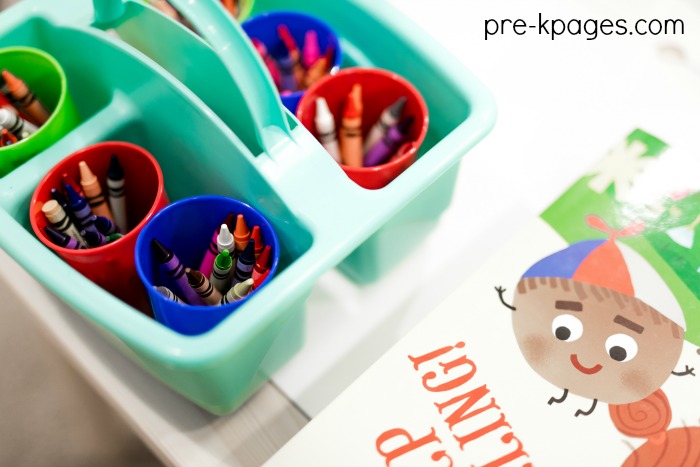
In my classroom, there are four tables, each marked with a different color and capable of seating six students. Each table features a supply caddy in red, yellow, blue, or green, which helps identify the table’s color. Each child is assigned to one of these color-coded groups, forming their “table group.”
The table groups use assessment data to group students with similar stages of math understanding.
Managing Math Centers Overview
Your daily math centers function as small group math activities. Here’s what it might look like:
Math Lesson: A group math lesson that includes a math read-aloud and a brief math lesson focused on developing emergent math skills. These lessons may include songs and interactive games to keep students engaged and focused.
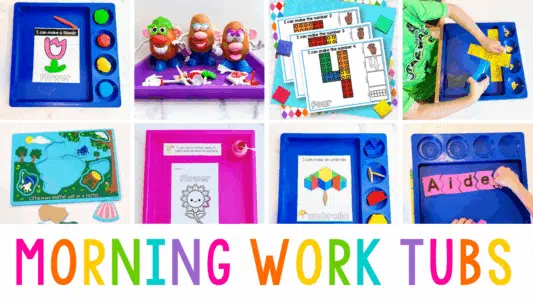
Independent Practice: Students gather at their assigned table to explore math concepts. The activities they use are hands-on, fun and playful. When they’re finished with the assigned activity, they can freely choose to explore anything from the math center.

Tips for Managing Math Centers
Four assigned activities occur per week, one per table. The students move to a new table each day to engage in a different activity. They complete 4 activities each week at math centers. Friday is for catching up or free choice.
Here is an example of what the math center rotation might look like:
Monday:
Red group @ red table- sorting with thematic manipulatives
Blue group @ blue table- patterning with thematic manipulatives
Yellow group@ yellow table- one-to-one correspondence ducks in a pond
Green group@ green table- Number 5 activity
Tuesday:
Red group @ blue table – patterning with thematic manipulatives
Blue group @ yellow table- one-to-one correspondence ducks in a pond
Yellow group @ green table- Number 5 activity
Green group @ red table- sorting with thematic manipulatives
And so on…
What does the teacher do during math centers?
You can work with one group and supervise another, while the assistant (if you have one) manages the other two groups. For example, one group may be working on a one-to-one correspondence activity.
With this group you can use the one-to-one duck pond activity. Students will toss the cube, count the numbers on the dice with their fingers while saying the numbers out loud. Then, they will count as they put the corresponding number of ducks in the pond.
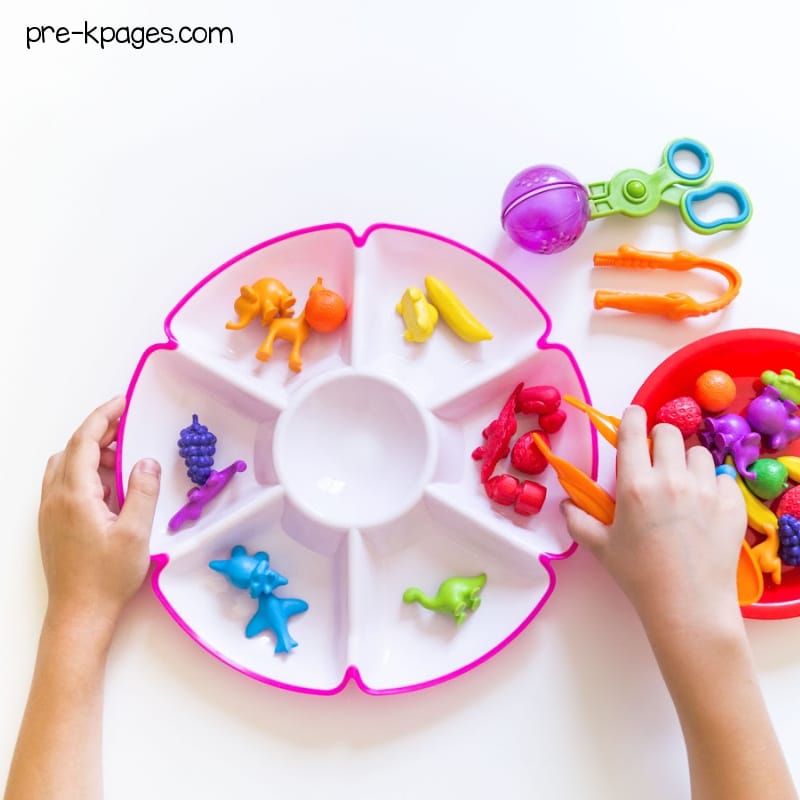
As you work with that group, you will closely watch another group. They will be sorting with thematic manipulatives.
How Long is Independent Practice?
Math centers are typically 20 minutes long by the end of the year. At the beginning of the school year they may start at only 10 minutes because the younger the child, the shorter the attention span.
Learn more about the items and materials that are in the math center.

How do you organize your math activities?
To keep your math activities for your table groups organized, consider putting hanging files inside a milk crate, each one holds a colored file folder; one red, yellow, blue, and green.
Every folder corresponds to the color of one of our tables and is situated within a hanging file folder inside the crate. Within each folder, I place the designated weekly activity. Referring to the previous example, I would place the themed erasers for the sorting task in the red folder, the supplies for the number 5 activity in the green folder, and continue in this manner.
If the items for a math activity are too big for a folder, you can write the names of the items down. Then, stick a post-it note inside the folder.
This helps you, your assistant, or any substitutes remember what you are doing at each table. It also reminds you of the materials you will need. Every Friday, you can take out the activities for the week. Then, put in the materials for next week’s centers.
Managing Math Centers: Table Groups
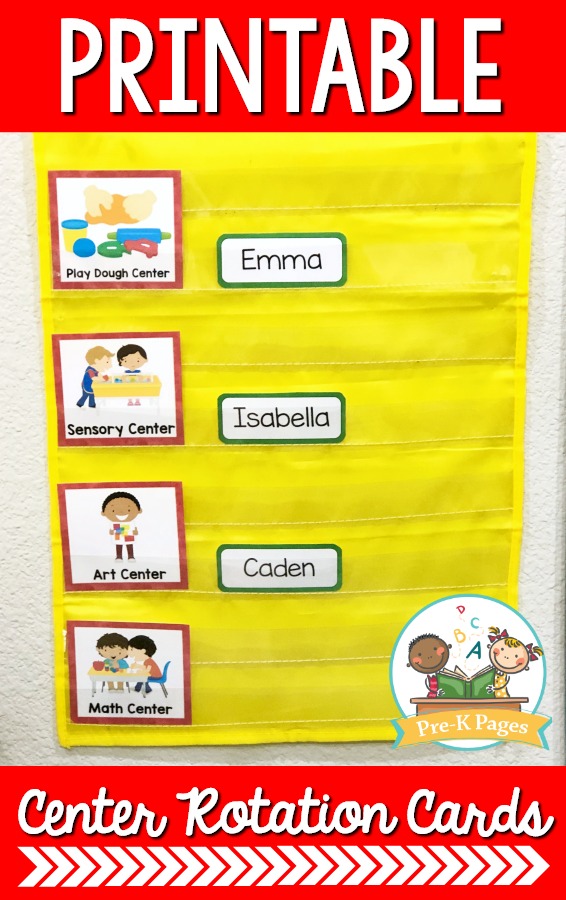
Above is a picture of the pocket charts and cards I use. They help show students where to go for literacy and math centers. You can use four small pocket charts, one red, one yellow, one green, and one blue. The cards pictured above are included in this Center Rotation System Packet.
The colors of the pocket charts match the color caddies on each table. Next, you can place name cards in each pocket chart to indicate the table students will go to for math centers.
For example, Emma, Luis, Sophia, Aiden, and Isabella are in the blue group. You can place their name cards in the blue pocket chart on Monday. This lets them know they will go to the blue table for math centers. Then, on Tuesday you can move their name cards to the right and place them into the next pocket chart.
The blue color group will sit at the blue table on Monday. On Tuesday, they will sit at the red table. On Wednesday, they will go to the green table. Finally, on Thursday, they will sit at the yellow table. Fridays are free choice.



What is the math curriculum that you use?
We’ve used many over the years. Typically, pre-packaged curricula for Pre-K is comprehensive and includes literacy, math, and science. One of the curricula we’ve used in the past that was specifically designed for Pre-K was HMH Every Day Counts Math for Pre-K. There are others, but I can’t remember them all. I got tired of the pre-packaged stuff so I made my own titled Math Lessons for Little Learners.
do they stay at the red table for example with that days activity the full 20 minutes. or what do they do when they are done with the sorting for example.
They can get an activity from the math center when they are done.