
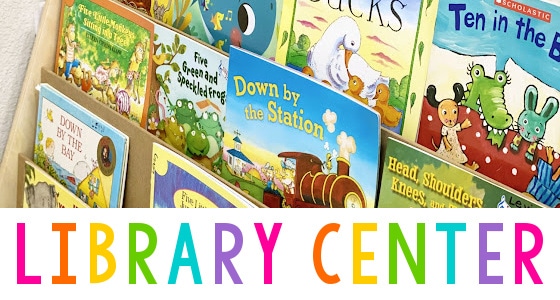
In your classroom, the preschool library center is a clearly defined space that young children can use independently to browse books. The classroom library plays an important role in creating a high-quality early childhood learning experience that enriches language and vocabulary development.
Preschool Library Center
In your preschool or pre-K classroom, the library should be a kid-friendly place where young children can go to look at, or “read” books.
The classroom library area should be a clear, defined space in your classroom with places for students to sit and read.
You can add some “homey” touches to this center such as lamps, curtains, chairs or furniture, and beanbags. When you create an inviting area for reading, your students are more likely to want to spend time in your library center.
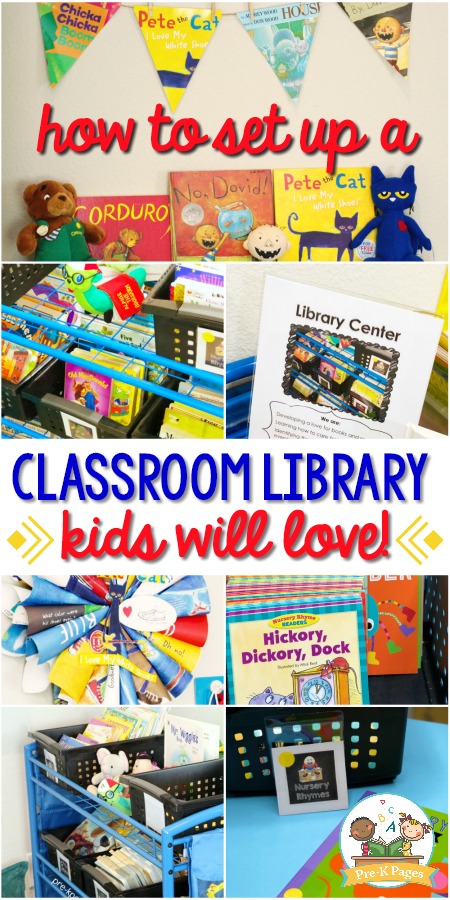
Rain Gutter Book Display
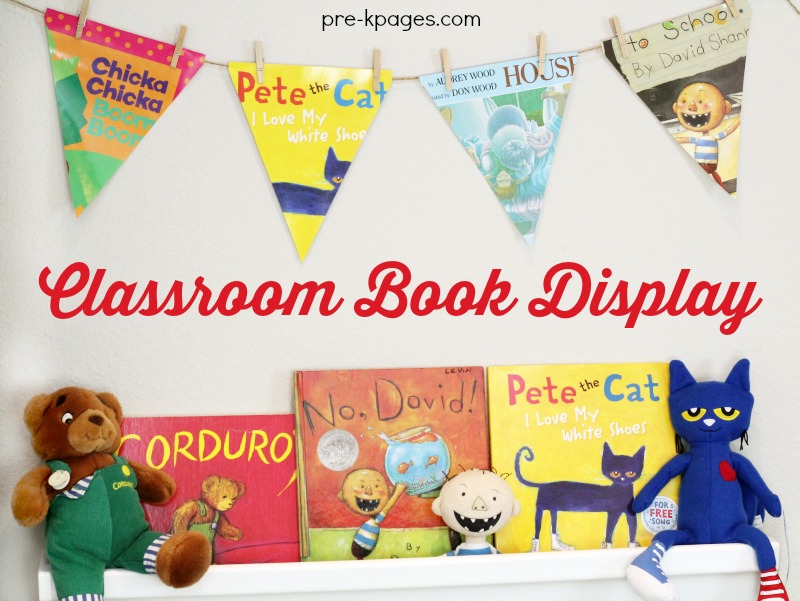
I like to display books throughout my classroom to send the message to my students that books are important, so important that they deserve to be on display.
This book display shelf pictured above was created with a plastic rain gutter from the local home improvement store. I first learned about this genius hack from the legendary Jim Trelease in his bestselling book, The Read-Aloud Handbook.
To create these shelves in your own classroom, just pick up some plastic rain gutters and a tool that will cut them. You can ask your home improvement specialist which tool to use to cut the gutters.
Book Jacket Pennant Banner
I made the pennant banner by cutting the dust jackets of hardcover books. I attached each pennant piece to a length of twine with mini-clothespins from the craft store. That’s it, super easy!
Book Wreath
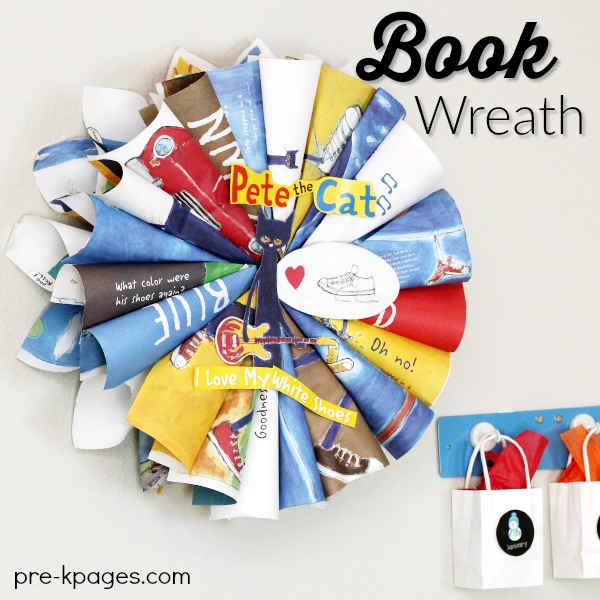
I tried making my own Pete the Cat book wreath, it didn’t turn out – at all! It’s so much harder than it looks on Pinterest! After a few tries, and a few destroyed Pete the Cat books, I gave up and ordered this one on Etsy, isn’t it adorable? It is purely decorative and has no educational value, I know that, but it makes me happy.
Why Create a Classroom Library?
One of the main goals of any early childhood teacher is to help young children develop a love of reading and books. Reading requires a lot of skill and practice, and to practice you need books. It’s simple, the more children are exposed to books, the more they learn to love them.
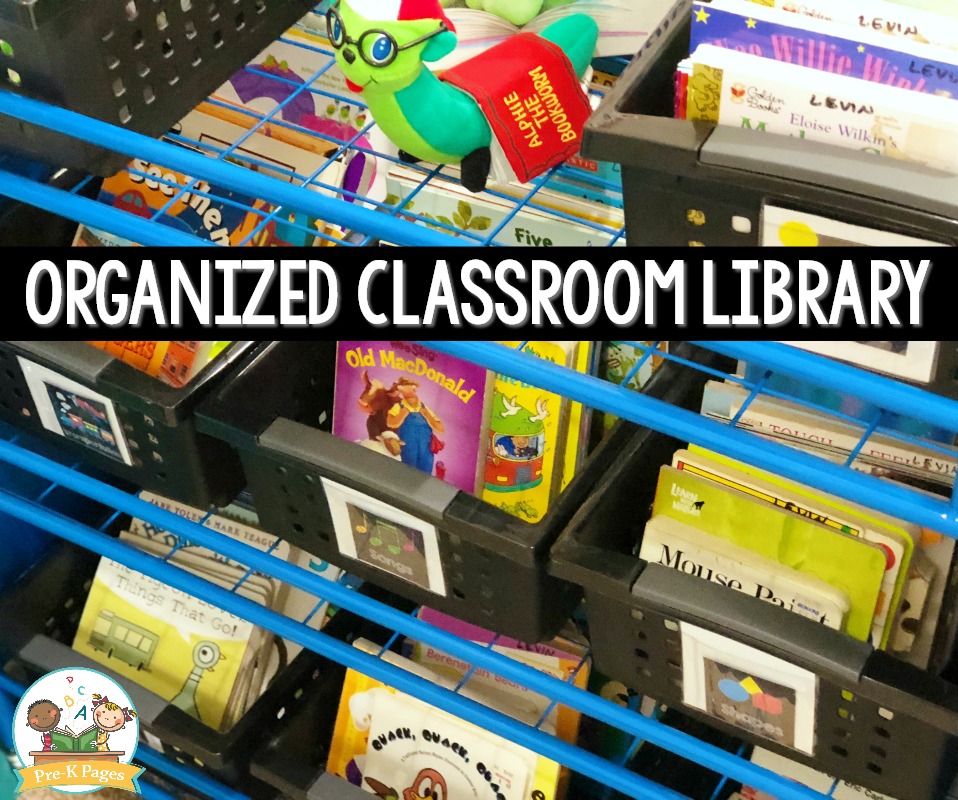
How to Organize a Preschool Classroom Library
I know what you’re thinking, “That looks awesome, but my kids would destroy that in a New York minute!” But here’s the thing, my kids don’t destroy the classroom library because I start teaching them from the very first day of school how to look at and treat books in our classroom.
Another helpful trick that works very well with four and five year-olds is to categorize the books by theme, and then color code the books with colored sticky dots.
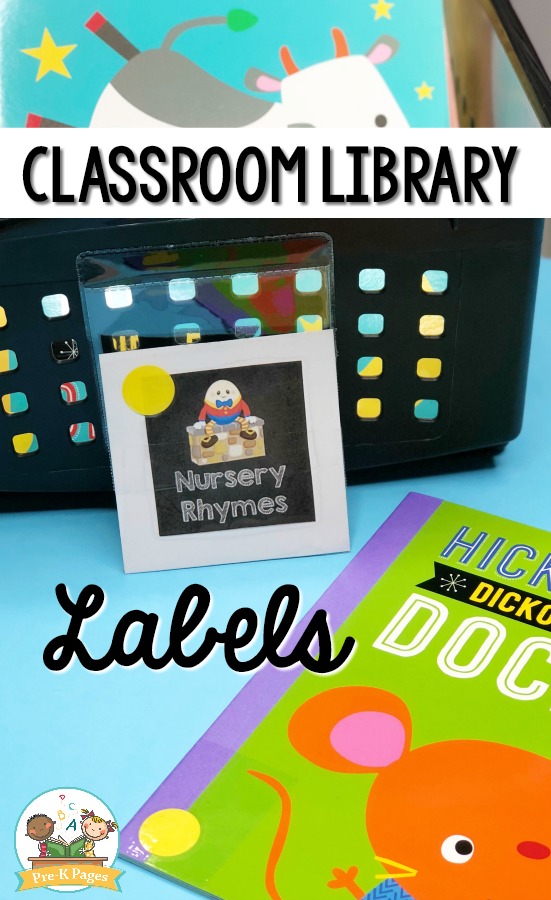
Book Tub Labels
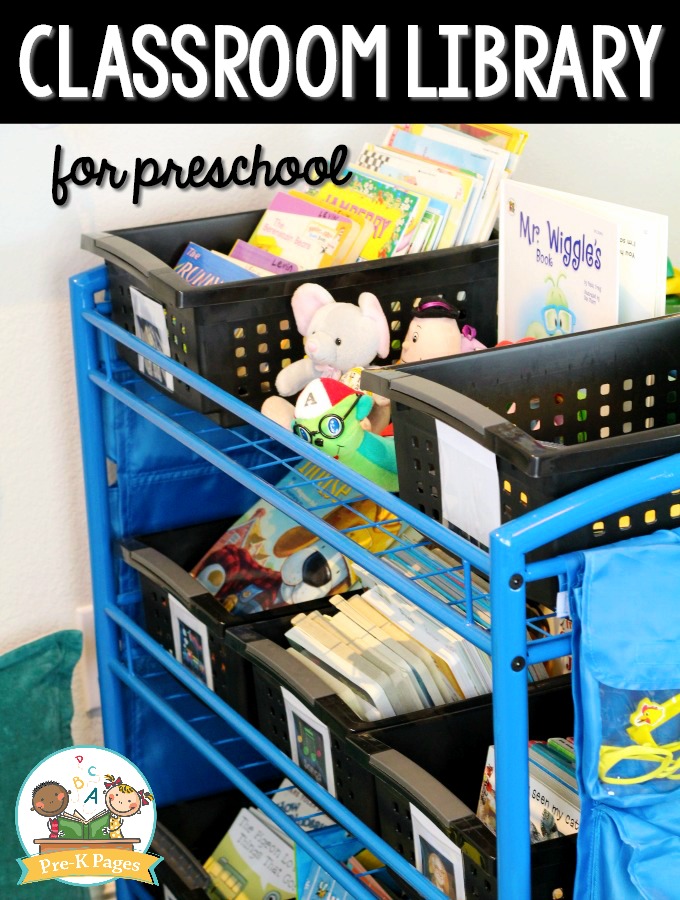
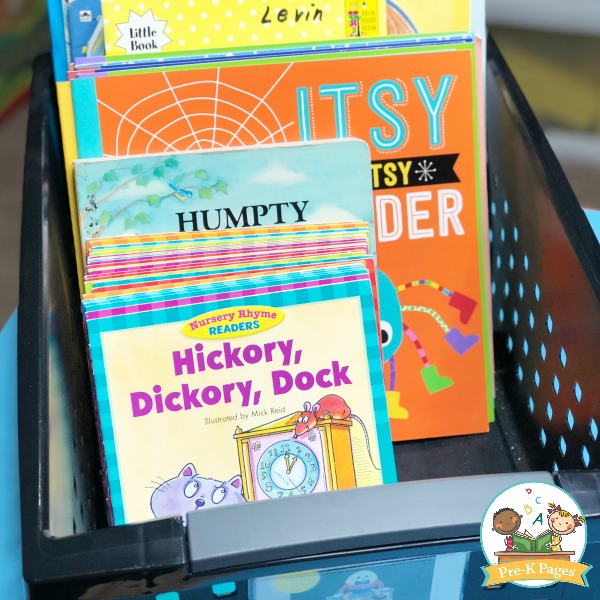
Each book tub has a picture label on the front as well as a colored sticky dot. The book boxes are available to every student, every day of the year and are never put away, but instead remain as permanent fixtures in our library center.
Each book in each box has a corresponding sticky dot on the lower left hand corner so the books can easily be matched to the boxes by the students. When I ran out of colors of sticky dots I started adding a gold star in the middle of the dot or another, smaller sticker.
I do add books by season or theme and rotate them out in one particular tub. You can also use a book display shelf for these thematic books so they don’t get mixed up with your regular classroom library books.
HINT:When adding colored dots to your books or boxes always cover the dots with clear book tape or they will be picked off by curious little finger.
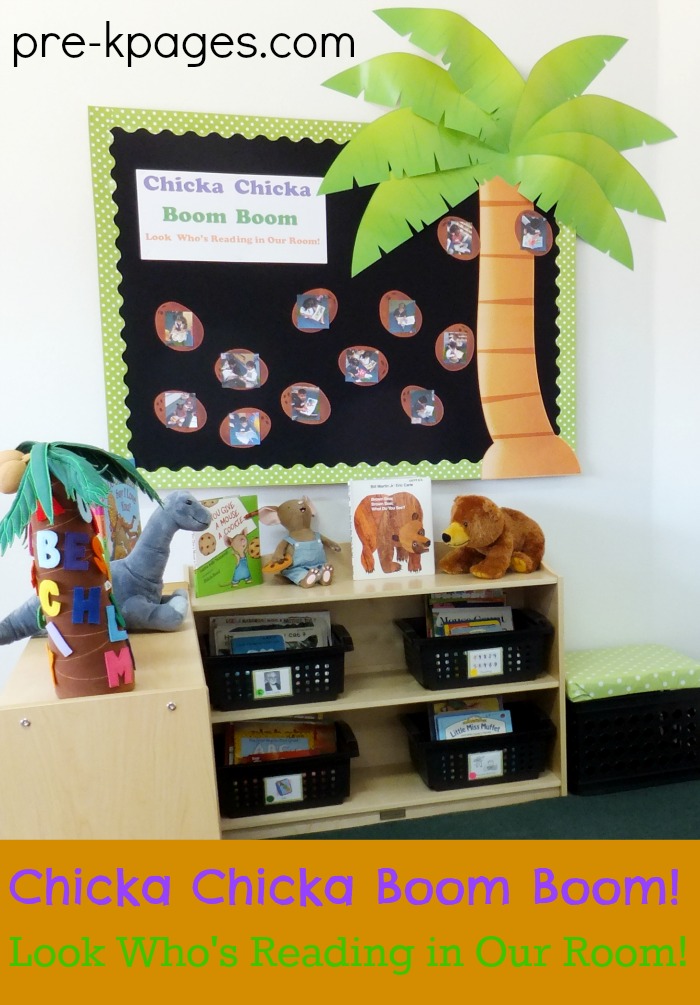
I once had a bulletin board titled “Chicka Chicka Boom Boom – Look Who’s Reading in Our Room” that featured pictures of the students reading.
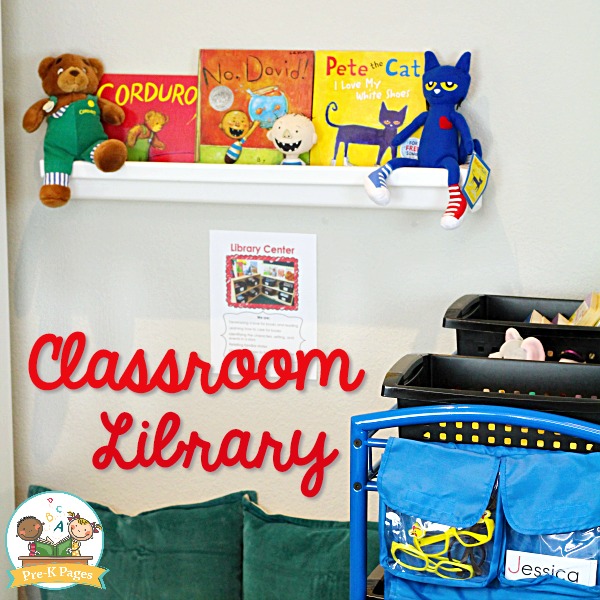
Classroom Library Sign
These signs are perfect for labeling all the centers in your classroom. Just insert a picture of your center directly into the PowerPoint file, the words below are for the adults. Above you can see the Library Center Sign in action.
Where to Find Books
This is the sad part of teaching, you will usually have to provide the books in your classroom library yourself. Building a classroom library can take years, don’t expect to accumulate as many books as you see pictured here in your first year. The following is a list of resources that new teachers can use to build their classroom libraries:
-
- Scholastic Bonus Points: Learn how to get more bang for your buck from Scholastic book clubs.
- Scholastic Warehouse Sales
- Used Book Sites like Thrift Books
You can read more about these sales and watch the video on the blog.
- Goodwill, Salvation Army, or other used venues
- Yard Sales and Library Book Sales: Some of the best bargains around can be found at yard sales or your local library’s annual book sale.
- Teacher Discounts: Many book stores give teachers a discount. Stores such as Barnes and Noble, Half-Price Books and others all offer a teacher discount.
What types of books should be included in the class library and how many?
- Including books by favorite authors, good non-fiction, and books your students have shown interest in are all factors to consider when choosing books for your classroom library.
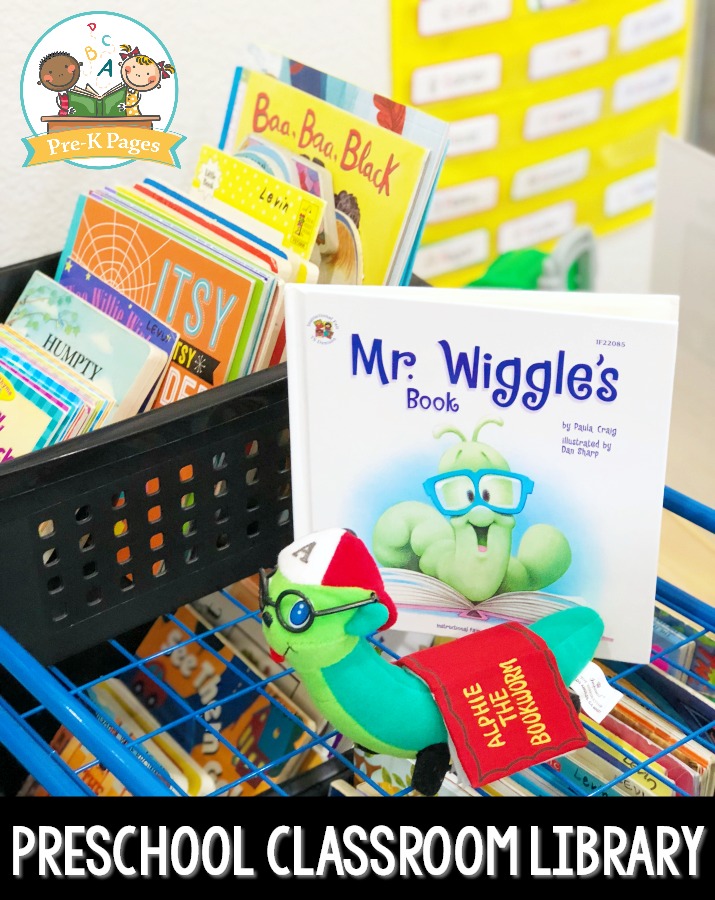
- Be sure to include books you have read to the class in your classroom library. Nothing makes a book more appealing to a child than a book that the teacher has read aloud. Including books you have read aloud to your students in your classroom library also allows for independent practice of reading. Nothing is more rewarding than seeing your students fight over copies of Brown Bear, Brown Bear because they all feel comfortable and successful “reading” it independently.
- The number of books included in a classroom library is simply as many as space and budget will allow. The more books children are exposed too, the more likely they will find ones that they like and which inspire them to learn to read and love books.
- Don’t forget to include class made books. Class made books are very inexpensive ways to add books to your library area. I try to make one class made book for every theme that we study and add it to our class library or circulate it in a Buddy Bag. The possibilities are endless for class books and the children really love them because they helped in the process. Class made books will help inspire even the most reluctant reader to pick up a book.
I created a set of 44 printable labels for the book boxes in your preschool library center.
What if I don’t have enough space in my classroom for a preschool library center?
This is a very common problem, the best way to solve it is to get creative! In some classrooms, the library also doubles as the circle time area because there simply isn’t enough space to allow for a separate area. The most important thing is to provide your kids with access to as many books as possible.
My students mistreat the books in the preschool classroom library, what should I do?
I created a packet designed specifically to help you teach your children how to care for books. Go HERE for details and see a preview.
My students don’t like to go to the preschool library center, what can I do to make them like it more?
- The best way to get your students to develop a love for reading and books is to provide a time during the day in your schedule for B.E.A.R (Be Excited About Reading) or more commonly referred to in older grades as D.E.A.R. (Drop Everything And Read) or simply S.S.R. (Silent Sustained Reading). B.E.A.R. time is a time when ALL students are expected to be reading or looking at books at the same time, including the teacher. In Pre-K and Kinder classes it is not necessary to require absolute silence as the older grades do.
- Read books about books. See the list of our favorite books about books at the bottom of this page.
- After B.E.A.R. time you can play another game; the “Favorite Book” game to encourage your children to think and read. Select one child to choose his or her “favorite” book from the class library. Allow the student to sit in your chair and ask him why this book was his favorite, what his favorite part of the story was, and any other questions you can think of. Then, read the book to the class making sure to explain that the book is special because it is “____’s favorite”. This game helps children understand that books are special and should be treated with love and respect.
- By taking the time to introduce books and discuss them you are showing your students how important books are to you. If books are important to you, they will also be important to your students and you will have more students who enjoy visiting the library center.
The Teaching Trailblazers
Having a fully stocked and organized classroom library is awesome! But let’s face it, a classroom library can’t make you a better teacher. The best place to discuss teaching best practices and get the support you need is in the Teaching Trailblazers. We have many printable resources and on-demand video trainings to help you become the best teacher you can be! If you want to get on the waiting list for the Teaching Trailblazers, do it soon so you don’t miss the next open enrollment period!
Pingback: Setting Up the Writing and Reading Centers - Teaching 2 and 3 year olds
Pingback: Mission Organization: 21 Ideas to Organize Your Classroom Library - A Modern Teacher
Where did you get the book tubs? Awesome stuff!
The black book tubs are from Target 🙂
Hello,
Where did you get the “Chicka Chicka Boom Boom Look Who’s Reading” poster and the tree?
Thank you!
I typed the sign on my computer and bought the tree at the teacher store.
Where did you get the blue organizer shelf?
Amazon, Honey-Do cart, very inexpensive for the quality.
Hi,
Thank you for your post. I have a question regarding the library center that I hope you can help me with. My students (3-4) are not going to the library center! I love reading and want them to learn to love it too (which during story time they do), but when it comes to reading independently they just don’t. my library is very inviting- has a nice shelf with all the books easy to see and organized. A small couch with pillows and a beanbag chair in a canopy- How more inviting can I get? Our books are always rotated. What am I doing wrong? They love all of the other centers but reading to themselves they just don’t do it. (Sometimes if a teacher sits there to read to them then they would go), But I want them to ‘read’ to themselves!
Thank you,
When it comes to reading books in the classroom, it’s different than the block center or the dramatic play center. In order to get kids excited about reading books you have to “sell it” As Dr. Jean says, “The teacher brings the magic.” In other words, you’re constantly talking about how much you love books, demonstrating how much you love books, and demonstrating how to care for and use books. One way to do this is to have a routine that you do every single time you read a book aloud to your students. You talk about the book and how much you love it and why you love it. You have discussions about the book with the children. Then, when you’re finished reading the book, you demonstrate for the children where exactly the book will “live” in your classroom library. You say, “If you liked this book too, I’m going to put it right over here (place it in a particular basket or on a certain shelf) so you can read it too. That’s one quick and easy thing you can do. The next step is to incorporate a daily dedicated time into your schedule for reading. Some schools call this DEAR (Drop Everything and Read), I prefer to call it BEAR time (Be Excited About Reading) Just like children need to practice how to walk before they get good at it, and they need to practice identifying letters before they can learn to say and recognize them all, they also need to practice looking at books. Having a small amount of time dedicated just to reading books will allow you ample time to support them and scaffold for success. During this time you will demonstrate how to care for books, concepts of print and just reading for pure enjoyment. These things will go a long way in creating a classroom culture that values and enjoys reading.
I have another suggestion for your classroom that I wanted to add. Include books in other centers that are popular and encourage kids to use them. For example, put some recipe books in your dramatic play area and show the children how to enhance pretend with them. Put books on bridges and other structures in the block center, put art books in your art area. You can help the kids understand how the books relate to their play, thus establishing that books are interesting AND useful.
What size are the book tubs from target? I haven’t been able to find them and thought it might be easier if I had a size.
Thank you!
Are you referring to the black tubs? If so, I’m not sure they sell this exact same model/brand any longer, it’s been about 5 years since I purchased them. But you know what works well? Dish tubs from the dollar store – they’re very similar in size and much easier on the wallet 🙂
I love all these ideas- but I do still have questions. You said that you have your books “live” there- do ALL your books live there? Or do you have a place where you keep a bunch that you read to them for read aloud not in the library. I have a lot of books… I am not sure I could have a tub for each kind of book in the library and not have it just be cluttered and chaotic. Do you pull your read aloud books from this class library or do you only put ones you have multiples of… or do you have multiples of most everything? If you have a set of “teacher” books in addition to the classroom library, do you organize them the same way? Still in tubs? On a shelf? In magazine style tubs? Thank you for the post. It was full of great ideas. I especially want to adopt some of your class books. We make class books a lot, but I love the idea of adding their pictures. Way more engaging…
Great questions! My personal books that I use for read-aloud are stored elsewhere, you can see a picture here https://www.pre-kpages.com/teacher-storage-and-organization-ideas/ I do have multiples of many books, but not all. Hope that helps 🙂
Where did you get the shelf for the stuffed animals to go with the books?
“This book display shelf pictured above was created with a plastic rain gutter from the local home improvement store. I first learned about this genius hack from the legendary Jim Trelease in his bestselling book, The Read-Aloud Handbook. To create these shelves in your own classroom, just pick up some plastic rain gutters and a tool that will cut them.”
Besides books do you have other things in the library center
You could add a flannel board for retelling practice, I’ve also kept my listening center there before. Add some comfy furniture if you have it.
Just a cool thing I did in my classroom reading center. (I’m retired from teaching)I had a storybook forest. As we would read a story I would place a character in the forest. After several weeks the kids would notice and start talking about the character or the book the character was from. It was so fun to watch as the year progressed and the forest grew and the excitement the children had remembering the characters snd stories.
How fun!