
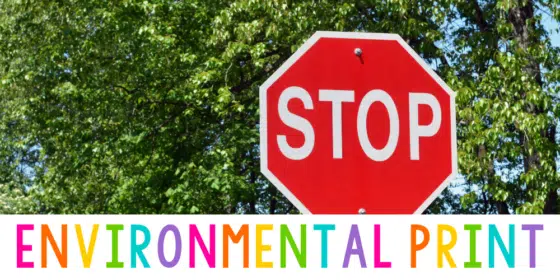
Environmental print is the print we see everyday in the world around us in the form of logos and signs. Young children learn how to recognize this type of print first, its an important part of the emergent literacy process.
Environmental Print for Pre-K
Recognizing this kind of print is one of the beginning stages of literacy development. The letters, numbers, shapes, and colors found in logos for products and stores such as McDonald’s, Wal-Mart, Coke, and Campbell’s soup all provide opportunities for emerging readers to interact with print and the written word in their own environment.

Environmental Print in the Preschool Classroom
Using this type of print in the preschool or pre-K classroom is very meaningful to young children. The labels, logos, and signs they see in their daily lives hold great meaning for them, things like stop signs, cereal boxes, and candy wrappers are familiar to them.
How many times have you driven by a McDonald’s restaurant with your child in the car and they’ve shouted “Look! McDonald’s!”? Children get excited when they can “read” the print they see in the world around them.

Environmental Print for Preschoolers
Environment helps bridge the gap between the written words on a page, and it also builds confidence in young children to get them excited about reading. When children are excited about reading, and print holds meaning for them, they will learn much faster and begin to make connections to the world around them. When children use the contextual clues to “read” then they will be able to transition into the functional print of school more easily.
Environmental Print in Preschool
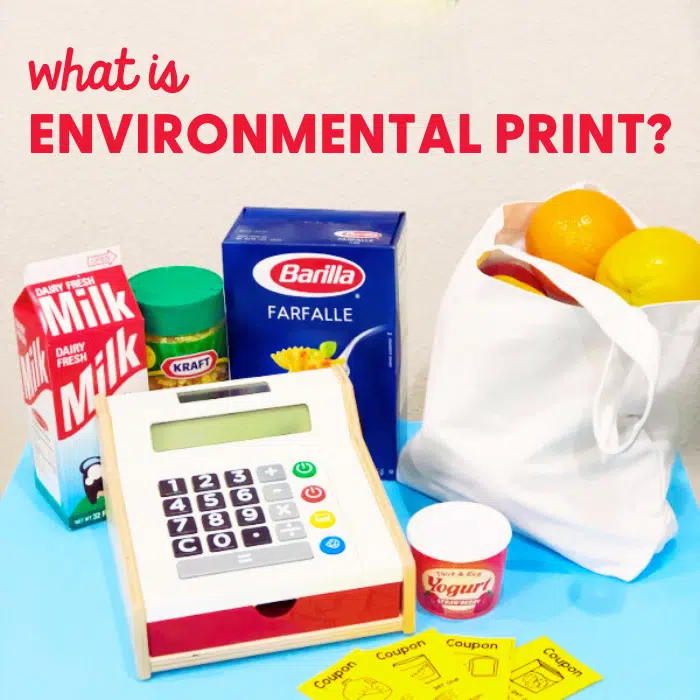
Environmental print is the print of everyday life. If you’ve ever been to the grocery store with a child and they’ve called out the names on the labels that they were most familiar with – that’s environmental print in action.
Or perhaps you were on a long road tip with a child and they were asking about the letters on license plates or street signs, that’s another example of this type of print in action.
Benefits of Environmental Print Activities
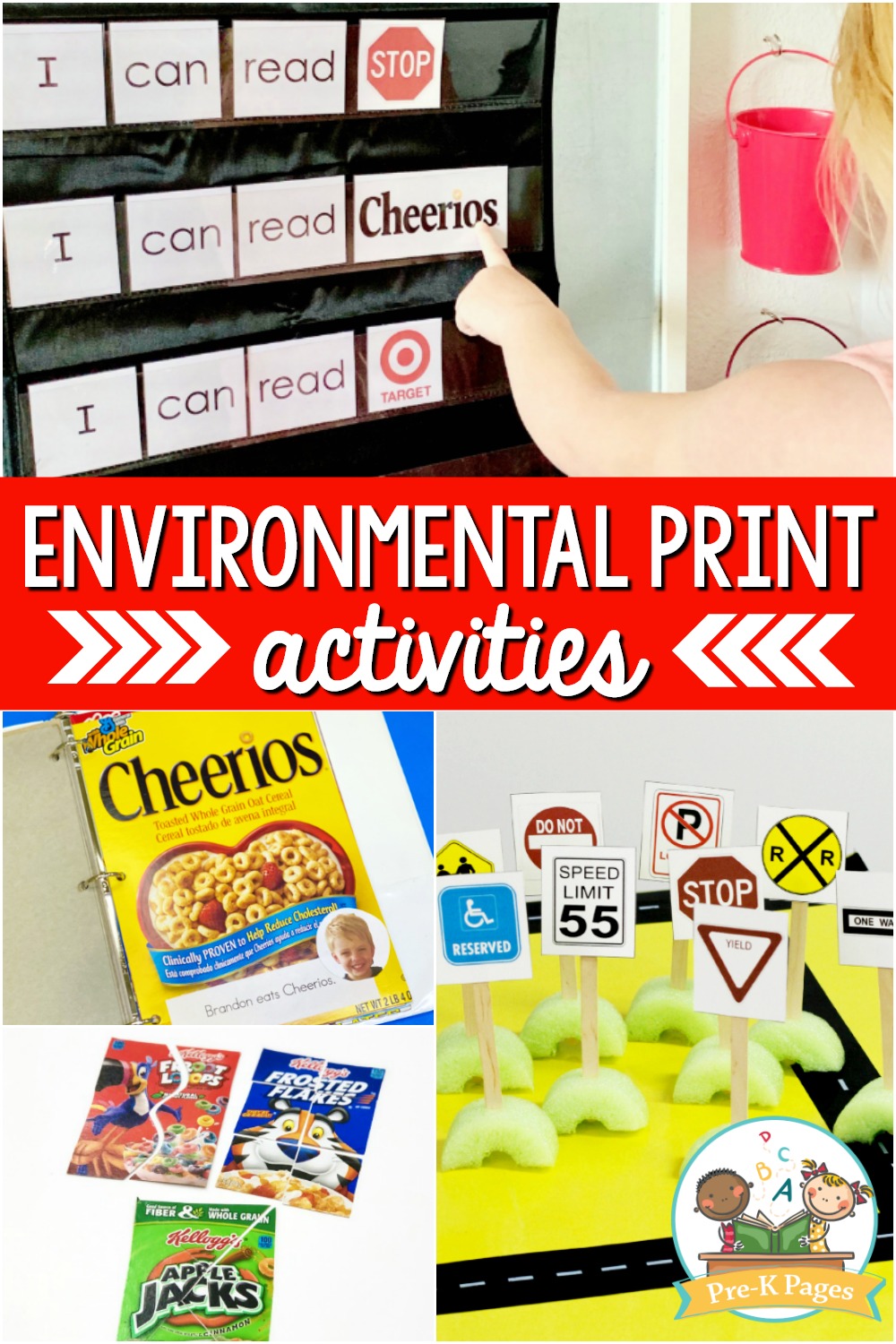
You can easily incorporate environmental print activities into every area of the early childhood classroom. You’ll find 12 Environmental Print Activities we love using in the classroom. Here are some ideas below for using environmental print in your classroom.

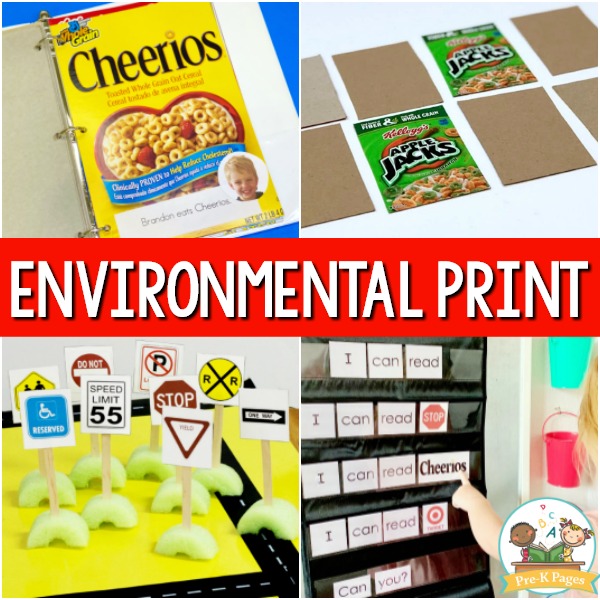
Environmental Print Class Book
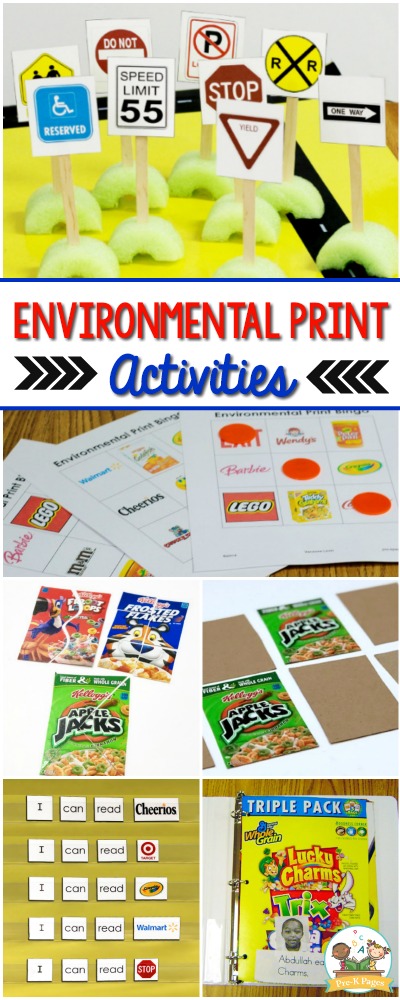
Have your students bring box fronts of their favorite breakfast cereal to school to make a class book titled “What’s for Breakfast?”.
Our Favorite Restaurant book: Have the students bring bags from their favorite restaurants. Next, mount the logos from the bags on cardstock and add the text below. “________ (child’s name) likes to eat at ________(name of restaurant)”
You can read this book aloud to your class when finished, then place it in your classroom library so students can “read” it on their own.
Environmental Print Bingo Game
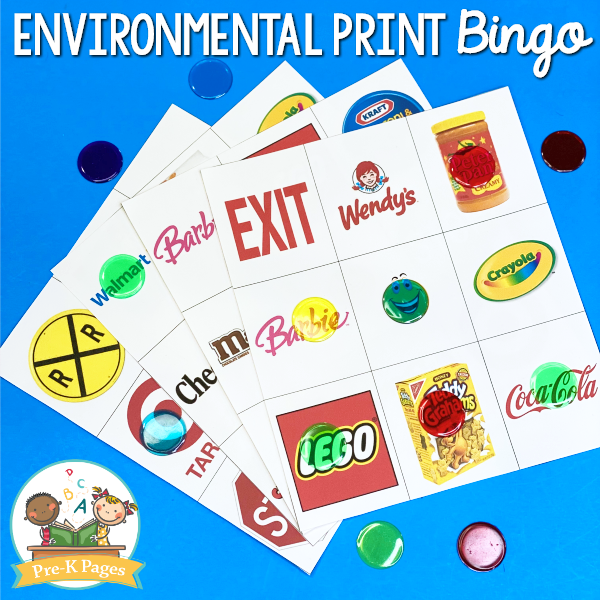
Combine emergent literacy learning and bingo for lots of fun! As students engage in this fun activity they’re developing many pre-literacy skills such as identifying letters and visual discrimination. You can access the free printable game on the blog here.

Memory Matching Game
Collect the mini-cereal boxes from the grocery store and cut the fronts off the boxes. You will need two of each box front to make this matching game. Mix up the box fronts and place them face down to create a memory matching game. Your kids will feel so successful when they make a match!
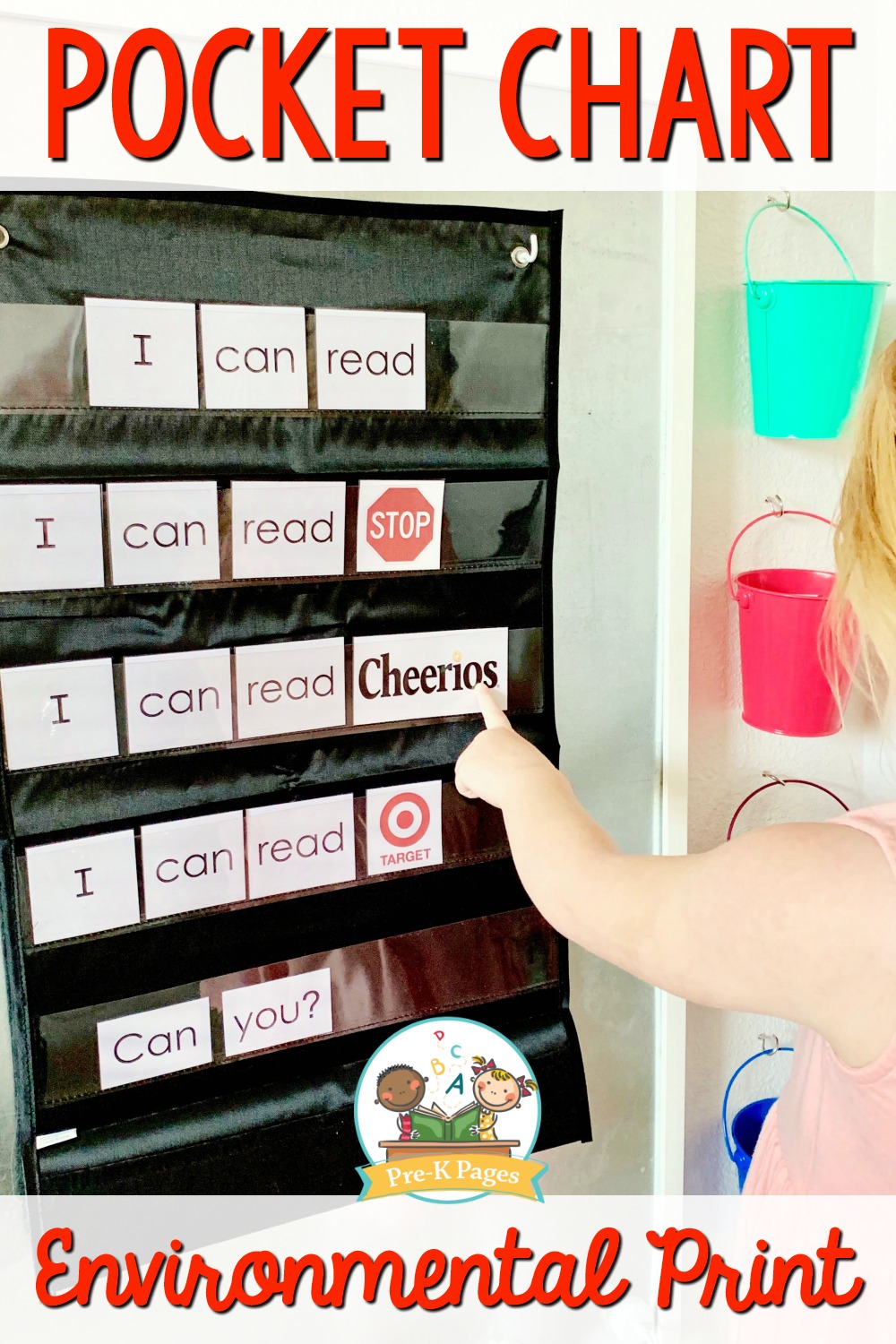
Pocket Chart Sentences
Pocket charts can provide a great way to combine environmental print with concepts of print. As your kids point to each word in the sentence they are actually beginning to understand left to right directionality, spaces between words, first and last words in a sentence – and so much more!
You can access the free pocket chart sentences here.
Word Wall
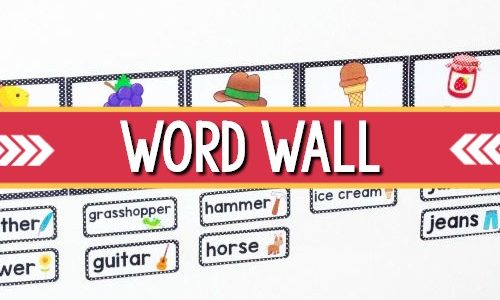
Put Environmental Print on your word or name wall. It is even more meaningful if you have the students bring in their own examples to put up on the wall themselves. Here’s a printable note you can send home to parents to collect environmental print.
You can also place environmental print in your writing center to entice your little learners to write.
I Spy
Invite your students to bring in an example from home to share. Then, cut out the Environmental Print and staple it to a bulletin board or glue it on a poster board. Children can play the “I Spy” game using the bulletin board or chart they helped create.

Puzzles
You can make simple puzzles from cereal box fronts for your students. These are super easy to create, and your kids will love them! You can make the puzzles as hard or as easy as you like. Store the puzzles in a pencil pouch or a plastic bag to keep the pieces together.
Sorting
Invite your students to bring in all sorts of Environmental Print from home, then have them sort the print by category (food, toy, store, signs etc)
T-Chart
Create a simple t-chart in your favorite program and have students glue environmental print on the page in categories of “I like/I don’t like”, or “food/fun”.
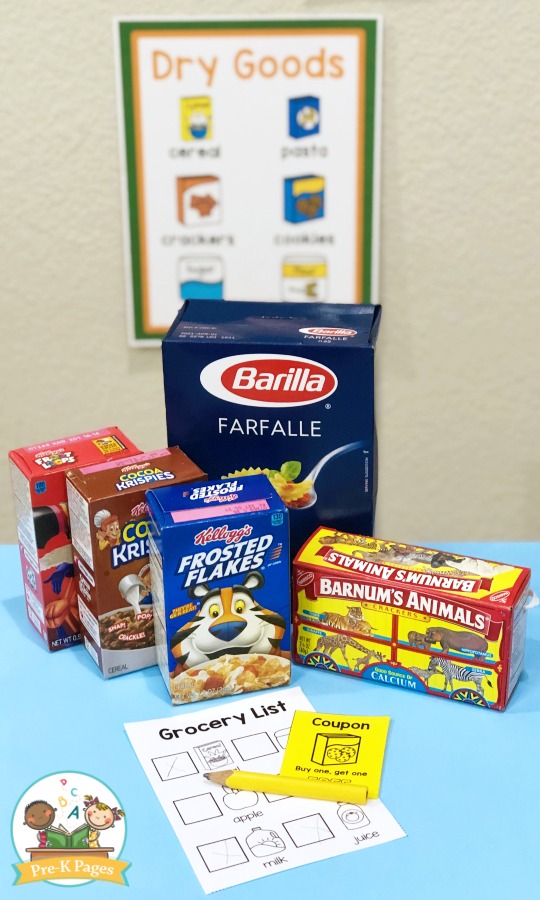
Environmental Print in the Dramatic Play Center
The perfect center for using meaningful print is your dramatic play center. You can set up your center as a grocery store and stock it with empty boxes, containers, and cartons rescued from your recycling bin.
Another addition you may want to consider adding to your grocery store dramatic play center is grocery store ads. You know, the weekly printed ads that are often given out at the front of the store for shoppers to reference. Your kids can use these to “shop” in your pretend play grocery store.
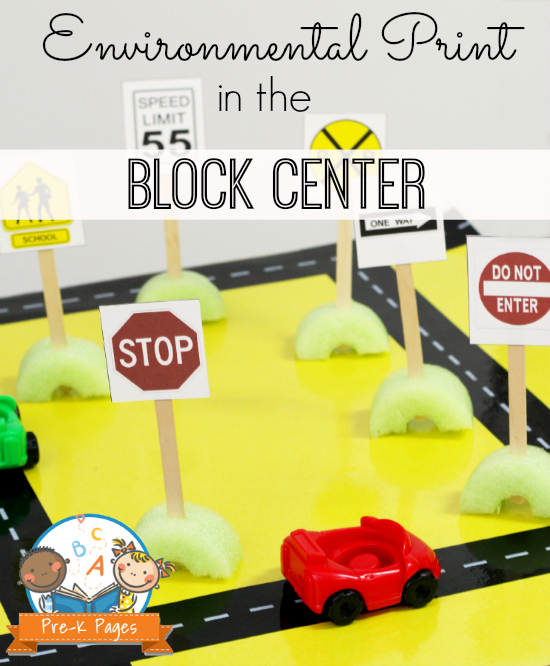
Environmental Print Block Center
Add traffic signs to your block center. You can find the free printable road signs HERE.


Pingback: Day 3: Visual Activities for Teaching Reading
Pingback: Free Emergent Readers Round-Up - Lovely Commotion
Pingback: Dictation with Young Children: Discovering the Purpose of Writing
Pingback: Updating NJoy's Picture Wall - This Reading Mama
Pingback: garbage-truck-obsessed-toddlers-trash-free-printable
This is a great site. Love it , great ideas can’t wait to use this in my class.