

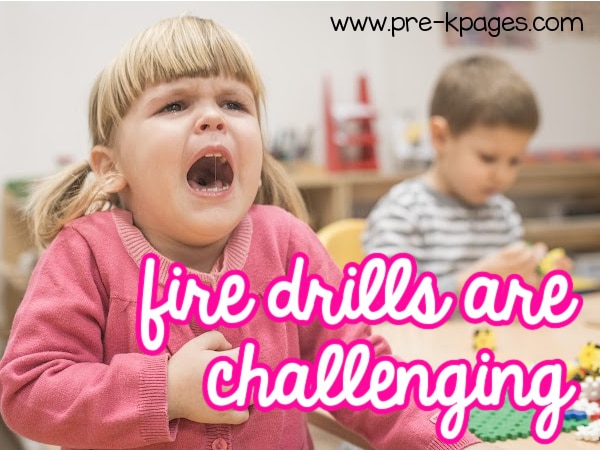
Fire drills in any early childhood classroom are so chaotic, it’s difficult not to fail. Moving an entire class of 4- and 5-year olds anywhere quickly is a challenge. Getting the kids out of the building at lightning speed is next to impossible, especially in the beginning of the year. Preschoolers may cry or wander aimlessly into the street. Don’t get me wrong, I think fire drills are important for fire safety, necessary safeguards against disaster, but that doesn’t make them any less stressful for teachers and kids.

My Fire Drill Failure
Have you ever had a fire drill failure? Many years ago I worked for a Head Start program in New England. In colder climates, we have a law mandating that you open any and all windows whenever the temperature rises above 60 degrees. And, do you know what else comes along with nice weather in the north? The dreaded “construction season.”
One fine day in May, I was in my classroom with the windows open, serving lunch with my assistant to our sixteen students. The ancient building that housed our Head Start program was in the process of having a new wing constructed—right outside my classroom window. Picture the classroom windows open and the delightful sounds of backhoes and earthmovers doing their thing outside.
Suddenly, the school nurse burst into the classroom, red-faced and ringing a miniature dinner bell. The only reason I knew it was ringing is because I saw her hand moving, the noise coming from outside the window masked the delicate tinkling of the tiny bell. She was screaming, “We’re having a fire drill and you’re just sitting here! I’ve been ringing this bell for five minutes!” Now, you’re probably wondering a few things: 1) why is the nurse ringing a miniature dinner bell to signal a fire drill? and 2) why is she the one in charge of the fire drill? The reason she was using a dinner bell is because the building was so old it didn’t have a real fire alarm (yes, I’m aware that’s 8 kinds of crazy and dangerous). She was in charge of the fire drill because she was in charge of everything and that’s the way she liked it!
Despite my explanations…and the fact that the assistant didn’t hear the bell either…Nurse Ratched insisted on writing me up for “failure to follow school policy,” making this an official Fire Drill Fail. I’m sure many of you have a “fire drill fail” story, too. Well, stay tuned and find out how to set up yourself and your little learners for total fire drill success!
Check out this research-based, playful learning unit in our curriculum shop!
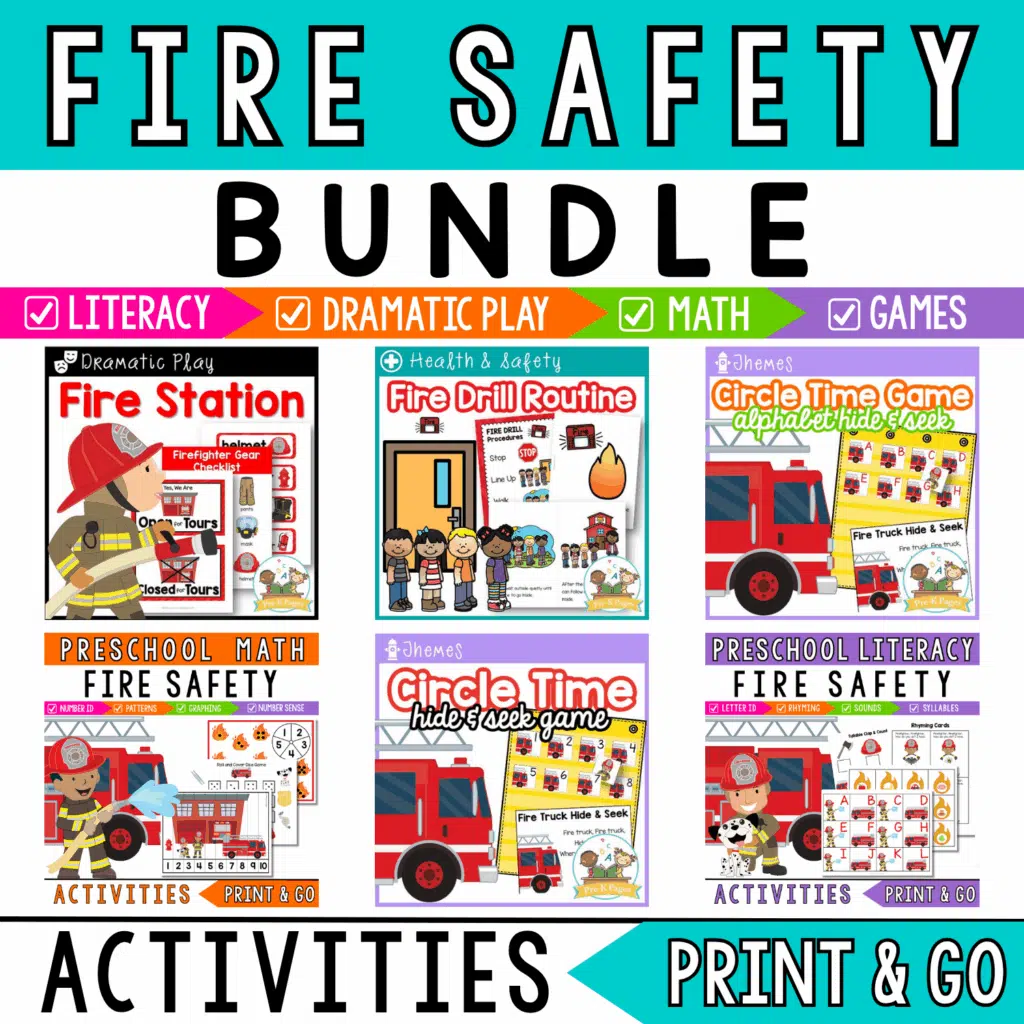
Fire Safety Bundle
SAVE 63% FOR FIRE SAFETY WEEK on a bundle of 7 of my best-selling fire safety resources, including math, literacy, and fire station dramatic play! Make learning fun with these hands-on resources!
The Challenge of Fire Drills
For many young children, your classroom is the very first one they have entered. Everything is new and different. The concept of a fire drill is completely unknown to them. They’ve never heard a fire alarm or seen the flashing lights in a hallway.
Fire drills are often scary for preschoolers. All the noise and activity can quickly overwhelm them. They may struggle to hear their teacher or even see her in all the movement.
Discuss Fire Drills with Preschoolers
The key to successful fire drills is preparation. Children must understand what a fire drill is, the purpose for it, and what is expected during it.
Tell kids that fire drills help students and teachers stay safe during an emergency. A fire drill helps people know what to do and where to go during an emergency time.
Talk about the loud sound that the fire alarm makes. Practice making the sound together. If possible, listen to the actual alarm sound. Your students will know exactly what is sounds like and how loud it really is. They can begin to understand that the sound is to keep them safe. If children don’t know what the sound is and what it means, they will not react appropriately when they hear it.
Read books about fire drills and fire safety. The Fire Drill Visual Routine includes books and posters to use to read about fire drill practices. Talk about how the events in the book relate to your real-life events at school. The Fire Safety Books list includes books about fire safety and the work of firefighters.

Practice Fire Drills with Preschoolers
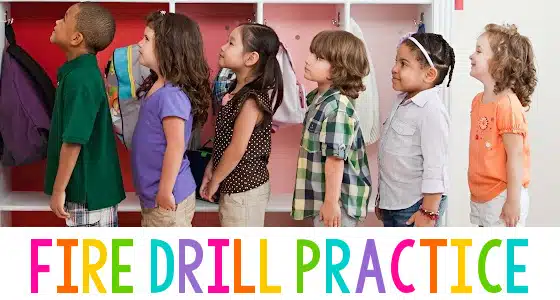
Introduce the procedures for a fire drill in non-threatening and kid-friendly ways. Act out appropriate behaviors for fire drills. Act out inappropriate behaviors and lead kids to correct you. Practice mock drills in your room and help children know exactly what to do and where to go when the fire alarm sounds. Do these things before your school ever has a fire drill. Practice walking down the hall and out the exit to your outside spot.
Repeat fire drill talks regularly, at least once each month, to reinforce the procedures. Display fire drill books or posters in your library center or other highly visual space so your children can review themselves. You may want to use this song or printable to recall the behaviors during a fire drill.
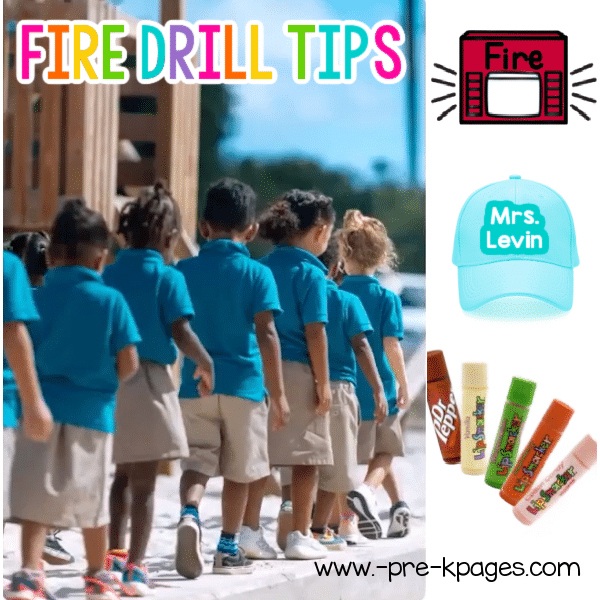
Fire Drill Success Tips
Wear a brightly colored hat (or headband) that you use only for fire drills. When the hallways are crowded with small children and adults, it’s difficult for little ones to see you or follow you. Brightly colored headwear will make you stand out from the crowd and prevent your students from getting lost. There are some great novelty hats online (from wizard hats to traffic cone hats). You can also find cheap, colorful foam visors at your local craft store; decorate it to suit your taste. Hang your hat on the wall next to your classroom door and grab it on your way out during a fire drill.
Provide a fun treat. Anybody who has been a long-time visitor of my website or blog knows that I am dead set against extrinsic rewards. However, I do make an exception for fire drills. My favorite type of reward is a “smelly” because in addition to smelling great, they are super cheap when compared to stickers or trinkets. Buy a package of scented lip balm at your local Dollar Store. After a successful fire drill and as you gather at your outside spot, lead kids to stand in a line with a hand on top of the head. Go down the line, counting children. As you count a child, rub a small circle of lip balm on the back of the child’s hand. This is a fun way to acknowledge the children’s successful exit.
Fire drills are necessary. With a little preparation and practice, your class will have fire drill success every time!