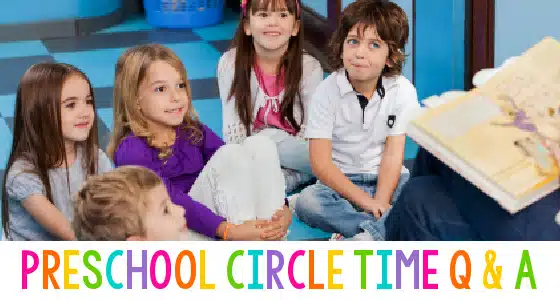



Preschool circle time is an important part of your school day. Each day you gather with your entire class, an opportunity for children to interact with you and with one another. Every year I hear questions from teachers. How can I have a successful circle time? What do I do to keep the preschoolers engaged during circle time? Why don’t they pay attention? Here are some answers to common circle time questions. 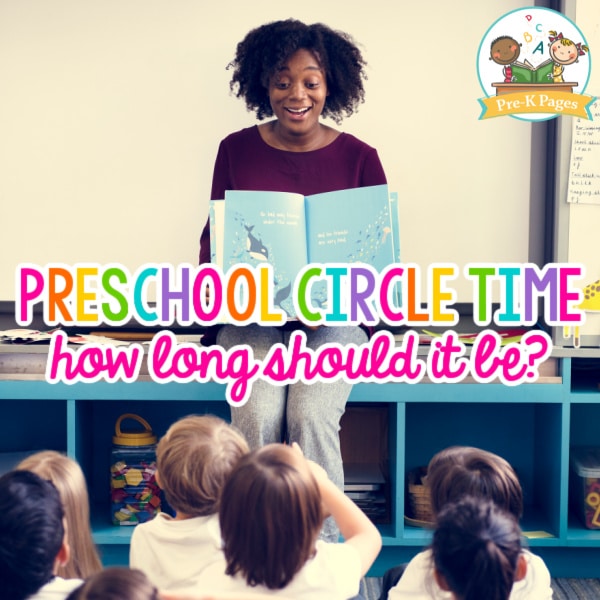
What is preschool circle time and why is it important?
Circle time is the time each day that you gather with all your students in your group learning space. This gathering is a transition time, from home to the classroom. You may sing a song, repeat a welcome ritual, review the daily schedule, or read a story together. What you do should signal to the children that classroom time has “officially” begun. An effective circle time sets the tone for the day, fosters classroom community, and builds social skills.
How long should preschool circle time be?
Research shows that attention spans for young children should be no more than 1-2 minutes per year of age. (And if you are with groups of preschoolers for very long, you know this is true!) Try to keep your circle time for younger preschoolers to no more than 5-10 minutes. For older preschoolers 10-15 minutes is ideal, with 10 minutes at the beginning of the year, slowly expanding to 15 minutes by the end of the year. With planning and intention, the time spent in the group is brief and focused, but still very powerful. 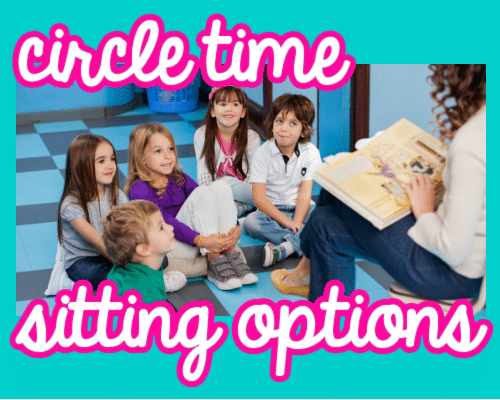
Do you assign seats on the carpet during preschool circle time?
I offer free choice in seating. If there are problems with disturbing others I say, “You can sit anywhere you want as long as you don’t bother your neighbors.” If they DO bother others, then the choice of where they sit becomes mine. Of course, if they demonstrate self-control in their new spot, then they can earn back the right to choose their own spot.
Should children sit criss cross at circle time?
My kids won’t sit down during circle time, they’re always up on their knees- which blocks the view of other students. Should I have them sit criss-cross? Traditional thinking was that kids were listening when they were sitting cross-legged on the carpet with their hands in their laps, but research has dispelled this myth. I invite you to say goodbye to that outdated method and embrace what the research shows:
- Neural pathways are strengthened through movement.
- Not all young children are comfortable sitting criss-cross. (How can they listen if they are uncomfortable?)
- As mentioned above, young children naturally have short attention spans.
If you’re tired of correcting and redirecting how your little learners sit during circle time, invite them to make choices that are most comfortable to them using fun choices like Mountain, Mermaid, and Pirate sitting positions. They’ll be a huge hit in your classroom! Use this free download to show kids what their sitting options are: Sitting Choices 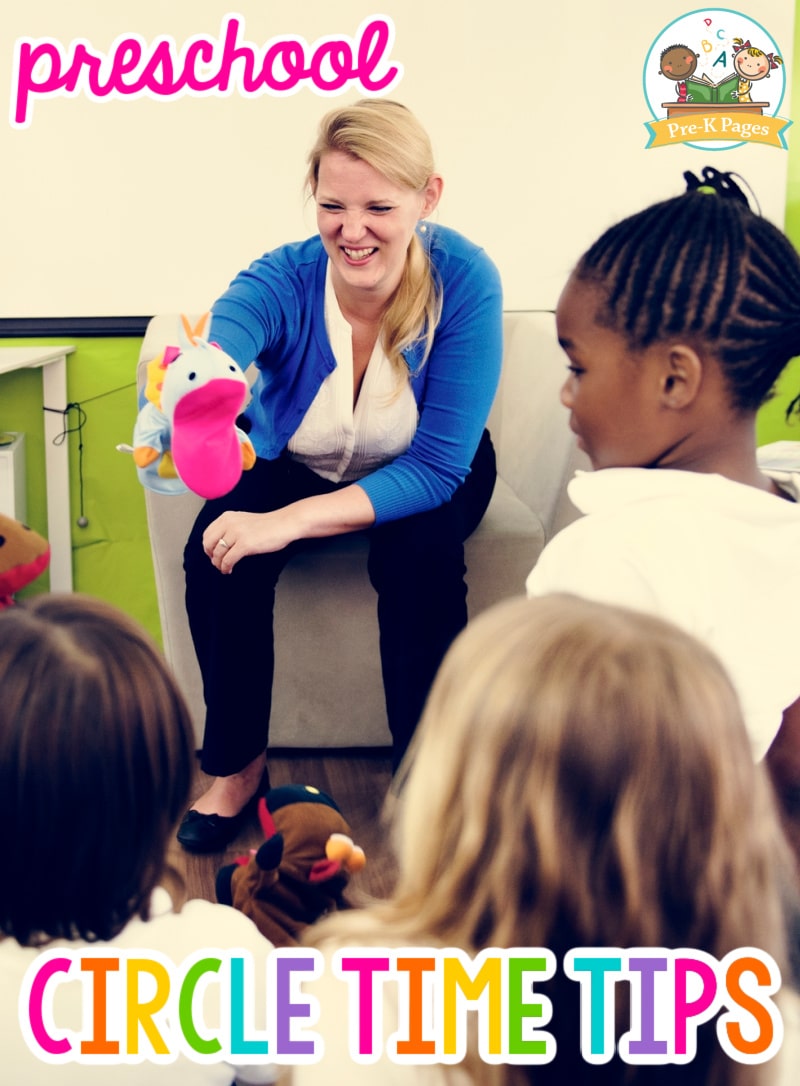
How do I keep kids engaged during circle time?
Circle time games are perfect for increasing engagement and expanding your students’ attention spans. Ideally, games involve all the group, move quickly, adjust to fit skills and needs, and can be stopped at any point (as needed) without seeming to lack an ending. (That means that you may play one round, five rounds, or eleven rounds and whenever you stop, the game feels complete.) I have two sets of circle time games, one for alphabet letters and one for numerals. Choose the theme of your game and adapt to fit whatever letters or numbers are familiar to your students.
Download games for your circle time–
How do I get my preschoolers to sit still during circle time?
Often some of our little learners just can’t seem to sit still! As we know, all behavior is a form of communication. If a child is wiggly during circle time, this behavior is telling you that they have reached the limit of their attention span. If this is the case, then your response should be to stop and get them up and moving with a song or fingerplay or transition to the next activity. During your circle time, make sure to balance active and passive activities. When children sit and listen to you (or another child) talk, they are passive participants. When they are engaged and moving, they are active. Too much passive activity drains the ability to pay attention and leads to wiggling. 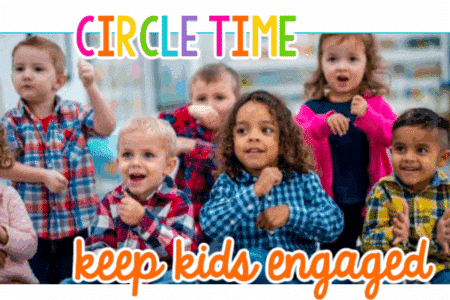
More Preschool Circle Time Tips
Check out these links for more circle time answers.
What do I include for a successful circle time? A Preschool Circle Time That Really Works
What resources or props do I need for circle time? The Best Circle Time Props for Preschool
Where can I find the resources I need? Pre-K Pages Circle Time Essentials (Amazon)
What about calendar in circle time? Calendar Time and Preschoolers
What are some songs for circle time? Best Songs for Circle Time