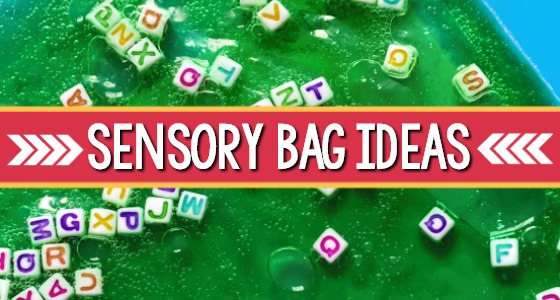


Sensory bags are a great way to add more sensory play experiences into your classroom. They’re also super quick and easy to make and tons of fun for playing and learning!

Sensory Bags for Mess-Free Learning and Play
Sensory play is just what is sounds like – play that involves the senses. While many activities can engage several senses at once, the one used most often in sensory bags is touch.
If you’re new to the sensory bag scene, they’re zip top bags with sensory materials sealed inside. The bags allow the materials inside to be explored and manipulated by little hands – without being spilled or eaten. They can also be easily sanitized to eliminate germs.
Some children may be reluctant to touch items that a leave a mess on their hands. Sensory bags allow children to explore textures and different sensations without a lot of mess.
Now that you know what they are, you may be wondering what in the world you should put inside a sensory bag. Don’t worry, you’re in the right place! Below you’ll learn the educational benefits of using these bags, as well as directions for making your own bags, and a list of ideas to help you get started.
Educational Benefits of Sensory Bags
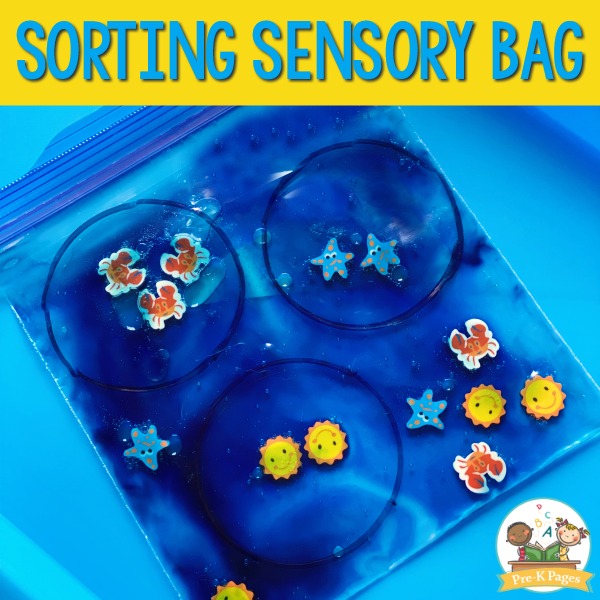
Sensory bags make great learning activities to go along with your thematic units, writing center, or math concepts like counting, sorting, or color identification.
Sensory bags also encourage children to use the small muscles in their hands and fingers, developing important fine motor skills. As children talk about the materials and use different descriptive words, they are building conversation skills, vocabulary skills, and other language skills. Children can understand more about cause and effect, too. (I push here and the materials move there.)
Sensory play encourages hands-on exploration, which can lead to increased engagement, and ultimately, more learning for your students.
There are many other educational benefits of using sensory bags in your classroom, here are just a few of those benefits.
- Bilateral Integration
- Crossing the Midline
- Fine Motor Skills
- Problem Solving
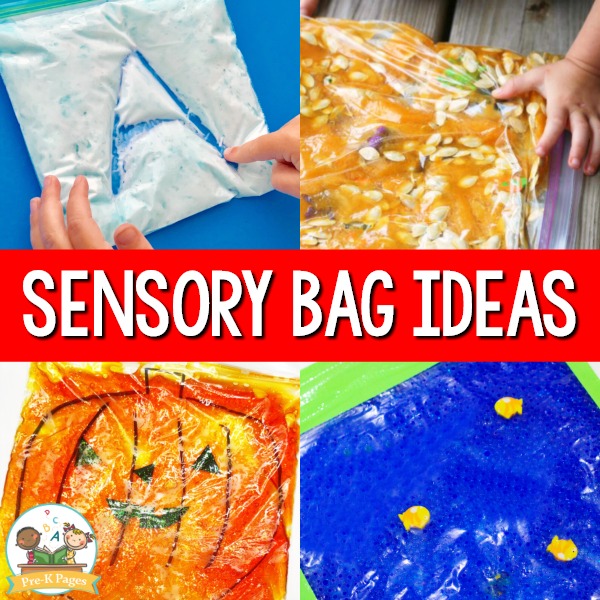
Sensory Bag Base Ideas
To prepare your sensory bags, you’ll need to gather your materials first. Just adding a single base to your bag is often enough to create a super fun and engaging activity, but sometimes you may want to add in a few extras to spark interest.
In addition to quart sized zip top bags, here are some of the bases you may consider using to fill your bags. One of the best things about selecting a base for a sensory bag is that you can find most of them at your local dollar store.
- Clear Hair Gel: Perfect for squishing and moving the filler around.
- Clear Shampoo: Any clear shampoo will work.
- Lotion: Similar to hair gel, adds a fun, squishy texture.
- Hair Conditioner: Similar to lotion and hair gel.
- Shaving Cream: Mix with a little paint or food coloring for color exploration.
- Colored Sand: Very fine colored sand adds texture and it’s perfect for writing.
After helping you clean out a real pumpkin, your kids will have a blast exploring the insides with a hands-on pumpkin sensory bag.
Build a fun snowman in a gel bag using foam shapes.
Sensory Bag Ideas: Filler
These items can be used to spark interest and increase engagement, choose the ones that best meet your needs and those of your students.
- Rainbow Sprinkles: Perfect for adding color and interest.
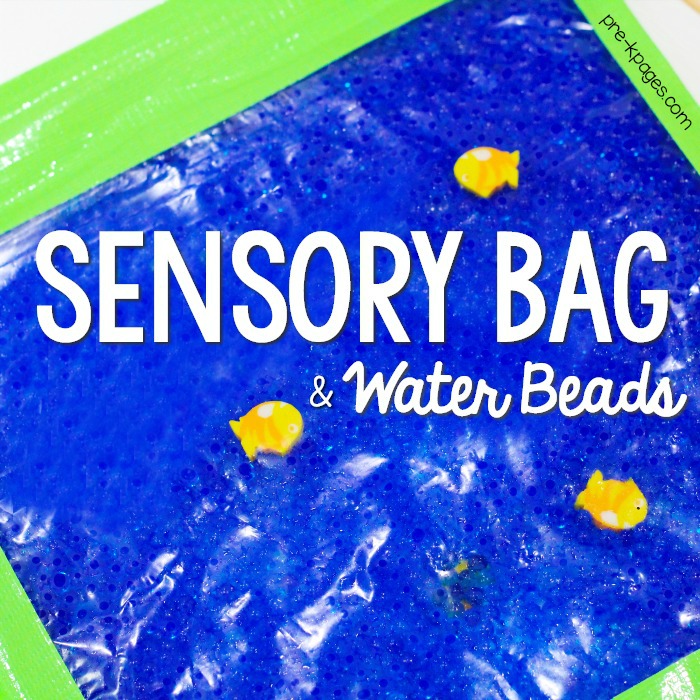
- Water Beads: A safer way to allow younger children to explore water beads.
- Paint: Use thicker paints to explore color mixing or writing.
- Mini Erasers: For sorting and manipulation
- Letter Beads: Add literacy to your bags with alphabet letter beads.
- Buttons: Sort, count, or squish with buttons.
- Sequins: Add sparkle and increase engagement with colorful sequins.
- Flat Table Scatter (confetti): Perfect for adding seasonal elements to sensory play.
- Wiggly Eyes: Just plain fun!
- Seeds: Science meets sensory play when you add pumpkin or watermelon seeds to your sensory bags.
- Foam Shapes: Flat foam shapes are available in a wide variety of styles.
- Small Beads: Great for manipulation and fine motor skills.
You can even combine multiple fillers such as the blue water beads and fish mini-erasers pictured above.

Sensory Bag Ideas: Add-Ins
This jack-o-lantern sensory bag is perfect for preschoolers, toddlers, and even babies. Your little learners will have a blast manipulating the foam shapes inside the bag to make a jack-o-lantern face!
You can use some of the following ingredients in your bags to add a little extra pizzazz to increase interest and engagement.
- Food Coloring: A quick and easy way to color your base.
- Glitter: Add a little sparkle to your sensory bags!
- Liquid Watercolors: Make your bags vibrant and engaging by adding liquid watercolors.

How to Make Sensory Bags
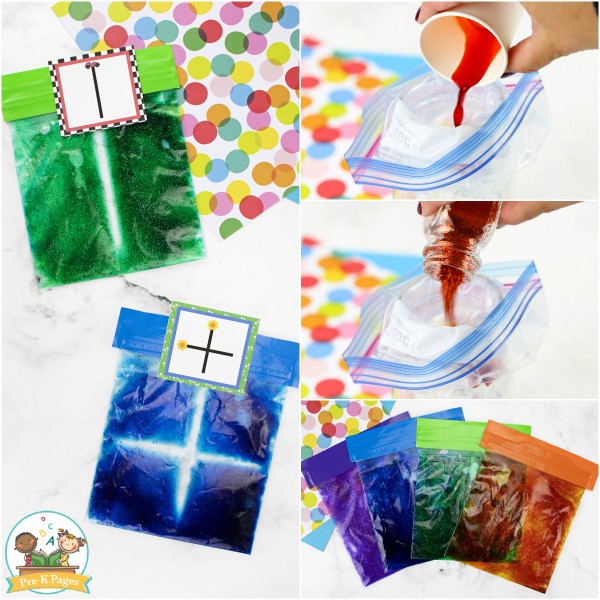
You can use sensory bags to teach handwriting skills all year long when you use seasonal pre-writing cards.
These simple steps will help you create amazing sensory bags your kids will love.
1. Get a zip top, quart size freezer bag.
2. Choose the base for your bag (see list above) and add about 8-10 ounces to your bag.
3. Add extras to spark interest.
4. Mix ingredients inside bag – unless it’s a color mixing activity for the kids to experience.
5. Seal the edges of the bag with packing or colorful duct tape to prevent leaks.
Now you’re ready to introduce the bags to your little learners! After they’ve been introduced and your students have been using them successfully for awhile, you may consider leaving the bags out for free exploration.

When to Use Sensory Bags
Sensory bags can be used at many different times throughout the school day. Here are just a few ways you can incorporate these sensory friendly bags into your daily classroom routine.
- Quiet Time or Nap Time
- Morning Work
- Arrival
- Table Time
- Small Groups
- Literacy Centers
- Fine Motor Centers
- Math Centers
- Writing Center